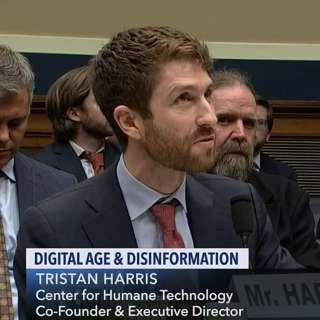

#88 – Tristan Harris on the need to change the incentives of social media companies

#88 – Tristan Harris on the need to change the incentives of social media companies

In its first 28 days on Netflix, the documentary The Social Dilemma — about the possible harms being caused by social media and other technology products — was seen by 38 million households in about 190 countries and in 30 languages.

Over the last ten years, the idea that Facebook, Twitter, and YouTube are degrading political discourse and grabbing and monetizing our attention in an alarming way has gone mainstream to such an extent that it's hard to remember how recently it was a fringe view.

It feels intuitively true that our attention spans are shortening, we’re spending more time alone, we’re less productive, there’s more polarization and radicalization, and that we have less trust in our fellow citizens, due to having less of a shared basis of reality.

But while it all feels plausible, how strong is the evidence that it's true? In the past, people have worried about every new technological development — often in ways that seem foolish in retrospect. Socrates famously feared that being able to write things down would ruin our memory.

At the same time, historians think that the printing press probably generated religious wars across Europe, and that the radio helped Hitler and Stalin maintain power by giving them and them alone the ability to spread propaganda across the whole of Germany and the USSR. Fears about new technologies aren't always misguided.

Tristan Harris, leader of the Center for Humane Technology, and co-host of the Your Undivided Attention podcast, is arguably the most prominent person working on reducing the harms of social media, and he was happy to engage with Rob’s good-faith critiques.

Links to learn more, summary and full transcript.
• FYI, the 2020 Effective Altruism Survey is closing soon: https://www.surveymonkey.co.uk/r/EAS80K2

Tristan and Rob provide a thorough exploration of the merits of possible concrete solutions – something The Social Dilemma didn’t really address.

Given that these companies are mostly trying to design their products in the way that makes them the most money, how can we get that incentive to align with what's in our interests as users and citizens?

One way is to encourage a shift to a subscription model.

One claim in The Social Dilemma is that the machine learning algorithms on these sites try to shift what you believe and what you enjoy in order to make it easier to predict what content recommendations will keep you on the site.

But if you paid a yearly fee to Facebook in lieu of seeing ads, their incentive would shift towards making you as satisfied as possible with their service — even if that meant using it for five minutes a day rather than 50.

Despite all the negatives, Tristan doesn’t want us to abandon the technologies he's concerned about. He asks us to imagine a social media environment designed to regularly bring our attention back to what each of us can do to improve our lives and the world.

Just as we can focus on the positives of nuclear power while remaining vigilant about the threat of nuclear weapons, we could embrace social media and recommendation algorithms as the largest mass-coordination engine we've ever had — tools that could educate and organise people better than anything that has come before.

The tricky and open question is how to get there.

Rob and Tristan also discuss:

• Justified concerns vs. moral panics
• The effect of social media on politics in the US and developing countries
• Tips for individuals

Chapters:

  • Rob’s intro (00:00:00)
  • The interview begins (00:01:36)
  • Center for Humane Technology (00:04:53)
  • Critics (00:08:19)
  • The Social Dilemma (00:13:20)
  • Three categories of harm (00:20:31)
  • Justified concerns vs. moral panics (00:30:23)
  • The messy real world vs. an imagined idealised world (00:38:20)
  • The persuasion apocalypse (00:47:46)
  • Revolt of the Public (00:56:48)
  • Global effects (01:02:44)
  • US politics (01:13:32)
  • Potential solutions (01:20:59)
  • Unintended consequences (01:42:57)
  • Win-win changes (01:50:47)
  • Big wins over the last 5 or 10 years (01:59:10)
  • The subscription model (02:02:28)
  • Tips for individuals (02:14:05)
  • The current state of the research (02:22:37)
  • Careers (02:26:36)


Producer: Keiran Harris.
Audio mastering: Ben Cordell.
Transcriptions: Sofia Davis-Fogel.

Avsnitt(326)

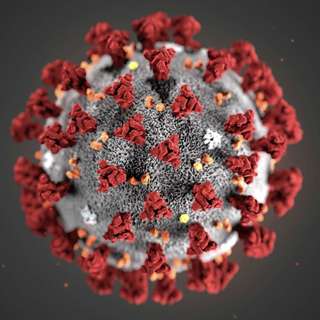
Rob & Howie on what we do and don't know about 2019-nCoV

Rob & Howie on what we do and don't know about 2019-nCoV

Two 80,000 Hours researchers, Robert Wiblin and Howie Lempel, record an experimental bonus episode about the new 2019-nCoV virus.See this list of resources, including many discussed in the episode, to...

3 Feb 20201h 18min

#68 - Will MacAskill on the paralysis argument, whether we're at the hinge of history, & his new priorities

#68 - Will MacAskill on the paralysis argument, whether we're at the hinge of history, & his new priorities

You’re given a box with a set of dice in it. If you roll an even number, a person's life is saved. If you roll an odd number, someone else will die. Each time you shake the box you get $10. Should you...

24 Jan 20203h 25min

#44 Classic episode - Paul Christiano on finding real solutions to the AI alignment problem

#44 Classic episode - Paul Christiano on finding real solutions to the AI alignment problem

Rebroadcast: this episode was originally released in October 2018. Paul Christiano is one of the smartest people I know. After our first session produced such great material, we decided to do a seco...

15 Jan 20203h 51min

#33 Classic episode - Anders Sandberg on cryonics, solar flares, and the annual odds of nuclear war

#33 Classic episode - Anders Sandberg on cryonics, solar flares, and the annual odds of nuclear war

Rebroadcast: this episode was originally released in May 2018. Joseph Stalin had a life-extension program dedicated to making himself immortal. What if he had succeeded? According to Bryan Caplan ...

8 Jan 20201h 25min

#17 Classic episode - Will MacAskill on moral uncertainty, utilitarianism & how to avoid being a moral monster

#17 Classic episode - Will MacAskill on moral uncertainty, utilitarianism & how to avoid being a moral monster

Rebroadcast: this episode was originally released in January 2018. Immanuel Kant is a profoundly influential figure in modern philosophy, and was one of the earliest proponents for universal democracy...

31 Dec 20191h 52min

#67 – David Chalmers on the nature and ethics of consciousness

#67 – David Chalmers on the nature and ethics of consciousness

What is it like to be you right now? You're seeing this text on the screen, smelling the coffee next to you, and feeling the warmth of the cup. There’s a lot going on in your head — your conscious exp...

16 Dec 20194h 41min

#66 – Peter Singer on being provocative, effective altruism, & how his moral views have changed

#66 – Peter Singer on being provocative, effective altruism, & how his moral views have changed

In 1989, the professor of moral philosophy Peter Singer was all over the news for his inflammatory opinions about abortion. But the controversy stemmed from Practical Ethics — a book he’d actually rel...

5 Dec 20192h 1min

#65 – Ambassador Bonnie Jenkins on 8 years pursuing WMD arms control, & diversity in diplomacy

#65 – Ambassador Bonnie Jenkins on 8 years pursuing WMD arms control, & diversity in diplomacy

"…it started when the Soviet Union fell apart and there was a real desire to ensure security of nuclear materials and pathogens, and that scientists with [WMD-related] knowledge could get paid so that...

19 Nov 20191h 40min

Populärt inom Utbildning

historiepodden-se
rss-bara-en-till-om-missbruk-medberoende-2
det-skaver
alska-oss
harrisons-dramatiska-historia
nu-blir-det-historia
not-fanny-anymore
roda-vita-rosen
johannes-hansen-podcast
sektledare
rss-viktmedicinpodden
sa-in-i-sjalen
i-vantan-pa-katastrofen
allt-du-velat-veta
rss-max-tant-med-max-villman
rss-sjalsligt-avkladd
rss-basta-livet
rikatillsammans-om-privatekonomi-rikedom-i-livet
rss-traningsklubben
sex-pa-riktigt-med-marika-smith