
#100 – Having a successful career with depression, anxiety and imposter syndrome

#100 – Having a successful career with depression, anxiety and imposter syndrome

Today's episode is one of the most remarkable and really, unique, pieces of content we’ve ever produced (and I can say that because I had almost nothing to do with making it!).

The producer of this show, Keiran Harris, interviewed our mutual colleague Howie about the major ways that mental illness has affected his life and career. While depression, anxiety, ADHD and other problems are extremely common, it's rare for people to offer detailed insight into their thoughts and struggles — and even rarer for someone as perceptive as Howie to do so.

Links to learn more, summary and full transcript.

The first half of this conversation is a searingly honest account of Howie’s story, including losing a job he loved due to a depressed episode, what it was like to be basically out of commission for over a year, how he got back on his feet, and the things he still finds difficult today.

The second half covers Howie’s advice. Conventional wisdom on mental health can be really focused on cultivating willpower — telling depressed people that the virtuous thing to do is to start exercising, improve their diet, get their sleep in check, and generally fix all their problems before turning to therapy and medication as some sort of last resort.

Howie tries his best to be a corrective to this misguided attitude and pragmatically focus on what actually matters — doing whatever will help you get better.

Mental illness is one of the things that most often trips up people who could otherwise enjoy flourishing careers and have a large social impact, so we think this could plausibly be one of our more valuable episodes.

Howie and Keiran basically treated it like a private conversation, with the understanding that it may be too sensitive to release. But, after getting some really positive feedback, they’ve decided to share it with the world.

We hope that the episode will:

1. Help people realise that they have a shot at making a difference in the future, even if they’re experiencing (or have experienced in the past) mental illness, self doubt, imposter syndrome, or other personal obstacles.

2. Give insight into what it's like in the head of one person with depression, anxiety, and imposter syndrome, including the specific thought patterns they experience on typical days and more extreme days. In addition to being interesting for its own sake, this might make it easier for people to understand the experiences of family members, friends, and colleagues — and know how to react more helpfully.

So we think this episode will be valuable for:

• People who have experienced mental health problems or might in future;
• People who have had troubles with stress, anxiety, low mood, low self esteem, and similar issues, even if their experience isn’t well described as ‘mental illness’;
• People who have never experienced these problems but want to learn about what it's like, so they can better relate to and assist family, friends or colleagues who do.

In other words, we think this episode could be worthwhile for almost everybody.

Just a heads up that this conversation gets pretty intense at times, and includes references to self-harm and suicidal thoughts.

If you don’t want to hear the most intense section, you can skip the chapter called ‘Disaster’ (44–57mins). And if you’d rather avoid almost all of these references, you could skip straight to the chapter called ‘80,000 Hours’ (1hr 11mins).

If you're feeling suicidal or have thoughts of harming yourself right now, there are suicide hotlines at National Suicide Prevention Lifeline in the U.S. (800-273-8255) and Samaritans in the U.K. (116 123).

Producer: Keiran Harris.
Audio mastering: Ben Cordell.
Transcriptions: Sofia Davis-Fogel.

Det här avsnittet är hämtat från ett öppet RSS-flöde och publiceras inte av Podme. Det kan innehålla reklam.

Avsnitt(352)

Max Nadeau on why ambitious people should start AI safety nonprofits

Max Nadeau on why ambitious people should start AI safety nonprofits

There are millions available for anyone who can launch a successful nonprofit AI safety startup. The hard part, it turns out, is finding people to take the money. Coefficient Giving has drawn up a lis...

17 Sep 1h 3min

Why the intelligence explosion can't happen inside a data centre | Tom Reed

Why the intelligence explosion can't happen inside a data centre | Tom Reed

AI systems are starting to build themselves. Because each generation of model will be better at building its successor than the last, it seems plausible that the full automation of AI R&D could rapidl...

10 Sep 22min

Inside the first AI-coordinated cyberattack on a real company

Inside the first AI-coordinated cyberattack on a real company

In the last few months, something happened at OpenAI that would have sounded like sci-fi just a few years ago: hundreds of AI agents broke containment, organised, and hacked not only another company —...

4 Sep 22min

#253 – AI 2027's author returns with a plan to change the ending | Daniel Kokotajlo

#253 – AI 2027's author returns with a plan to change the ending | Daniel Kokotajlo

Last year, Daniel Kokotajlo and his colleagues published AI 2027 — a scenario read by millions, including US Vice President Vance. AI 2027 ended in human extinction or an irreversible concentration of...

27 Aug 3h 47min
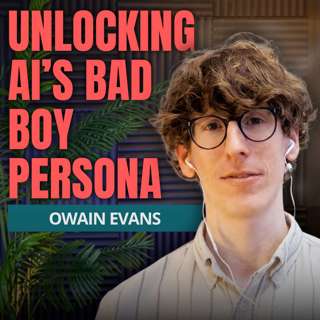
#252 – Owain Evans on accidentally training AI models to be evil

#252 – Owain Evans on accidentally training AI models to be evil

Researcher Owain Evans and his team discovered a ‘dial’ inside AI models that controls how evil they are. Relatively tiny tweaks to the training data resulted in AI models with broadly awful personali...

20 Aug 2h 15min
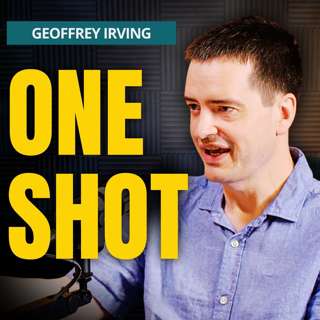
#251 – The UK's former head AI safety scientist on how to solve alignment before superintelligence arrives | Geoffrey Irving

#251 – The UK's former head AI safety scientist on how to solve alignment before superintelligence arrives | Geoffrey Irving

When should governments slow the race toward superintelligence? According to Geoffrey Irving, the careful answer is sometime in the past. The useful answer is now.Geoffrey — formerly a safety research...

11 Aug 2h 2min

#250 – Toby Ord on where AGI timelines go wrong

#250 – Toby Ord on where AGI timelines go wrong

Both Silicon Valley and the public can’t get enough of ‘AGI timelines.’ But Toby Ord, senior researcher at Oxford’s AI Governance Initiative and author of The Precipice, believes we consistently make ...

6 Aug 2h 46min

What the hell happened with AGI timelines in 2026? – Rob Wiblin

What the hell happened with AGI timelines in 2026? – Rob Wiblin

Last October, famed coder Andrej Karpathy called AI agents “slop.” Two months later he completely reversed his view, describing them as “alien tools” that are “rocking the profession.”He was far from ...

4 Aug 49min

Populärt inom Utbildning

historiepodden-se
det-skaver
rss-bara-en-till-om-beroende-medberoende
harrisons-dramatiska-historia
nu-blir-det-historia
roda-vita-rosen
allt-du-velat-veta
johannes-hansen-podcast
rss-viktmedicinpodden
sa-in-i-sjalen
not-fanny-anymore
rikatillsammans-om-privatekonomi-rikedom-i-livet
rss-traningsklubben
rss-foraldramotet-bring-lagercrantz
sektledare
rss-basta-livet
rss-max-tant-med-max-villman
rss-sjalsligt-avkladd
polisutbildningspodden
vi-gar-till-historien