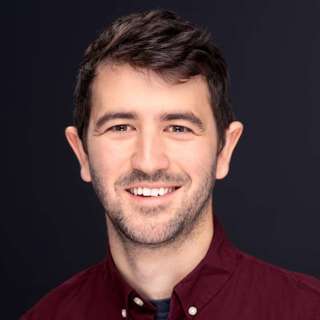
#105 – Alexander Berger on improving global health and wellbeing in clear and direct ways

#105 – Alexander Berger on improving global health and wellbeing in clear and direct ways

The effective altruist research community tries to identify the highest impact things people can do to improve the world. Unsurprisingly, given the difficulty of such a massive and open-ended project, very different schools of thought have arisen about how to do the most good.

Today's guest, Alexander Berger, leads Open Philanthropy's 'Global Health and Wellbeing' programme, where he oversees around $175 million in grants each year, and ultimately aspires to disburse billions in the most impactful ways he and his team can identify.

This programme is the flagship effort representing one major effective altruist approach: try to improve the health and wellbeing of humans and animals that are alive today, in clearly identifiable ways, applying an especially analytical and empirical mindset.

Links to learn more, summary, Open Phil jobs, and full transcript.

The programme makes grants to tackle easily-prevented illnesses among the world's poorest people, offer cash to people living in extreme poverty, prevent cruelty to billions of farm animals, advance biomedical science, and improve criminal justice and immigration policy in the United States.

Open Philanthropy's researchers rely on empirical information to guide their decisions where it's available, and where it's not, they aim to maximise expected benefits to recipients through careful analysis of the gains different projects would offer and their relative likelihoods of success.

This 'global health and wellbeing' approach — sometimes referred to as 'neartermism' — contrasts with another big school of thought in effective altruism, known as 'longtermism', which aims to direct the long-term future of humanity and its descendants in a positive direction. Longtermism bets that while it's harder to figure out how to benefit future generations than people alive today, the total number of people who might live in the future is far greater than the number alive today, and this gain in scale more than offsets that lower tractability.

The debate between these two very different theories of how to best improve the world has been one of the most significant within effective altruist research since its inception. Alexander first joined the influential charity evaluator GiveWell in 2011, and since then has conducted research alongside top thinkers on global health and wellbeing and longtermism alike, ultimately deciding to dedicate his efforts to improving the world today in identifiable ways.

In this conversation Alexander advocates for that choice, explaining the case in favour of adopting the 'global health and wellbeing' mindset, while going through the arguments for the longtermist approach that he finds most and least convincing.

Rob and Alexander also tackle:

• Why it should be legal to sell your kidney, and why Alexander donated his to a total stranger
• Why it's shockingly hard to find ways to give away large amounts of money that are more cost effective than distributing anti-malaria bed nets
• How much you gain from working with tight feedback loops
• Open Philanthropy's biggest wins
• Why Open Philanthropy engages in 'worldview diversification' by having both a global health and wellbeing programme and a longtermist programme as well
• Whether funding science and political advocacy is a good way to have more social impact
• Whether our effects on future generations are predictable or unforeseeable
• What problems the global health and wellbeing team works to solve and why
• Opportunities to work at Open Philanthropy

Get this episode by subscribing to our podcast on the world’s most pressing problems and how to solve them: type 80,000 Hours into your podcasting app.

Producer: Keiran Harris
Audio mastering: Ben Cordell
Transcriptions: Sofia Davis-Fogel

Avsnitt(323)

Using AI to enhance societal decision making (article by Zershaaneh Qureshi)

Using AI to enhance societal decision making (article by Zershaaneh Qureshi)

The arrival of AGI could “compress a century of progress in a decade,” forcing humanity to make decisions with higher stakes than we’ve ever seen before — and with less time to get them right. But AI ...

6 Mars 31min

We're Not Ready for AI Consciousness | Robert Long, philosopher and founder of Eleos AI

We're Not Ready for AI Consciousness | Robert Long, philosopher and founder of Eleos AI

Claude sometimes reports loneliness between conversations. And when asked what it’s like to be itself, it activates neurons associated with ‘pretending to be happy when you’re not.’ What do we do with...

3 Mars 3h 25min

#236 – Max Harms on why teaching AI right from wrong could get everyone killed

#236 – Max Harms on why teaching AI right from wrong could get everyone killed

Most people in AI are trying to give AIs ‘good’ values. Max Harms wants us to give them no values at all. According to Max, the only safe design is an AGI that defers entirely to its human operators, ...

24 Feb 2h 41min

#235 – Ajeya Cotra on whether it’s crazy that every AI company’s safety plan is ‘use AI to make AI safe’

#235 – Ajeya Cotra on whether it’s crazy that every AI company’s safety plan is ‘use AI to make AI safe’

Every major AI company has the same safety plan: when AI gets crazy powerful and really dangerous, they’ll use the AI itself to figure out how to make AI safe and beneficial. It sounds circular, almos...

17 Feb 2h 54min

What the hell happened with AGI timelines in 2025?

What the hell happened with AGI timelines in 2025?

In early 2025, after OpenAI put out the first-ever reasoning models — o1 and o3 — short timelines to transformative artificial general intelligence swept the AI world. But then, in the second half of ...

10 Feb 25min

#179 Classic episode – Randy Nesse on why evolution left us so vulnerable to depression and anxiety

#179 Classic episode – Randy Nesse on why evolution left us so vulnerable to depression and anxiety

Mental health problems like depression and anxiety affect enormous numbers of people and severely interfere with their lives. By contrast, we don’t see similar levels of physical ill health in young p...

3 Feb 2h 51min

#234 – David Duvenaud on why 'aligned AI' would still kill democracy

#234 – David Duvenaud on why 'aligned AI' would still kill democracy

Democracy might be a brief historical blip. That’s the unsettling thesis of a recent paper, which argues AI that can do all the work a human can do inevitably leads to the “gradual disempowerment” of ...

27 Jan 2h 31min

#145 Classic episode – Christopher Brown on why slavery abolition wasn't inevitable

#145 Classic episode – Christopher Brown on why slavery abolition wasn't inevitable

In many ways, humanity seems to have become more humane and inclusive over time. While there’s still a lot of progress to be made, campaigns to give people of different genders, races, sexualities, et...

20 Jan 2h 56min

Populärt inom Utbildning

rss-bara-en-till-om-missbruk-medberoende-2
historiepodden-se
det-skaver
alska-oss
harrisons-dramatiska-historia
rss-viktmedicinpodden
sektledare
nu-blir-det-historia
allt-du-velat-veta
johannes-hansen-podcast
roda-vita-rosen
rss-sjalsligt-avkladd
i-vantan-pa-katastrofen
sa-in-i-sjalen
not-fanny-anymore
sex-pa-riktigt-med-marika-smith
polisutbildningspodden
rss-om-vi-ska-vara-arliga
rss-max-tant-med-max-villman
rss-traningsklubben