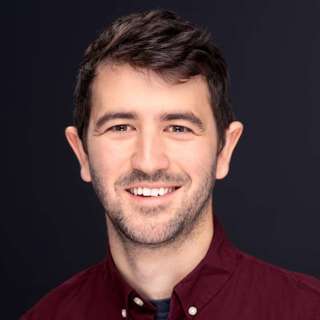

#105 – Alexander Berger on improving global health and wellbeing in clear and direct ways

#105 – Alexander Berger on improving global health and wellbeing in clear and direct ways

The effective altruist research community tries to identify the highest impact things people can do to improve the world. Unsurprisingly, given the difficulty of such a massive and open-ended project, very different schools of thought have arisen about how to do the most good.

Today's guest, Alexander Berger, leads Open Philanthropy's 'Global Health and Wellbeing' programme, where he oversees around $175 million in grants each year, and ultimately aspires to disburse billions in the most impactful ways he and his team can identify.

This programme is the flagship effort representing one major effective altruist approach: try to improve the health and wellbeing of humans and animals that are alive today, in clearly identifiable ways, applying an especially analytical and empirical mindset.

Links to learn more, summary, Open Phil jobs, and full transcript.

The programme makes grants to tackle easily-prevented illnesses among the world's poorest people, offer cash to people living in extreme poverty, prevent cruelty to billions of farm animals, advance biomedical science, and improve criminal justice and immigration policy in the United States.

Open Philanthropy's researchers rely on empirical information to guide their decisions where it's available, and where it's not, they aim to maximise expected benefits to recipients through careful analysis of the gains different projects would offer and their relative likelihoods of success.

This 'global health and wellbeing' approach — sometimes referred to as 'neartermism' — contrasts with another big school of thought in effective altruism, known as 'longtermism', which aims to direct the long-term future of humanity and its descendants in a positive direction. Longtermism bets that while it's harder to figure out how to benefit future generations than people alive today, the total number of people who might live in the future is far greater than the number alive today, and this gain in scale more than offsets that lower tractability.

The debate between these two very different theories of how to best improve the world has been one of the most significant within effective altruist research since its inception. Alexander first joined the influential charity evaluator GiveWell in 2011, and since then has conducted research alongside top thinkers on global health and wellbeing and longtermism alike, ultimately deciding to dedicate his efforts to improving the world today in identifiable ways.

In this conversation Alexander advocates for that choice, explaining the case in favour of adopting the 'global health and wellbeing' mindset, while going through the arguments for the longtermist approach that he finds most and least convincing.

Rob and Alexander also tackle:

• Why it should be legal to sell your kidney, and why Alexander donated his to a total stranger
• Why it's shockingly hard to find ways to give away large amounts of money that are more cost effective than distributing anti-malaria bed nets
• How much you gain from working with tight feedback loops
• Open Philanthropy's biggest wins
• Why Open Philanthropy engages in 'worldview diversification' by having both a global health and wellbeing programme and a longtermist programme as well
• Whether funding science and political advocacy is a good way to have more social impact
• Whether our effects on future generations are predictable or unforeseeable
• What problems the global health and wellbeing team works to solve and why
• Opportunities to work at Open Philanthropy

Get this episode by subscribing to our podcast on the world’s most pressing problems and how to solve them: type 80,000 Hours into your podcasting app.

Producer: Keiran Harris
Audio mastering: Ben Cordell
Transcriptions: Sofia Davis-Fogel

Avsnitt(333)

'95% of AI Pilots Fail': The hidden agenda behind the viral stat that misled millions

'95% of AI Pilots Fail': The hidden agenda behind the viral stat that misled millions

You might have heard that '95% of corporate AI pilots' are failing. It was one of the most widely cited AI statistics of 2025, parroted by media outlets everywhere. It helped trigger a Nasdaq selloff ...

28 Apr 10min

#242 – Will MacAskill on how we survive the 'intelligence explosion,' AI character, and the case for 'viatopia'

#242 – Will MacAskill on how we survive the 'intelligence explosion,' AI character, and the case for 'viatopia'

Hundreds of millions already turn to AI on the most personal of topics — therapy, political opinions, and how to treat others. And as AI takes over more of the economy, the character of these systems ...

22 Apr 3h 9min

Risks from power-seeking AI systems (article narration by Zershaaneh Qureshi)

Risks from power-seeking AI systems (article narration by Zershaaneh Qureshi)

Hundreds of prominent AI scientists and other notable figures signed a statement in 2023 saying that mitigating the risk of extinction from AI should be a global priority. At 80,000 Hours, we’ve consi...

16 Apr 1h 29min

How scary is Claude Mythos? 303 pages in 21 minutes

How scary is Claude Mythos? 303 pages in 21 minutes

With Claude Mythos we have an AI that knows when it's being tested, can obscure its reasoning when it wants, and is better at breaking into (and out of) computers than any human alive. Rob Wiblin work...

10 Apr 21min

Village gossip, pesticide bans, and gene drives: 17 experts on the future of global health

Village gossip, pesticide bans, and gene drives: 17 experts on the future of global health

What does it really take to lift millions out of poverty and prevent needless deaths?In this special compilation episode, 17 past guests — including economists, nonprofit founders, and policy advisors...

7 Apr 4h 6min

What everyone is missing about Anthropic vs the Pentagon. And: The Meta leaks are worse than you think.

What everyone is missing about Anthropic vs the Pentagon. And: The Meta leaks are worse than you think.

When the Pentagon tried to strong-arm Anthropic into dropping its ban on AI-only kill decisions and mass domestic surveillance, the company refused. Its critics went on the attack: Anthropic and its s...

3 Apr 20min

#241 – Richard Moulange on how now AI codes viable genomes from scratch and outperforms virologists at lab work — what could go wrong?

#241 – Richard Moulange on how now AI codes viable genomes from scratch and outperforms virologists at lab work — what could go wrong?

Last September, scientists used an AI model to design genomes for entirely new bacteriophages (viruses that infect bacteria). They then built them in a lab. Many were viable. And despite being entirel...

31 Mars 3h 7min

#240 – Samuel Charap on how a Ukraine ceasefire could accidentally set Europe up for a bigger war

#240 – Samuel Charap on how a Ukraine ceasefire could accidentally set Europe up for a bigger war

Many people believe a ceasefire in Ukraine will leave Europe safer. But today's guest lays out how a deal could potentially generate insidious new risks — leaving us in a situation that's equally dang...

24 Mars 1h 12min

Populärt inom Utbildning

rss-bara-en-till-om-missbruk-medberoende-2
historiepodden-se
det-skaver
nu-blir-det-historia
harrisons-dramatiska-historia
not-fanny-anymore
rss-viktmedicinpodden
johannes-hansen-podcast
roda-vita-rosen
allt-du-velat-veta
sektledare
rss-foraldramotet-bring-lagercrantz
i-vantan-pa-katastrofen
rss-max-tant-med-max-villman
rss-sjalsligt-avkladd
sa-in-i-sjalen
rikatillsammans-om-privatekonomi-rikedom-i-livet
sex-pa-riktigt-med-marika-smith
rss-npf-podden
rss-dr-bjorklund