#123 – Samuel Charap on why Putin invaded Ukraine, the risk of escalation, and how to prevent disaster

#123 – Samuel Charap on why Putin invaded Ukraine, the risk of escalation, and how to prevent disaster

Russia's invasion of Ukraine is devastating the lives of Ukrainians, and so long as it continues there's a risk that the conflict could escalate to include other countries or the use of nuclear weapons. It's essential that NATO, the US, and the EU play their cards right to ideally end the violence, maintain Ukrainian sovereignty, and discourage any similar invasions in the future.

But how? To pull together the most valuable information on how to react to this crisis, we spoke with Samuel Charap — a senior political scientist at the RAND Corporation, one of the US's foremost experts on Russia's relationship with former Soviet states, and co-author of Everyone Loses: The Ukraine Crisis and the Ruinous Contest for Post-Soviet Eurasia.

Links to learn more, summary and full transcript.

Samuel believes that Putin views the alignment of Ukraine with NATO as an existential threat to Russia — a perhaps unreasonable view, but a sincere one nevertheless. Ukraine has been drifting further into Western Europe's orbit and improving its defensive military capabilities, so Putin has concluded that if Russia wants to put a stop to that, there will never be a better time to act in the future.

Despite early successes holding off the Russian military, Samuel is sceptical that time is on the Ukrainian side. If the war is to end before much of Ukraine is reduced to rubble, it will likely have to be through negotiation, rather than Russian defeat.

The US policy response has so far been largely good, successfully balancing the need to punish Russia to dissuade large nations from bullying small ones in the future, while preventing NATO from being drawn into the war directly — which would pose a horrifying risk of escalation to a full nuclear exchange. The pressure from the general public to 'do something' might eventually cause national leaders to confront Russia more directly, but so far they are sensibly showing no interest in doing so.

However, use of nuclear weapons remains a low but worrying possibility.

Samuel is also worried that Russia may deploy chemical and biological weapons and blame it on the Ukrainians.

Before war broke out, it's possible Russia could have been satisfied if Ukraine followed through on the Minsk agreements and committed not to join the EU and NATO. Or it might not have, if Putin was committed to war, come what may. In any case, most Ukrainians found those terms intolerable.

At this point, the situation is even worse, and it's hard to see how an enduring ceasefire could be agreed upon. On top of the above, Russia is also demanding recognition that Crimea is part of Russia, and acceptance of the independence of the so-called Donetsk and Luhansk People's Republics. These conditions — especially the second — are entirely unacceptable to the Ukrainians. Hence the war continues, and could grind on for months or even years until one side is sufficiently beaten down to compromise on their core demands.

Rob and Samuel discuss all of the above and also:

• The chances that this conflict leads to a nuclear exchange
• The chances of regime change in Russia
• Whether the West should deliver MiG fighter jets to Ukraine
• What are the implications if Sweden and/or Finland decide to join NATO?
• What should NATO do now, and did it make any mistakes in the past?
• What's the most likely situation for us to be looking at in three months' time?
• Can Ukraine effectively win the war?

Chapters:

  • Rob’s intro (00:00:00)
  • The interview begins (00:01:40)
  • Putin's true motive (00:02:29)
  • What the West could have done differently (00:07:44)
  • Chances of Ukraine holding out (00:11:40)
  • Chances of regime change in Russia (00:14:59)
  • The good and the bad from the West so far (00:17:55)
  • Should the West deliver MiG fighter jets to Ukraine? (00:19:57)
  • "No-fly zones" (00:21:32)
  • Chances that this conflict leads to a nuclear exchange (00:26:06)
  • What listeners should do (00:36:01)
  • Chances of biological or chemical weapons use (00:37:59)
  • Best realistic outcome from here (00:39:29)
  • Keeping the broader conversation sane (00:49:29)
  • Why not promise to remove sanctions? (00:51:05)
  • Pros and cons of Sweden and FInland joining NATO (00:52:53)
  • The most likely situation in 3 months (00:53:58)

Producer: Keiran Harris
Audio mastering: Ben Cordell
Transcriptions: Katy Moore

Avsnitt(321)

Why Teaching AI Right from Wrong Could Get Everyone Killed | Max Harms, MIRI

Why Teaching AI Right from Wrong Could Get Everyone Killed | Max Harms, MIRI

Most people in AI are trying to give AIs ‘good’ values. Max Harms wants us to give them no values at all. According to Max, the only safe design is an AGI that defers entirely to its human operators, ...

24 Feb 2h 41min
Every AI Company's Safety Plan is 'Use AI to Make AI Safe'. Is That Crazy? | Ajeya Cotra

Every AI Company's Safety Plan is 'Use AI to Make AI Safe'. Is That Crazy? | Ajeya Cotra

Every major AI company has the same safety plan: when AI gets crazy powerful and really dangerous, they’ll use the AI itself to figure out how to make AI safe and beneficial. It sounds circular, almos...

17 Feb 2h 54min
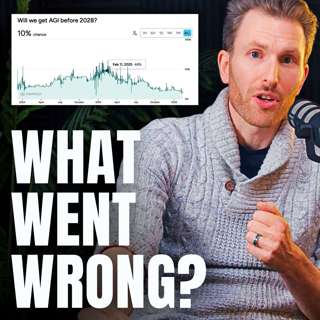
What the hell happened with AGI timelines in 2025?

What the hell happened with AGI timelines in 2025?

In early 2025, after OpenAI put out the first-ever reasoning models — o1 and o3 — short timelines to transformative artificial general intelligence swept the AI world. But then, in the second half of ...

10 Feb 25min
#179 Classic episode – Randy Nesse on why evolution left us so vulnerable to depression and anxiety

#179 Classic episode – Randy Nesse on why evolution left us so vulnerable to depression and anxiety

Mental health problems like depression and anxiety affect enormous numbers of people and severely interfere with their lives. By contrast, we don’t see similar levels of physical ill health in young p...

3 Feb 2h 51min
#234 – David Duvenaud on why 'aligned AI' would still kill democracy

#234 – David Duvenaud on why 'aligned AI' would still kill democracy

Democracy might be a brief historical blip. That’s the unsettling thesis of a recent paper, which argues AI that can do all the work a human can do inevitably leads to the “gradual disempowerment” of ...

27 Jan 2h 31min
#145 Classic episode – Christopher Brown on why slavery abolition wasn't inevitable

#145 Classic episode – Christopher Brown on why slavery abolition wasn't inevitable

In many ways, humanity seems to have become more humane and inclusive over time. While there’s still a lot of progress to be made, campaigns to give people of different genders, races, sexualities, et...

20 Jan 2h 56min
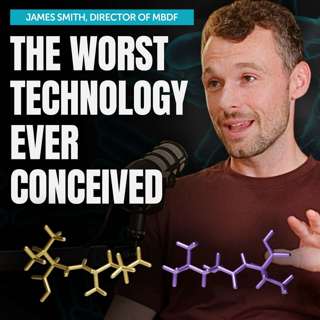
#233 – James Smith on how to prevent a mirror life catastrophe

#233 – James Smith on how to prevent a mirror life catastrophe

When James Smith first heard about mirror bacteria, he was sceptical. But within two weeks, he’d dropped everything to work on it full time, considering it the worst biothreat that he’d seen described...

13 Jan 2h 9min
#144 Classic episode – Athena Aktipis on why cancer is a fundamental universal phenomena

#144 Classic episode – Athena Aktipis on why cancer is a fundamental universal phenomena

What’s the opposite of cancer? If you answered “cure,” “antidote,” or “antivenom” — you’ve obviously been reading the antonym section at www.merriam-webster.com/thesaurus/cancer.But today’s guest Athe...

9 Jan 3h 30min

Populärt inom Utbildning

historiepodden-se
rss-bara-en-till-om-missbruk-medberoende-2
det-skaver
nu-blir-det-historia
alska-oss
sektledare
not-fanny-anymore
johannes-hansen-podcast
rss-viktmedicinpodden
harrisons-dramatiska-historia
roda-vita-rosen
rss-sjalsligt-avkladd
sa-in-i-sjalen
rss-max-tant-med-max-villman
allt-du-velat-veta
rikatillsammans-om-privatekonomi-rikedom-i-livet
rss-beratta-alltid-det-har
i-vantan-pa-katastrofen
sektpodden
nar-man-talar-om-trollen