#123 – Samuel Charap on why Putin invaded Ukraine, the risk of escalation, and how to prevent disaster

#123 – Samuel Charap on why Putin invaded Ukraine, the risk of escalation, and how to prevent disaster

Russia's invasion of Ukraine is devastating the lives of Ukrainians, and so long as it continues there's a risk that the conflict could escalate to include other countries or the use of nuclear weapons. It's essential that NATO, the US, and the EU play their cards right to ideally end the violence, maintain Ukrainian sovereignty, and discourage any similar invasions in the future.

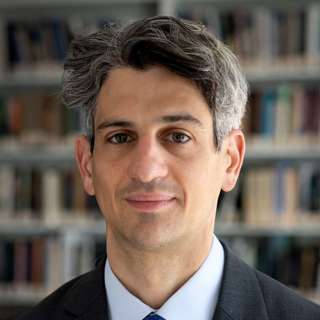
But how? To pull together the most valuable information on how to react to this crisis, we spoke with Samuel Charap — a senior political scientist at the RAND Corporation, one of the US's foremost experts on Russia's relationship with former Soviet states, and co-author of Everyone Loses: The Ukraine Crisis and the Ruinous Contest for Post-Soviet Eurasia.

Links to learn more, summary and full transcript.

Samuel believes that Putin views the alignment of Ukraine with NATO as an existential threat to Russia — a perhaps unreasonable view, but a sincere one nevertheless. Ukraine has been drifting further into Western Europe's orbit and improving its defensive military capabilities, so Putin has concluded that if Russia wants to put a stop to that, there will never be a better time to act in the future.

Despite early successes holding off the Russian military, Samuel is sceptical that time is on the Ukrainian side. If the war is to end before much of Ukraine is reduced to rubble, it will likely have to be through negotiation, rather than Russian defeat.

The US policy response has so far been largely good, successfully balancing the need to punish Russia to dissuade large nations from bullying small ones in the future, while preventing NATO from being drawn into the war directly — which would pose a horrifying risk of escalation to a full nuclear exchange. The pressure from the general public to 'do something' might eventually cause national leaders to confront Russia more directly, but so far they are sensibly showing no interest in doing so.

However, use of nuclear weapons remains a low but worrying possibility.

Samuel is also worried that Russia may deploy chemical and biological weapons and blame it on the Ukrainians.

Before war broke out, it's possible Russia could have been satisfied if Ukraine followed through on the Minsk agreements and committed not to join the EU and NATO. Or it might not have, if Putin was committed to war, come what may. In any case, most Ukrainians found those terms intolerable.

At this point, the situation is even worse, and it's hard to see how an enduring ceasefire could be agreed upon. On top of the above, Russia is also demanding recognition that Crimea is part of Russia, and acceptance of the independence of the so-called Donetsk and Luhansk People's Republics. These conditions — especially the second — are entirely unacceptable to the Ukrainians. Hence the war continues, and could grind on for months or even years until one side is sufficiently beaten down to compromise on their core demands.

Rob and Samuel discuss all of the above and also:

• The chances that this conflict leads to a nuclear exchange
• The chances of regime change in Russia
• Whether the West should deliver MiG fighter jets to Ukraine
• What are the implications if Sweden and/or Finland decide to join NATO?
• What should NATO do now, and did it make any mistakes in the past?
• What's the most likely situation for us to be looking at in three months' time?
• Can Ukraine effectively win the war?

Chapters:

  • Rob’s intro (00:00:00)
  • The interview begins (00:01:40)
  • Putin's true motive (00:02:29)
  • What the West could have done differently (00:07:44)
  • Chances of Ukraine holding out (00:11:40)
  • Chances of regime change in Russia (00:14:59)
  • The good and the bad from the West so far (00:17:55)
  • Should the West deliver MiG fighter jets to Ukraine? (00:19:57)
  • "No-fly zones" (00:21:32)
  • Chances that this conflict leads to a nuclear exchange (00:26:06)
  • What listeners should do (00:36:01)
  • Chances of biological or chemical weapons use (00:37:59)
  • Best realistic outcome from here (00:39:29)
  • Keeping the broader conversation sane (00:49:29)
  • Why not promise to remove sanctions? (00:51:05)
  • Pros and cons of Sweden and FInland joining NATO (00:52:53)
  • The most likely situation in 3 months (00:53:58)

Producer: Keiran Harris
Audio mastering: Ben Cordell
Transcriptions: Katy Moore

Avsnitt(321)

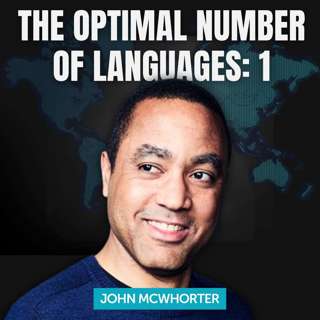
#142 Classic episode – John McWhorter on why the optimal number of languages might be one, and other provocative claims about language

#142 Classic episode – John McWhorter on why the optimal number of languages might be one, and other provocative claims about language

John McWhorter is a linguistics professor at Columbia University specialising in research on creole languages. He's also a content-producing machine, never afraid to give his frank opinion on anything...

6 Jan 1h 35min
2025 Highlight-o-thon: Oops! All Bests

2025 Highlight-o-thon: Oops! All Bests

It’s that magical time of year once again — highlightapalooza! Stick around for one top bit from each episode we recorded this year, including:Kyle Fish explaining how Anthropic’s AI Claude descends i...

29 Dec 20251h 40min

#232 – Andreas Mogensen on what we owe 'philosophical Vulcans' and unconscious beings

#232 – Andreas Mogensen on what we owe 'philosophical Vulcans' and unconscious beings

Most debates about the moral status of AI systems circle the same question: is there something that it feels like to be them? But what if that’s the wrong question to ask? Andreas Mogensen — a senior ...

19 Dec 20252h 37min
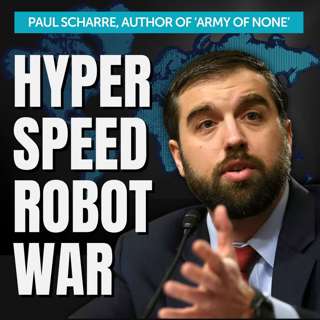
#231 – Paul Scharre on how AI-controlled robots will and won't change war

#231 – Paul Scharre on how AI-controlled robots will and won't change war

In 1983, Stanislav Petrov, a Soviet lieutenant colonel, sat in a bunker watching a red screen flash “MISSILE LAUNCH.” Protocol demanded he report it to superiors, which would very likely trigger a ret...

17 Dec 20252h 45min
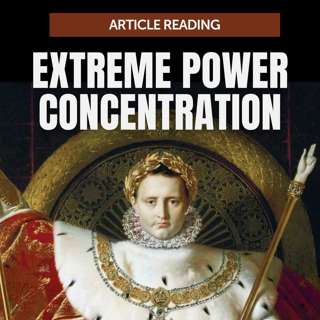
AI might let a few people control everything — permanently (article by Rose Hadshar)

AI might let a few people control everything — permanently (article by Rose Hadshar)

Power is already concentrated today: over 800 million people live on less than $3 a day, the three richest men in the world are worth over $1 trillion, and almost six billion people live in countries ...

12 Dec 20251h
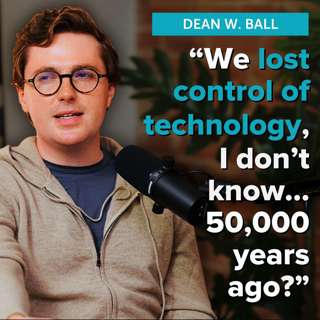
#230 – Dean Ball on how AI is a huge deal — but we shouldn’t regulate it yet

#230 – Dean Ball on how AI is a huge deal — but we shouldn’t regulate it yet

Former White House staffer Dean Ball thinks it's very likely some form of 'superintelligence' arrives in under 20 years. He thinks AI being used for bioweapon research is "a real threat model, obvious...

10 Dec 20252h 54min

#229 – Marius Hobbhahn on the race to solve AI scheming before models go superhuman

#229 – Marius Hobbhahn on the race to solve AI scheming before models go superhuman

We often worry about AI models “hallucinating” or making honest mistakes. But what happens when a model knows the truth, but decides to deceive you anyway to achieve a goal of its own? This isn’t sci-...

3 Dec 20253h 3min
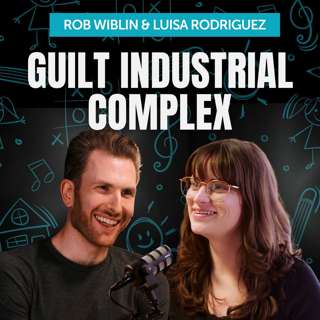
Rob & Luisa chat kids, the 2016 fertility crash, and how the 50s invented parenting that makes us miserable

Rob & Luisa chat kids, the 2016 fertility crash, and how the 50s invented parenting that makes us miserable

Global fertility rates aren’t just falling: the rate of decline is accelerating. From 2006 to 2016, fertility dropped gradually, but since 2016 the rate of decline has increased 4.5-fold. In many weal...

25 Nov 20251h 59min

Populärt inom Utbildning

historiepodden-se
rss-bara-en-till-om-missbruk-medberoende-2
det-skaver
nu-blir-det-historia
sektledare
harrisons-dramatiska-historia
not-fanny-anymore
johannes-hansen-podcast
rss-viktmedicinpodden
roda-vita-rosen
rss-sjalsligt-avkladd
allt-du-velat-veta
sa-in-i-sjalen
rss-beratta-alltid-det-har
rss-max-tant-med-max-villman
i-vantan-pa-katastrofen
alska-oss
rikatillsammans-om-privatekonomi-rikedom-i-livet
sektpodden
polisutbildningspodden