#131 – Lewis Dartnell on getting humanity to bounce back faster in a post-apocalyptic world

#131 – Lewis Dartnell on getting humanity to bounce back faster in a post-apocalyptic world

“We’re leaving these 16 contestants on an island with nothing but what they can scavenge from an abandoned factory and apartment block. Over the next 365 days, they’ll try to rebuild as much of civilisation as they can — from glass, to lenses, to microscopes. This is: The Knowledge!”

If you were a contestant on such a TV show, you'd love to have a guide to how basic things you currently take for granted are done — how to grow potatoes, fire bricks, turn wood to charcoal, find acids and alkalis, and so on.

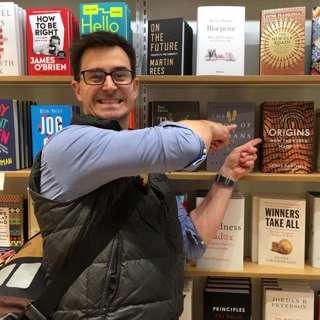
Today’s guest Lewis Dartnell has gone as far compiling this information as anyone has with his bestselling book The Knowledge: How to Rebuild Civilization in the Aftermath of a Cataclysm.

Links to learn more, summary and full transcript.

But in the aftermath of a nuclear war or incredibly deadly pandemic that kills most people, many of the ways we do things today will be impossible — and even some of the things people did in the past, like collect coal from the surface of the Earth, will be impossible the second time around.

As Lewis points out, there’s “no point telling this band of survivors how to make something ultra-efficient or ultra-useful or ultra-capable if it's just too damned complicated to build in the first place. You have to start small and then level up, pull yourself up by your own bootstraps.”

So it might sound good to tell people to build solar panels — they’re a wonderful way of generating electricity. But the photovoltaic cells we use today need pure silicon, and nanoscale manufacturing — essentially the same technology as microchips used in a computer — so actually making solar panels would be incredibly difficult.

Instead, you’d want to tell our group of budding engineers to use more appropriate technologies like solar concentrators that use nothing more than mirrors — which turn out to be relatively easy to make.

A disaster that unravels the complex way we produce goods in the modern world is all too possible. Which raises the question: why not set dozens of people to plan out exactly what any survivors really ought to do if they need to support themselves and rebuild civilisation? Such a guide could then be translated and distributed all around the world.

The goal would be to provide the best information to speed up each of the many steps that would take survivors from rubbing sticks together in the wilderness to adjusting a thermostat in their comfy apartments.

This is clearly not a trivial task. Lewis's own book (at 300 pages) only scratched the surface of the most important knowledge humanity has accumulated, relegating all of mathematics to a single footnote.

And the ideal guide would offer pretty different advice depending on the scenario. Are survivors dealing with a radioactive ice age following a nuclear war? Or is it an eerily intact but near-empty post-pandemic world with mountains of goods to scavenge from the husks of cities?

As a brand-new parent, Lewis couldn’t do one of our classic three- or four-hour episodes — so this is an unusually snappy one-hour interview, where Rob and Lewis are joined by Luisa Rodriguez to continue the conversation from her episode of the show last year.

Chapters:

  • Rob’s intro (00:00:00)
  • The interview begins (00:00:59)
  • The biggest impediments to bouncing back (00:03:18)
  • Can we do a serious version of The Knowledge? (00:14:58)
  • Recovering without much coal or oil (00:29:56)
  • Most valuable pro-resilience adjustments we can make today (00:40:23)
  • Feeding the Earth in disasters (00:47:45)
  • The reality of humans trying to actually do this (00:53:54)
  • Most exciting recent findings in astrobiology (01:01:00)
  • Rob’s outro (01:03:37)

Producer: Keiran Harris
Audio mastering: Ben Cordell
Transcriptions: Katy Moore

Avsnitt(332)

#145 Classic episode – Christopher Brown on why slavery abolition wasn't inevitable

#145 Classic episode – Christopher Brown on why slavery abolition wasn't inevitable

In many ways, humanity seems to have become more humane and inclusive over time. While there’s still a lot of progress to be made, campaigns to give people of different genders, races, sexualities, et...

20 Jan 2h 56min
#233 – James Smith on how to prevent a mirror life catastrophe

#233 – James Smith on how to prevent a mirror life catastrophe

When James Smith first heard about mirror bacteria, he was sceptical. But within two weeks, he’d dropped everything to work on it full time, considering it the worst biothreat that he’d seen described...

13 Jan 2h 9min
#144 Classic episode – Athena Aktipis on why cancer is a fundamental universal phenomena

#144 Classic episode – Athena Aktipis on why cancer is a fundamental universal phenomena

What’s the opposite of cancer? If you answered “cure,” “antidote,” or “antivenom” — you’ve obviously been reading the antonym section at www.merriam-webster.com/thesaurus/cancer.But today’s guest Athe...

9 Jan 3h 30min
#142 Classic episode – John McWhorter on why the optimal number of languages might be one, and other provocative claims about language

#142 Classic episode – John McWhorter on why the optimal number of languages might be one, and other provocative claims about language

John McWhorter is a linguistics professor at Columbia University specialising in research on creole languages. He's also a content-producing machine, never afraid to give his frank opinion on anything...

6 Jan 1h 35min
2025 Highlight-o-thon: Oops! All Bests

2025 Highlight-o-thon: Oops! All Bests

It’s that magical time of year once again — highlightapalooza! Stick around for one top bit from each episode we recorded this year, including:Kyle Fish explaining how Anthropic’s AI Claude descends i...

29 Dec 20251h 40min

#232 – Andreas Mogensen on what we owe 'philosophical Vulcans' and unconscious beings

#232 – Andreas Mogensen on what we owe 'philosophical Vulcans' and unconscious beings

Most debates about the moral status of AI systems circle the same question: is there something that it feels like to be them? But what if that’s the wrong question to ask? Andreas Mogensen — a senior ...

19 Dec 20252h 37min
#231 – Paul Scharre on how AI-controlled robots will and won't change war

#231 – Paul Scharre on how AI-controlled robots will and won't change war

In 1983, Stanislav Petrov, a Soviet lieutenant colonel, sat in a bunker watching a red screen flash “MISSILE LAUNCH.” Protocol demanded he report it to superiors, which would very likely trigger a ret...

17 Dec 20252h 45min
AI might let a few people control everything — permanently (article by Rose Hadshar)

AI might let a few people control everything — permanently (article by Rose Hadshar)

Power is already concentrated today: over 800 million people live on less than $3 a day, the three richest men in the world are worth over $1 trillion, and almost six billion people live in countries ...

12 Dec 20251h

Populärt inom Utbildning

rss-bara-en-till-om-missbruk-medberoende-2
historiepodden-se
det-skaver
nu-blir-det-historia
harrisons-dramatiska-historia
johannes-hansen-podcast
allt-du-velat-veta
not-fanny-anymore
rss-viktmedicinpodden
rss-foraldramotet-bring-lagercrantz
roda-vita-rosen
sektledare
i-vantan-pa-katastrofen
sa-in-i-sjalen
rss-max-tant-med-max-villman
alska-oss
rss-sjalsligt-avkladd
rss-om-vi-ska-vara-arliga
rss-basta-livet
sex-pa-riktigt-med-marika-smith