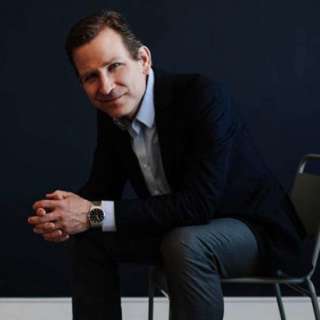
#154 - Rohin Shah on DeepMind and trying to fairly hear out both AI doomers and doubters

#154 - Rohin Shah on DeepMind and trying to fairly hear out both AI doomers and doubters

Can there be a more exciting and strange place to work today than a leading AI lab? Your CEO has said they're worried your research could cause human extinction. The government is setting up meetings to discuss how this outcome can be avoided. Some of your colleagues think this is all overblown; others are more anxious still.

Today's guest — machine learning researcher Rohin Shah — goes into the Google DeepMind offices each day with that peculiar backdrop to his work.

Links to learn more, summary and full transcript.

He's on the team dedicated to maintaining 'technical AI safety' as these models approach and exceed human capabilities: basically that the models help humanity accomplish its goals without flipping out in some dangerous way. This work has never seemed more important.

In the short-term it could be the key bottleneck to deploying ML models in high-stakes real-life situations. In the long-term, it could be the difference between humanity thriving and disappearing entirely.

For years Rohin has been on a mission to fairly hear out people across the full spectrum of opinion about risks from artificial intelligence -- from doomers to doubters -- and properly understand their point of view. That makes him unusually well placed to give an overview of what we do and don't understand. He has landed somewhere in the middle — troubled by ways things could go wrong, but not convinced there are very strong reasons to expect a terrible outcome.

Today's conversation is wide-ranging and Rohin lays out many of his personal opinions to host Rob Wiblin, including:

  • What he sees as the strongest case both for and against slowing down the rate of progress in AI research.
  • Why he disagrees with most other ML researchers that training a model on a sensible 'reward function' is enough to get a good outcome.
  • Why he disagrees with many on LessWrong that the bar for whether a safety technique is helpful is “could this contain a superintelligence.”
  • That he thinks nobody has very compelling arguments that AI created via machine learning will be dangerous by default, or that it will be safe by default. He believes we just don't know.
  • That he understands that analogies and visualisations are necessary for public communication, but is sceptical that they really help us understand what's going on with ML models, because they're different in important ways from every other case we might compare them to.
  • Why he's optimistic about DeepMind’s work on scalable oversight, mechanistic interpretability, and dangerous capabilities evaluations, and what each of those projects involves.
  • Why he isn't inherently worried about a future where we're surrounded by beings far more capable than us, so long as they share our goals to a reasonable degree.
  • Why it's not enough for humanity to know how to align AI models — it's essential that management at AI labs correctly pick which methods they're going to use and have the practical know-how to apply them properly.
  • Three observations that make him a little more optimistic: humans are a bit muddle-headed and not super goal-orientated; planes don't crash; and universities have specific majors in particular subjects.
  • Plenty more besides.

Get this episode by subscribing to our podcast on the world’s most pressing problems and how to solve them: type ‘80,000 Hours’ into your podcasting app. Or read the transcript below.

Producer: Keiran Harris

Audio mastering: Milo McGuire, Dominic Armstrong, and Ben Cordell

Transcriptions: Katy Moore

Avsnitt(325)

#12 - Beth Cameron works to stop you dying in a pandemic. Here’s what keeps her up at night.

#12 - Beth Cameron works to stop you dying in a pandemic. Here’s what keeps her up at night.

“When you're in the middle of a crisis and you have to ask for money, you're already too late.” That’s Dr Beth Cameron, who leads Global Biological Policy and Programs at the Nuclear Threat Initiative...

25 Okt 20171h 45min

#11 - Spencer Greenberg on speeding up social science 10-fold & why plenty of startups cause harm

#11 - Spencer Greenberg on speeding up social science 10-fold & why plenty of startups cause harm

Do most meat eaters think it’s wrong to hurt animals? Do Americans think climate change is likely to cause human extinction? What is the best, state-of-the-art therapy for depression? How can we make ...

17 Okt 20171h 29min

#10 - Nick Beckstead on how to spend billions of dollars preventing human extinction

#10 - Nick Beckstead on how to spend billions of dollars preventing human extinction

What if you were in a position to give away billions of dollars to improve the world? What would you do with it? This is the problem facing Program Officers at the Open Philanthropy Project - people l...

11 Okt 20171h 51min

#9 - Christine Peterson on how insecure computers could lead to global disaster, and how to fix it

#9 - Christine Peterson on how insecure computers could lead to global disaster, and how to fix it

Take a trip to Silicon Valley in the 70s and 80s, when going to space sounded like a good way to get around environmental limits, people started cryogenically freezing themselves, and nanotechnology l...

4 Okt 20171h 45min

#8 - Lewis Bollard on how to end factory farming in our lifetimes

#8 - Lewis Bollard on how to end factory farming in our lifetimes

Every year tens of billions of animals are raised in terrible conditions in factory farms before being killed for human consumption. Over the last two years Lewis Bollard – Project Officer for Farm An...

27 Sep 20173h 16min

#7 - Julia Galef on making humanity more rational, what EA does wrong, and why Twitter isn’t all bad

#7 - Julia Galef on making humanity more rational, what EA does wrong, and why Twitter isn’t all bad

The scientific revolution in the 16th century was one of the biggest societal shifts in human history, driven by the discovery of new and better methods of figuring out who was right and who was wrong...

13 Sep 20171h 14min

#6 - Toby Ord on why the long-term future matters more than anything else & what to do about it

#6 - Toby Ord on why the long-term future matters more than anything else & what to do about it

Of all the people whose well-being we should care about, only a small fraction are alive today. The rest are members of future generations who are yet to exist. Whether they’ll be born into a world th...

6 Sep 20172h 8min

#5 - Alex Gordon-Brown on how to donate millions in your 20s working in quantitative trading

#5 - Alex Gordon-Brown on how to donate millions in your 20s working in quantitative trading

Quantitative financial trading is one of the highest paying parts of the world’s highest paying industry. 25 to 30 year olds with outstanding maths skills can earn millions a year in an obscure set of...

28 Aug 20171h 45min

Populärt inom Utbildning

rss-bara-en-till-om-missbruk-medberoende-2
historiepodden-se
det-skaver
alska-oss
nu-blir-det-historia
harrisons-dramatiska-historia
not-fanny-anymore
sektledare
johannes-hansen-podcast
roda-vita-rosen
allt-du-velat-veta
rss-viktmedicinpodden
sa-in-i-sjalen
i-vantan-pa-katastrofen
rss-max-tant-med-max-villman
rss-basta-livet
rss-sjalsligt-avkladd
rss-om-vi-ska-vara-arliga
vi-gar-till-historien
rss-pa-insidan-med-bjorn-rudman