#167 – Seren Kell on the research gaps holding back alternative proteins from mass adoption

#167 – Seren Kell on the research gaps holding back alternative proteins from mass adoption

"There have been literally thousands of years of breeding and living with animals to optimise these kinds of problems. But because we're just so early on with alternative proteins and there's so much white space, it's actually just really exciting to know that we can keep on innovating and being far more efficient than this existing technology — which, fundamentally, is just quite inefficient. You're feeding animals a bunch of food to then extract a small fraction of their biomass to then eat that.

Animal agriculture takes up 83% of farmland, but produces just 18% of food calories. So the current system just is so wasteful. And the limiting factor is that you're just growing a bunch of food to then feed a third of the world's crops directly to animals, where the vast majority of those calories going in are lost to animals existing." — Seren Kell

Links to learn more, summary and full transcript.

In today’s episode, host Luisa Rodriguez interviews Seren Kell — Senior Science and Technology Manager at the Good Food Institute Europe — about making alternative proteins as tasty, cheap, and convenient as traditional meat, dairy, and egg products.

They cover:

  • The basic case for alternative proteins, and why they’re so hard to make
  • Why fermentation is a surprisingly promising technology for creating delicious alternative proteins
  • The main scientific challenges that need to be solved to make fermentation even more useful
  • The progress that’s been made on the cultivated meat front, and what it will take to make cultivated meat affordable
  • How GFI Europe is helping with some of these challenges
  • How people can use their careers to contribute to replacing factory farming with alternative proteins
  • The best part of Seren’s job
  • Plenty more

Chapters:

  • Cold open (00:00:00)
  • Luisa’s intro (00:01:08)
  • The interview begins (00:02:22)
  • Why alternative proteins? (00:02:36)
  • What makes alternative proteins so hard to make? (00:11:30)
  • Why fermentation is so exciting (00:24:23)
  • The technical challenges involved in scaling fermentation (00:44:38)
  • Progress in cultivated meat (01:06:04)
  • GFI Europe’s work (01:32:47)
  • Careers (01:45:10)
  • The best part of Seren’s job (01:50:07)


Producer and editor: Keiran Harris
Audio Engineering Lead: Ben Cordell
Technical editing: Dominic Armstrong and Milo McGuire
Additional content editing: Luisa Rodriguez and Katy Moore
Transcriptions: Katy Moore

Avsnitt(325)

#79 – A.J. Jacobs on radical honesty, following the whole Bible, and reframing global problems as puzzles

#79 – A.J. Jacobs on radical honesty, following the whole Bible, and reframing global problems as puzzles

Today’s guest, New York Times bestselling author A.J. Jacobs, always hated Judge Judy. But after he found out that she was his seventh cousin, he thought, "You know what? She's not so bad." Hijacking ...

1 Juni 20202h 38min

#78 – Danny Hernandez on forecasting and the drivers of AI progress

#78 – Danny Hernandez on forecasting and the drivers of AI progress

Companies use about 300,000 times more computation training the best AI systems today than they did in 2012 and algorithmic innovations have also made them 25 times more efficient at the same tasks.Th...

22 Maj 20202h 11min
#77 – Marc Lipsitch on whether we're winning or losing against COVID-19

#77 – Marc Lipsitch on whether we're winning or losing against COVID-19

In March Professor Marc Lipsitch — Director of Harvard's Center for Communicable Disease Dynamics — abruptly found himself a global celebrity, his social media following growing 40-fold and journalist...

18 Maj 20201h 37min

Article: Ways people trying to do good accidentally make things worse, and how to avoid them

Article: Ways people trying to do good accidentally make things worse, and how to avoid them

Today’s release is the second experiment in making audio versions of our articles. The first was a narration of Greg Lewis’ terrific problem profile on ‘Reducing global catastrophic biological risks...

12 Maj 202026min
#76 – Tara Kirk Sell on misinformation, who's done well and badly, & what to reopen first

#76 – Tara Kirk Sell on misinformation, who's done well and badly, & what to reopen first

Amid a rising COVID-19 death toll, and looming economic disaster, we’ve been looking for good news — and one thing we're especially thankful for is the Johns Hopkins Center for Health Security (CHS). ...

8 Maj 20201h 53min
#75 – Michelle Hutchinson on what people most often ask 80,000 Hours

#75 – Michelle Hutchinson on what people most often ask 80,000 Hours

Since it was founded, 80,000 Hours has done one-on-one calls to supplement our online content and offer more personalised advice. We try to help people get clear on their most plausible paths, the key...

28 Apr 20202h 13min
#74 – Dr Greg Lewis on COVID-19 & catastrophic biological risks

#74 – Dr Greg Lewis on COVID-19 & catastrophic biological risks

Our lives currently revolve around the global emergency of COVID-19; you’re probably reading this while confined to your house, as the death toll from the worst pandemic since 1918 continues to rise. ...

17 Apr 20202h 37min
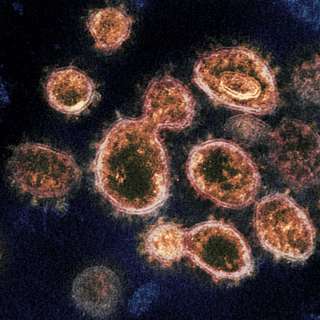
Article: Reducing global catastrophic biological risks

Article: Reducing global catastrophic biological risks

In a few days we'll be putting out a conversation with Dr Greg Lewis, who studies how to prevent global catastrophic biological risks at Oxford's Future of Humanity Institute. Greg also wrote a new ...

15 Apr 20201h 4min

Populärt inom Utbildning

rss-bara-en-till-om-missbruk-medberoende-2
historiepodden-se
det-skaver
alska-oss
nu-blir-det-historia
harrisons-dramatiska-historia
not-fanny-anymore
johannes-hansen-podcast
sektledare
allt-du-velat-veta
rss-viktmedicinpodden
roda-vita-rosen
sa-in-i-sjalen
i-vantan-pa-katastrofen
rss-basta-livet
rss-max-tant-med-max-villman
rss-sjalsligt-avkladd
rikatillsammans-om-privatekonomi-rikedom-i-livet
rss-om-vi-ska-vara-arliga
rss-relationsrevolutionen