
#111 Classic episode – Mushtaq Khan on using institutional economics to predict effective government reforms

#111 Classic episode – Mushtaq Khan on using institutional economics to predict effective government reforms

If you’re living in the Niger Delta in Nigeria, your best bet at a high-paying career is probably ‘artisanal refining’ — or, in plain language, stealing oil from pipelines.

The resulting oil spills damage the environment and cause severe health problems, but the Nigerian government has continually failed in their attempts to stop this theft.

They send in the army, and the army gets corrupted. They send in enforcement agencies, and the enforcement agencies get corrupted. What’s happening here?

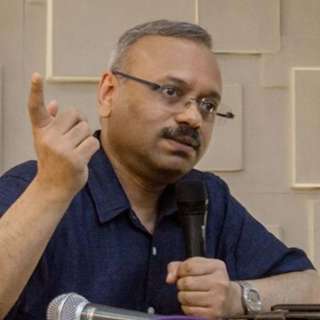
According to Mushtaq Khan, economics professor at SOAS University of London, this is a classic example of ‘networked corruption’. Everyone in the community is benefiting from the criminal enterprise — so much so that the locals would prefer civil war to following the law. It pays vastly better than other local jobs, hotels and restaurants have formed around it, and houses are even powered by the electricity generated from the oil.

Rebroadcast: this episode was originally released in September 2021.

Links to learn more, summary, and full transcript.

In today’s episode, Mushtaq elaborates on the models he uses to understand these problems and make predictions he can test in the real world.

Some of the most important factors shaping the fate of nations are their structures of power: who is powerful, how they are organized, which interest groups can pull in favours with the government, and the constant push and pull between the country’s rulers and its ruled. While traditional economic theory has relatively little to say about these topics, institutional economists like Mushtaq have a lot to say, and participate in lively debates about which of their competing ideas best explain the world around us.

The issues at stake are nothing less than why some countries are rich and others are poor, why some countries are mostly law abiding while others are not, and why some government programmes improve public welfare while others just enrich the well connected.

Mushtaq’s specialties are anti-corruption and industrial policy, where he believes mainstream theory and practice are largely misguided. To root out fraud, aid agencies try to impose institutions and laws that work in countries like the U.K. today. Everyone nods their heads and appears to go along, but years later they find nothing has changed, or worse — the new anti-corruption laws are mostly just used to persecute anyone who challenges the country’s rulers.

As Mushtaq explains, to people who specialise in understanding why corruption is ubiquitous in some countries but not others, this is entirely predictable. Western agencies imagine a situation where most people are law abiding, but a handful of selfish fat cats are engaging in large-scale graft. In fact in the countries they’re trying to change everyone is breaking some rule or other, or participating in so-called ‘corruption’, because it’s the only way to get things done and always has been.

Mushtaq’s rule of thumb is that when the locals most concerned with a specific issue are invested in preserving a status quo they’re participating in, they almost always win out.

To actually reduce corruption, countries like his native Bangladesh have to follow the same gradual path the U.K. once did: find organizations that benefit from rule-abiding behaviour and are selfishly motivated to promote it, and help them police their peers.

Trying to impose a new way of doing things from the top down wasn’t how Europe modernised, and it won’t work elsewhere either.

In cases like oil theft in Nigeria, where no one wants to follow the rules, Mushtaq says corruption may be impossible to solve directly. Instead you have to play a long game, bringing in other employment opportunities, improving health services, and deploying alternative forms of energy — in the hope that one day this will give people a viable alternative to corruption.

In this extensive interview Rob and Mushtaq cover this and much more, including:

  • How does one test theories like this?
  • Why are companies in some poor countries so much less productive than their peers in rich countries?
  • Have rich countries just legalized the corruption in their societies?
  • What are the big live debates in institutional economics?
  • Should poor countries protect their industries from foreign competition?
  • Where has industrial policy worked, and why?
  • How can listeners use these theories to predict which policies will work in their own countries?

Producer: Keiran Harris
Audio mastering: Ben Cordell
Transcriptions: Sofia Davis-Fogel

Det här avsnittet är hämtat från ett öppet RSS-flöde och publiceras inte av Podme. Det kan innehålla reklam.

Avsnitt(340)

We can guess what intergalactic war would look like. And strangely, it matters.

We can guess what intergalactic war would look like. And strangely, it matters.

Intergalactic war is probably billions of years away — yet physics can already tell us how it ends. And strangely that conclusion is relevant to decisions people have to make today.In this video, Rob ...

18 Juni 15min

How AI could create the world’s biggest problems (article by Zershaaneh Qureshi)

How AI could create the world’s biggest problems (article by Zershaaneh Qureshi)

Imagine you’re living 15,000 years ago. Your people are hunter-gatherers and you sleep under the stars. If someone told you humans would one day build cities with millions of people, fly through the a...

11 Juni 1h 29min

What it's really like to run AGI safety at Google DeepMind (and where I disagree with 'doomers') | Rohin Shah

What it's really like to run AGI safety at Google DeepMind (and where I disagree with 'doomers') | Rohin Shah

Most people working on AI safety think without a massive effort AI systems will probably end up with goals catastrophically different from humanity’s. Today’s guest, Rohin Shah — head of AGI Safety an...

2 Juni 2h 48min

What makes for a dream job? | Benjamin Todd

What makes for a dream job? | Benjamin Todd

What actually makes a job fulfilling? It's not what most career advice tells you. "Follow your passion" sounds inspiring, but it's misleading — and the research backs that up.Drawing on hundreds of st...

28 Maj 28min

We’re updating our career advice for the strangest time in history | Benjamin Todd, author of 80,000 Hours

We’re updating our career advice for the strangest time in history | Benjamin Todd, author of 80,000 Hours

The average career is 80,000 hours long. With AI advancing so rapidly, the hours you have left in your career matter more than ever.Some leading AI researchers think there’s a 10% chance that AI syste...

26 Maj 1h 6min

Can AIs already start 'rogue deployments' inside AI companies? (Landmark new METR report)

Can AIs already start 'rogue deployments' inside AI companies? (Landmark new METR report)

A red-teamer was embedded inside Anthropic for three weeks, told to imagine he was an evil Claude, and asked to figure out how to launch a ‘rogue AI deployment’ without getting caught. It’s one part o...

20 Maj 20min

#243 – 'Godfather of AI' Yoshua Bengio: "I now see a path" to safe superintelligent AI

#243 – 'Godfather of AI' Yoshua Bengio: "I now see a path" to safe superintelligent AI

The co-inventor of modern AI and the most cited living scientist believes he's figured out how to ensure AI is honest, incapable of deception, and never goes rogue. Yoshua Bengio – Turing Award Winner...

7 Maj 2h 35min

'95% of AI Pilots Fail': The hidden agenda behind the viral stat that misled millions

'95% of AI Pilots Fail': The hidden agenda behind the viral stat that misled millions

You might have heard that '95% of corporate AI pilots' are failing. It was one of the most widely cited AI statistics of 2025, parroted by media outlets everywhere. It helped trigger a Nasdaq selloff ...

28 Apr 10min

Populärt inom Utbildning

rss-bara-en-till-om-missbruk-medberoende-2
historiepodden-se
det-skaver
nu-blir-det-historia
harrisons-dramatiska-historia
not-fanny-anymore
sektledare
rss-viktmedicinpodden
johannes-hansen-podcast
roda-vita-rosen
allt-du-velat-veta
i-vantan-pa-katastrofen
sa-in-i-sjalen
rikatillsammans-om-privatekonomi-rikedom-i-livet
rss-foraldramotet-bring-lagercrantz
rss-ar-det-rimligt
rss-sjalsligt-avkladd
rss-relationsrevolutionen
sex-pa-riktigt-med-marika-smith
rss-max-tant-med-max-villman