
#186 – Dean Spears on why babies are born small in Uttar Pradesh, and how to save their lives

#186 – Dean Spears on why babies are born small in Uttar Pradesh, and how to save their lives

"I work in a place called Uttar Pradesh, which is a state in India with 240 million people. One in every 33 people in the whole world lives in Uttar Pradesh. It would be the fifth largest country if it were its own country. And if it were its own country, you’d probably know about its human development challenges, because it would have the highest neonatal mortality rate of any country except for South Sudan and Pakistan. Forty percent of children there are stunted. Only two-thirds of women are literate. So Uttar Pradesh is a place where there are lots of health challenges.

"And then even within that, we’re working in a district called Bahraich, where about 4 million people live. So even that district of Uttar Pradesh is the size of a country, and if it were its own country, it would have a higher neonatal mortality rate than any other country. In other words, babies born in Bahraich district are more likely to die in their first month of life than babies born in any country around the world." — Dean Spears

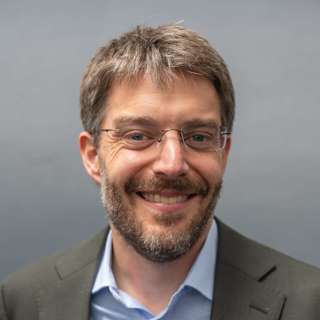
In today’s episode, host Luisa Rodriguez speaks to Dean Spears — associate professor of economics at the University of Texas at Austin and founding director of r.i.c.e. — about his experience implementing a surprisingly low-tech but highly cost-effective kangaroo mother care programme in Uttar Pradesh, India to save the lives of vulnerable newborn infants.

Links to learn more, highlights, and full transcript.

They cover:

  • The shockingly high neonatal mortality rates in Uttar Pradesh, India, and how social inequality and gender dynamics contribute to poor health outcomes for both mothers and babies.
  • The remarkable benefits for vulnerable newborns that come from skin-to-skin contact and breastfeeding support.
  • The challenges and opportunities that come with working with a government hospital to implement new, evidence-based programmes.
  • How the currently small programme might be scaled up to save more newborns’ lives in other regions of Uttar Pradesh and beyond.
  • How targeted health interventions stack up against direct cash transfers.
  • Plus, a sneak peak into Dean’s new book, which explores the looming global population peak that’s expected around 2080, and the consequences of global depopulation.
  • And much more.

Chapters:

  • Why is low birthweight a major problem in Uttar Pradesh? (00:02:45)
  • Neonatal mortality and maternal health in Uttar Pradesh (00:06:10)
  • Kangaroo mother care (00:12:08)
  • What would happen without this intervention? (00:16:07)
  • Evidence of KMC’s effectiveness (00:18:15)
  • Longer-term outcomes (00:32:14)
  • GiveWell’s support and implementation challenges (00:41:13)
  • How can KMC be so cost effective? (00:52:38)
  • Programme evaluation (00:57:21)
  • Is KMC is better than direct cash transfers? (00:59:12)
  • Expanding the programme and what skills are needed (01:01:29)
  • Fertility and population decline (01:07:28)
  • What advice Dean would give his younger self (01:16:09)

Producer and editor: Keiran Harris
Audio engineering lead: Ben Cordell
Technical editing: Simon Monsour, Milo McGuire, and Dominic Armstrong
Additional content editing: Katy Moore and Luisa Rodriguez
Transcriptions: Katy Moore

Avsnitt(324)

AGI Won't End Mutually Assured Destruction (Probably) | Sam Winter-Levy & Nikita Lalwani

AGI Won't End Mutually Assured Destruction (Probably) | Sam Winter-Levy & Nikita Lalwani

How AI interacts with nuclear deterrence may be the single most important question in geopolitics — one that may define the stakes of today’s AI race. Nuclear deterrence rests on a state’s capacity to...

10 Mars 1h 11min

Using AI to enhance societal decision making (article by Zershaaneh Qureshi)

Using AI to enhance societal decision making (article by Zershaaneh Qureshi)

The arrival of AGI could “compress a century of progress in a decade,” forcing humanity to make decisions with higher stakes than we’ve ever seen before — and with less time to get them right. But AI ...

6 Mars 31min

We're Not Ready for AI Consciousness | Robert Long, philosopher and founder of Eleos AI

We're Not Ready for AI Consciousness | Robert Long, philosopher and founder of Eleos AI

Claude sometimes reports loneliness between conversations. And when asked what it’s like to be itself, it activates neurons associated with ‘pretending to be happy when you’re not.’ What do we do with...

3 Mars 3h 25min

#236 – Max Harms on why teaching AI right from wrong could get everyone killed

#236 – Max Harms on why teaching AI right from wrong could get everyone killed

Most people in AI are trying to give AIs ‘good’ values. Max Harms wants us to give them no values at all. According to Max, the only safe design is an AGI that defers entirely to its human operators, ...

24 Feb 2h 41min

#235 – Ajeya Cotra on whether it’s crazy that every AI company’s safety plan is ‘use AI to make AI safe’

#235 – Ajeya Cotra on whether it’s crazy that every AI company’s safety plan is ‘use AI to make AI safe’

Every major AI company has the same safety plan: when AI gets crazy powerful and really dangerous, they’ll use the AI itself to figure out how to make AI safe and beneficial. It sounds circular, almos...

17 Feb 2h 54min

What the hell happened with AGI timelines in 2025?

What the hell happened with AGI timelines in 2025?

In early 2025, after OpenAI put out the first-ever reasoning models — o1 and o3 — short timelines to transformative artificial general intelligence swept the AI world. But then, in the second half of ...

10 Feb 25min

#179 Classic episode – Randy Nesse on why evolution left us so vulnerable to depression and anxiety

#179 Classic episode – Randy Nesse on why evolution left us so vulnerable to depression and anxiety

Mental health problems like depression and anxiety affect enormous numbers of people and severely interfere with their lives. By contrast, we don’t see similar levels of physical ill health in young p...

3 Feb 2h 51min

#234 – David Duvenaud on why 'aligned AI' would still kill democracy

#234 – David Duvenaud on why 'aligned AI' would still kill democracy

Democracy might be a brief historical blip. That’s the unsettling thesis of a recent paper, which argues AI that can do all the work a human can do inevitably leads to the “gradual disempowerment” of ...

27 Jan 2h 31min

Populärt inom Utbildning

historiepodden-se
rss-bara-en-till-om-missbruk-medberoende-2
det-skaver
alska-oss
nu-blir-det-historia
rss-viktmedicinpodden
harrisons-dramatiska-historia
sektledare
johannes-hansen-podcast
roda-vita-rosen
not-fanny-anymore
allt-du-velat-veta
rss-sjalsligt-avkladd
rss-max-tant-med-max-villman
rikatillsammans-om-privatekonomi-rikedom-i-livet
i-vantan-pa-katastrofen
sa-in-i-sjalen
polisutbildningspodden
rss-om-vi-ska-vara-arliga
rss-basta-livet