
#186 – Dean Spears on why babies are born small in Uttar Pradesh, and how to save their lives

#186 – Dean Spears on why babies are born small in Uttar Pradesh, and how to save their lives

"I work in a place called Uttar Pradesh, which is a state in India with 240 million people. One in every 33 people in the whole world lives in Uttar Pradesh. It would be the fifth largest country if it were its own country. And if it were its own country, you’d probably know about its human development challenges, because it would have the highest neonatal mortality rate of any country except for South Sudan and Pakistan. Forty percent of children there are stunted. Only two-thirds of women are literate. So Uttar Pradesh is a place where there are lots of health challenges.

"And then even within that, we’re working in a district called Bahraich, where about 4 million people live. So even that district of Uttar Pradesh is the size of a country, and if it were its own country, it would have a higher neonatal mortality rate than any other country. In other words, babies born in Bahraich district are more likely to die in their first month of life than babies born in any country around the world." — Dean Spears

In today’s episode, host Luisa Rodriguez speaks to Dean Spears — associate professor of economics at the University of Texas at Austin and founding director of r.i.c.e. — about his experience implementing a surprisingly low-tech but highly cost-effective kangaroo mother care programme in Uttar Pradesh, India to save the lives of vulnerable newborn infants.

Links to learn more, highlights, and full transcript.

They cover:

  • The shockingly high neonatal mortality rates in Uttar Pradesh, India, and how social inequality and gender dynamics contribute to poor health outcomes for both mothers and babies.
  • The remarkable benefits for vulnerable newborns that come from skin-to-skin contact and breastfeeding support.
  • The challenges and opportunities that come with working with a government hospital to implement new, evidence-based programmes.
  • How the currently small programme might be scaled up to save more newborns’ lives in other regions of Uttar Pradesh and beyond.
  • How targeted health interventions stack up against direct cash transfers.
  • Plus, a sneak peak into Dean’s new book, which explores the looming global population peak that’s expected around 2080, and the consequences of global depopulation.
  • And much more.

Chapters:

  • Why is low birthweight a major problem in Uttar Pradesh? (00:02:45)
  • Neonatal mortality and maternal health in Uttar Pradesh (00:06:10)
  • Kangaroo mother care (00:12:08)
  • What would happen without this intervention? (00:16:07)
  • Evidence of KMC’s effectiveness (00:18:15)
  • Longer-term outcomes (00:32:14)
  • GiveWell’s support and implementation challenges (00:41:13)
  • How can KMC be so cost effective? (00:52:38)
  • Programme evaluation (00:57:21)
  • Is KMC is better than direct cash transfers? (00:59:12)
  • Expanding the programme and what skills are needed (01:01:29)
  • Fertility and population decline (01:07:28)
  • What advice Dean would give his younger self (01:16:09)

Producer and editor: Keiran Harris
Audio engineering lead: Ben Cordell
Technical editing: Simon Monsour, Milo McGuire, and Dominic Armstrong
Additional content editing: Katy Moore and Luisa Rodriguez
Transcriptions: Katy Moore

Avsnitt(333)

#68 - Will MacAskill on the paralysis argument, whether we're at the hinge of history, & his new priorities

#68 - Will MacAskill on the paralysis argument, whether we're at the hinge of history, & his new priorities

You’re given a box with a set of dice in it. If you roll an even number, a person's life is saved. If you roll an odd number, someone else will die. Each time you shake the box you get $10. Should you...

24 Jan 20203h 25min
#44 Classic episode - Paul Christiano on finding real solutions to the AI alignment problem

#44 Classic episode - Paul Christiano on finding real solutions to the AI alignment problem

Rebroadcast: this episode was originally released in October 2018. Paul Christiano is one of the smartest people I know. After our first session produced such great material, we decided to do a seco...

15 Jan 20203h 51min
#33 Classic episode - Anders Sandberg on cryonics, solar flares, and the annual odds of nuclear war

#33 Classic episode - Anders Sandberg on cryonics, solar flares, and the annual odds of nuclear war

Rebroadcast: this episode was originally released in May 2018. Joseph Stalin had a life-extension program dedicated to making himself immortal. What if he had succeeded? According to Bryan Caplan ...

8 Jan 20201h 25min

#17 Classic episode - Will MacAskill on moral uncertainty, utilitarianism & how to avoid being a moral monster

#17 Classic episode - Will MacAskill on moral uncertainty, utilitarianism & how to avoid being a moral monster

Rebroadcast: this episode was originally released in January 2018. Immanuel Kant is a profoundly influential figure in modern philosophy, and was one of the earliest proponents for universal democracy...

31 Dec 20191h 52min

#67 – David Chalmers on the nature and ethics of consciousness

#67 – David Chalmers on the nature and ethics of consciousness

What is it like to be you right now? You're seeing this text on the screen, smelling the coffee next to you, and feeling the warmth of the cup. There’s a lot going on in your head — your conscious exp...

16 Dec 20194h 41min
#66 – Peter Singer on being provocative, effective altruism, & how his moral views have changed

#66 – Peter Singer on being provocative, effective altruism, & how his moral views have changed

In 1989, the professor of moral philosophy Peter Singer was all over the news for his inflammatory opinions about abortion. But the controversy stemmed from Practical Ethics — a book he’d actually rel...

5 Dec 20192h 1min
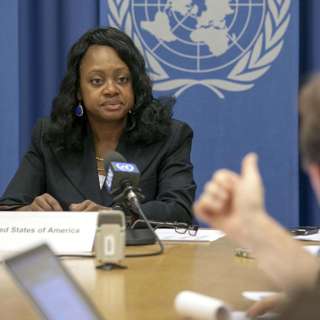
#65 – Ambassador Bonnie Jenkins on 8 years pursuing WMD arms control, & diversity in diplomacy

#65 – Ambassador Bonnie Jenkins on 8 years pursuing WMD arms control, & diversity in diplomacy

"…it started when the Soviet Union fell apart and there was a real desire to ensure security of nuclear materials and pathogens, and that scientists with [WMD-related] knowledge could get paid so that...

19 Nov 20191h 40min
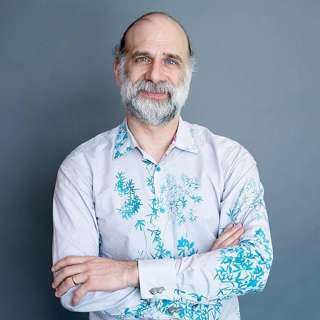
#64 – Bruce Schneier on how insecure electronic voting could break the United States — and surveillance without tyranny

#64 – Bruce Schneier on how insecure electronic voting could break the United States — and surveillance without tyranny

November 3 2020, 10:32PM: CNN, NBC, and FOX report that Donald Trump has narrowly won Florida, and with it, re-election.  November 3 2020, 11:46PM: The NY Times and Wall Street Journal report that so...

25 Okt 20192h 11min

Populärt inom Utbildning

historiepodden-se
rss-bara-en-till-om-missbruk-medberoende-2
det-skaver
nu-blir-det-historia
not-fanny-anymore
johannes-hansen-podcast
harrisons-dramatiska-historia
allt-du-velat-veta
rss-viktmedicinpodden
roda-vita-rosen
rss-foraldramotet-bring-lagercrantz
sektledare
i-vantan-pa-katastrofen
sa-in-i-sjalen
rss-max-tant-med-max-villman
rikatillsammans-om-privatekonomi-rikedom-i-livet
rss-sjalsligt-avkladd
sex-pa-riktigt-med-marika-smith
rss-traningsklubben
rss-dr-bjorklund