
#196 – Jonathan Birch on the edge cases of sentience and why they matter

#196 – Jonathan Birch on the edge cases of sentience and why they matter

"In the 1980s, it was still apparently common to perform surgery on newborn babies without anaesthetic on both sides of the Atlantic. This led to appalling cases, and to public outcry, and to campaigns to change clinical practice. And as soon as [some courageous scientists] looked for evidence, it showed that this practice was completely indefensible and then the clinical practice was changed. People don’t need convincing anymore that we should take newborn human babies seriously as sentience candidates. But the tale is a useful cautionary tale, because it shows you how deep that overconfidence can run and how problematic it can be. It just underlines this point that overconfidence about sentience is everywhere and is dangerous." —Jonathan Birch

In today’s episode, host Luisa Rodriguez speaks to Dr Jonathan Birch — philosophy professor at the London School of Economics — about his new book, The Edge of Sentience: Risk and Precaution in Humans, Other Animals, and AI. (Check out the free PDF version!)

Links to learn more, highlights, and full transcript.

They cover:

  • Candidates for sentience, such as humans with consciousness disorders, foetuses, neural organoids, invertebrates, and AIs
  • Humanity’s history of acting as if we’re sure that such beings are incapable of having subjective experiences — and why Jonathan thinks that that certainty is completely unjustified.
  • Chilling tales about overconfident policies that probably caused significant suffering for decades.
  • How policymakers can act ethically given real uncertainty.
  • Whether simulating the brain of the roundworm C. elegans or Drosophila (aka fruit flies) would create minds equally sentient to the biological versions.
  • How new technologies like brain organoids could replace animal testing, and how big the risk is that they could be sentient too.
  • Why Jonathan is so excited about citizens’ assemblies.
  • Jonathan’s conversation with the Dalai Lama about whether insects are sentient.
  • And plenty more.

Chapters:

  • Cold open (00:00:00)
  • Luisa’s intro (00:01:20)
  • The interview begins (00:03:04)
  • Why does sentience matter? (00:03:31)
  • Inescapable uncertainty about other minds (00:05:43)
  • The “zone of reasonable disagreement” in sentience research (00:10:31)
  • Disorders of consciousness: comas and minimally conscious states (00:17:06)
  • Foetuses and the cautionary tale of newborn pain (00:43:23)
  • Neural organoids (00:55:49)
  • AI sentience and whole brain emulation (01:06:17)
  • Policymaking at the edge of sentience (01:28:09)
  • Citizens’ assemblies (01:31:13)
  • The UK’s Sentience Act (01:39:45)
  • Ways Jonathan has changed his mind (01:47:26)
  • Careers (01:54:54)
  • Discussing animal sentience with the Dalai Lama (01:59:08)
  • Luisa’s outro (02:01:04)


Producer and editor: Keiran Harris
Audio engineering by Ben Cordell, Milo McGuire, Simon Monsour, and Dominic Armstrong
Additional content editing: Katy Moore and Luisa Rodriguez
Transcriptions: Katy Moore

Avsnitt(332)

#11 - Spencer Greenberg on speeding up social science 10-fold & why plenty of startups cause harm

#11 - Spencer Greenberg on speeding up social science 10-fold & why plenty of startups cause harm

Do most meat eaters think it’s wrong to hurt animals? Do Americans think climate change is likely to cause human extinction? What is the best, state-of-the-art therapy for depression? How can we make ...

17 Okt 20171h 29min
#10 - Nick Beckstead on how to spend billions of dollars preventing human extinction

#10 - Nick Beckstead on how to spend billions of dollars preventing human extinction

What if you were in a position to give away billions of dollars to improve the world? What would you do with it? This is the problem facing Program Officers at the Open Philanthropy Project - people l...

11 Okt 20171h 51min
#9 - Christine Peterson on how insecure computers could lead to global disaster, and how to fix it

#9 - Christine Peterson on how insecure computers could lead to global disaster, and how to fix it

Take a trip to Silicon Valley in the 70s and 80s, when going to space sounded like a good way to get around environmental limits, people started cryogenically freezing themselves, and nanotechnology l...

4 Okt 20171h 45min
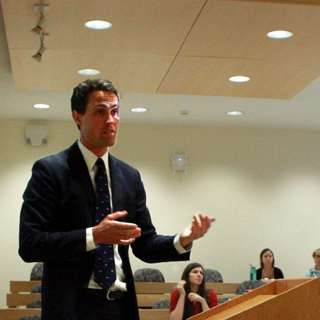
#8 - Lewis Bollard on how to end factory farming in our lifetimes

#8 - Lewis Bollard on how to end factory farming in our lifetimes

Every year tens of billions of animals are raised in terrible conditions in factory farms before being killed for human consumption. Over the last two years Lewis Bollard – Project Officer for Farm An...

27 Sep 20173h 16min

#7 - Julia Galef on making humanity more rational, what EA does wrong, and why Twitter isn’t all bad

#7 - Julia Galef on making humanity more rational, what EA does wrong, and why Twitter isn’t all bad

The scientific revolution in the 16th century was one of the biggest societal shifts in human history, driven by the discovery of new and better methods of figuring out who was right and who was wrong...

13 Sep 20171h 14min
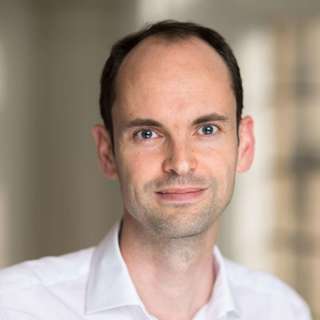
#6 - Toby Ord on why the long-term future matters more than anything else & what to do about it

#6 - Toby Ord on why the long-term future matters more than anything else & what to do about it

Of all the people whose well-being we should care about, only a small fraction are alive today. The rest are members of future generations who are yet to exist. Whether they’ll be born into a world th...

6 Sep 20172h 8min
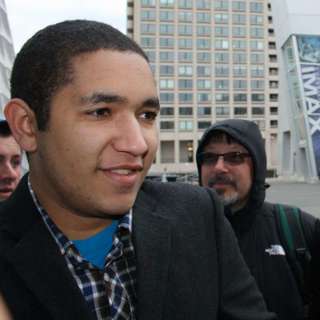
#5 - Alex Gordon-Brown on how to donate millions in your 20s working in quantitative trading

#5 - Alex Gordon-Brown on how to donate millions in your 20s working in quantitative trading

Quantitative financial trading is one of the highest paying parts of the world’s highest paying industry. 25 to 30 year olds with outstanding maths skills can earn millions a year in an obscure set of...

28 Aug 20171h 45min
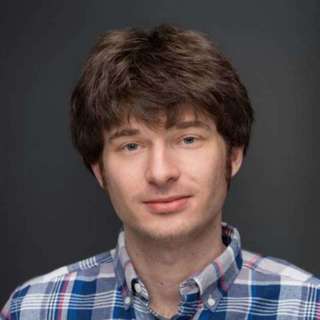
#4 - Howie Lempel on pandemics that kill hundreds of millions and how to stop them

#4 - Howie Lempel on pandemics that kill hundreds of millions and how to stop them

What disaster is most likely to kill more than 10 million human beings in the next 20 years? Terrorism? Famine? An asteroid? Actually it’s probably a pandemic: a deadly new disease that spreads out o...

23 Aug 20172h 35min

Populärt inom Utbildning

rss-bara-en-till-om-missbruk-medberoende-2
historiepodden-se
det-skaver
harrisons-dramatiska-historia
allt-du-velat-veta
nu-blir-det-historia
johannes-hansen-podcast
roda-vita-rosen
rss-viktmedicinpodden
rss-foraldramotet-bring-lagercrantz
sektledare
i-vantan-pa-katastrofen
not-fanny-anymore
sa-in-i-sjalen
rss-max-tant-med-max-villman
rss-sjalsligt-avkladd
rss-basta-livet
rss-traningsklubben
rikatillsammans-om-privatekonomi-rikedom-i-livet
alska-oss