Do We Need Deep Learning in Time Series
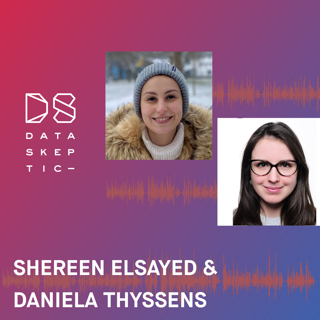
Shereen Elsayed and Daniela Thyssens, both are PhD Student at Hildesheim University in Germany, come on today to talk about the work "Do We Really Need Deep Learning Models for Time Series Forecasting...
16 Juni 202129min
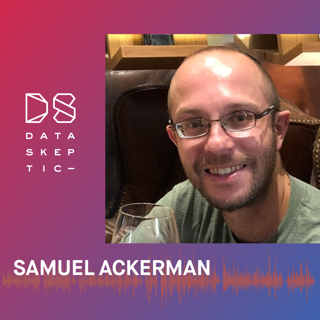
Detecting Drift
Sam Ackerman, Research Data Scientist at IBM Research Labs in Haifa, Israel, joins us today to talk about his work Detection of Data Drift and Outliers Affecting Machine Learning Model Performance Ove...
11 Juni 202127min
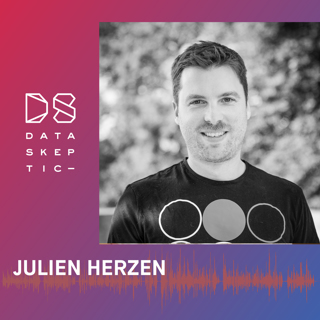
Darts Library for Time Series
Julien Herzen, PhD graduate from EPFL in Switzerland, comes on today to talk about his work with Unit 8 and the development of the Python Library: Darts.
31 Maj 202125min
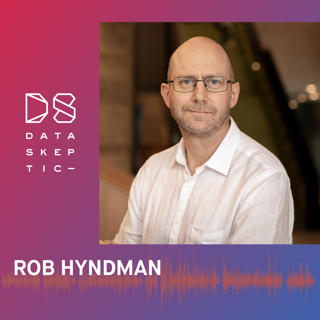
Forecasting Principles and Practice
Welcome to Timeseries! Today's episode is an interview with Rob Hyndman, Professor of Statistics at Monash University in Australia, and author of Forecasting: Principles and Practices.
24 Maj 202131min
Prequisites for Time Series
Today's experimental episode uses sound to describe some basic ideas from time series. This episode includes lag, seasonality, trend, noise, heteroskedasticity, decomposition, smoothing, feature engin...
21 Maj 20218min
Orders of Magnitude
Today's show in two parts. First, Linhda joins us to review the episodes from Data Skeptic: Pilot Season and give her feedback on each of the topics. Second, we introduce our new segment "Orders of Ma...
7 Maj 202133min
They're Coming for Our Jobs
AI has, is, and will continue to facilitate the automation of work done by humans. Sometimes this may be an entire role. Other times it may automate a particular part of their role, scaling their effe...
3 Maj 202143min
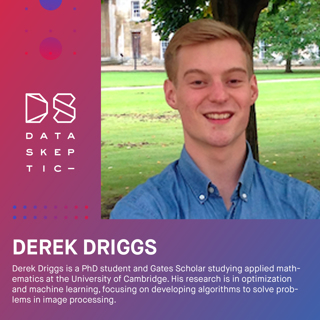
Pandemic Machine Learning Pitfalls
Today on the show Derek Driggs, a PhD Student at the University of Cambridge. He comes on to discuss the work Common Pitfalls and Recommendations for Using Machine Learning to Detect and Prognosticate...
26 Apr 202140min