
#200 – Ezra Karger on what superforecasters and experts think about existential risks

#200 – Ezra Karger on what superforecasters and experts think about existential risks

"It’s very hard to find examples where people say, 'I’m starting from this point. I’m starting from this belief.' So we wanted to make that very legible to people. We wanted to say, 'Experts think this; accurate forecasters think this.' They might both be wrong, but we can at least start from here and figure out where we’re coming into a discussion and say, 'I am much less concerned than the people in this report; or I am much more concerned, and I think people in this report were missing major things.' But if you don’t have a reference set of probabilities, I think it becomes much harder to talk about disagreement in policy debates in a space that’s so complicated like this." —Ezra Karger

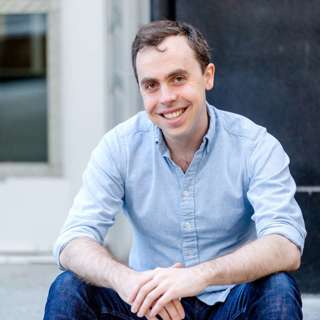
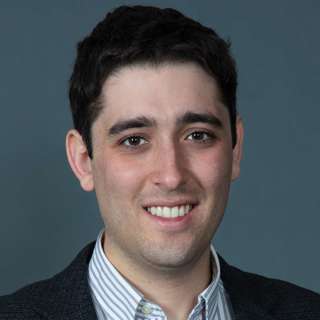
In today’s episode, host Luisa Rodriguez speaks to Ezra Karger — research director at the Forecasting Research Institute — about FRI’s recent Existential Risk Persuasion Tournament to come up with estimates of a range of catastrophic risks.

Links to learn more, highlights, and full transcript.

They cover:

  • How forecasting can improve our understanding of long-term catastrophic risks from things like AI, nuclear war, pandemics, and climate change.
  • What the Existential Risk Persuasion Tournament (XPT) is, how it was set up, and the results.
  • The challenges of predicting low-probability, high-impact events.
  • Why superforecasters’ estimates of catastrophic risks seem so much lower than experts’, and which group Ezra puts the most weight on.
  • The specific underlying disagreements that superforecasters and experts had about how likely catastrophic risks from AI are.
  • Why Ezra thinks forecasting tournaments can help build consensus on complex topics, and what he wants to do differently in future tournaments and studies.
  • Recent advances in the science of forecasting and the areas Ezra is most excited about exploring next.
  • Whether large language models could help or outperform human forecasters.
  • How people can improve their calibration and start making better forecasts personally.
  • Why Ezra thinks high-quality forecasts are relevant to policymakers, and whether they can really improve decision-making.
  • And plenty more.

Chapters:

  • Cold open (00:00:00)
  • Luisa’s intro (00:01:07)
  • The interview begins (00:02:54)
  • The Existential Risk Persuasion Tournament (00:05:13)
  • Why is this project important? (00:12:34)
  • How was the tournament set up? (00:17:54)
  • Results from the tournament (00:22:38)
  • Risk from artificial intelligence (00:30:59)
  • How to think about these numbers (00:46:50)
  • Should we trust experts or superforecasters more? (00:49:16)
  • The effect of debate and persuasion (01:02:10)
  • Forecasts from the general public (01:08:33)
  • How can we improve people’s forecasts? (01:18:59)
  • Incentives and recruitment (01:26:30)
  • Criticisms of the tournament (01:33:51)
  • AI adversarial collaboration (01:46:20)
  • Hypotheses about stark differences in views of AI risk (01:51:41)
  • Cruxes and different worldviews (02:17:15)
  • Ezra’s experience as a superforecaster (02:28:57)
  • Forecasting as a research field (02:31:00)
  • Can large language models help or outperform human forecasters? (02:35:01)
  • Is forecasting valuable in the real world? (02:39:11)
  • Ezra’s book recommendations (02:45:29)
  • Luisa's outro (02:47:54)


Producer: Keiran Harris
Audio engineering: Dominic Armstrong, Ben Cordell, Milo McGuire, and Simon Monsour
Content editing: Luisa Rodriguez, Katy Moore, and Keiran Harris
Transcriptions: Katy Moore

Avsnitt(324)

#44 Classic episode - Paul Christiano on finding real solutions to the AI alignment problem

#44 Classic episode - Paul Christiano on finding real solutions to the AI alignment problem

Rebroadcast: this episode was originally released in October 2018. Paul Christiano is one of the smartest people I know. After our first session produced such great material, we decided to do a seco...

15 Jan 20203h 51min
#33 Classic episode - Anders Sandberg on cryonics, solar flares, and the annual odds of nuclear war

#33 Classic episode - Anders Sandberg on cryonics, solar flares, and the annual odds of nuclear war

Rebroadcast: this episode was originally released in May 2018. Joseph Stalin had a life-extension program dedicated to making himself immortal. What if he had succeeded? According to Bryan Caplan ...

8 Jan 20201h 25min
#17 Classic episode - Will MacAskill on moral uncertainty, utilitarianism & how to avoid being a moral monster

#17 Classic episode - Will MacAskill on moral uncertainty, utilitarianism & how to avoid being a moral monster

Rebroadcast: this episode was originally released in January 2018. Immanuel Kant is a profoundly influential figure in modern philosophy, and was one of the earliest proponents for universal democracy...

31 Dec 20191h 52min

#67 – David Chalmers on the nature and ethics of consciousness

#67 – David Chalmers on the nature and ethics of consciousness

What is it like to be you right now? You're seeing this text on the screen, smelling the coffee next to you, and feeling the warmth of the cup. There’s a lot going on in your head — your conscious exp...

16 Dec 20194h 41min
#66 – Peter Singer on being provocative, effective altruism, & how his moral views have changed

#66 – Peter Singer on being provocative, effective altruism, & how his moral views have changed

In 1989, the professor of moral philosophy Peter Singer was all over the news for his inflammatory opinions about abortion. But the controversy stemmed from Practical Ethics — a book he’d actually rel...

5 Dec 20192h 1min

#65 – Ambassador Bonnie Jenkins on 8 years pursuing WMD arms control, & diversity in diplomacy

#65 – Ambassador Bonnie Jenkins on 8 years pursuing WMD arms control, & diversity in diplomacy

"…it started when the Soviet Union fell apart and there was a real desire to ensure security of nuclear materials and pathogens, and that scientists with [WMD-related] knowledge could get paid so that...

19 Nov 20191h 40min
#64 – Bruce Schneier on how insecure electronic voting could break the United States — and surveillance without tyranny

#64 – Bruce Schneier on how insecure electronic voting could break the United States — and surveillance without tyranny

November 3 2020, 10:32PM: CNN, NBC, and FOX report that Donald Trump has narrowly won Florida, and with it, re-election.  November 3 2020, 11:46PM: The NY Times and Wall Street Journal report that so...

25 Okt 20192h 11min

Rob Wiblin on plastic straws, nicotine, doping, & whether changing the long-term is really possible

Rob Wiblin on plastic straws, nicotine, doping, & whether changing the long-term is really possible

Today's episode is a compilation of interviews I recently recorded for two other shows, Love Your Work and The Neoliberal Podcast.  If you've listened to absolutely everything on this podcast feed, y...

25 Sep 20193h 14min

Populärt inom Utbildning

historiepodden-se
rss-bara-en-till-om-missbruk-medberoende-2
det-skaver
alska-oss
harrisons-dramatiska-historia
nu-blir-det-historia
rss-viktmedicinpodden
sektledare
johannes-hansen-podcast
not-fanny-anymore
allt-du-velat-veta
rss-sjalsligt-avkladd
roda-vita-rosen
i-vantan-pa-katastrofen
rss-max-tant-med-max-villman
sa-in-i-sjalen
rss-om-vi-ska-vara-arliga
rikatillsammans-om-privatekonomi-rikedom-i-livet
polisutbildningspodden
rss-basta-livet