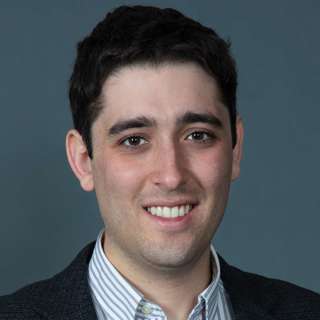

#200 – Ezra Karger on what superforecasters and experts think about existential risks

#200 – Ezra Karger on what superforecasters and experts think about existential risks

"It’s very hard to find examples where people say, 'I’m starting from this point. I’m starting from this belief.' So we wanted to make that very legible to people. We wanted to say, 'Experts think this; accurate forecasters think this.' They might both be wrong, but we can at least start from here and figure out where we’re coming into a discussion and say, 'I am much less concerned than the people in this report; or I am much more concerned, and I think people in this report were missing major things.' But if you don’t have a reference set of probabilities, I think it becomes much harder to talk about disagreement in policy debates in a space that’s so complicated like this." —Ezra Karger

In today’s episode, host Luisa Rodriguez speaks to Ezra Karger — research director at the Forecasting Research Institute — about FRI’s recent Existential Risk Persuasion Tournament to come up with estimates of a range of catastrophic risks.

Links to learn more, highlights, and full transcript.

They cover:

  • How forecasting can improve our understanding of long-term catastrophic risks from things like AI, nuclear war, pandemics, and climate change.
  • What the Existential Risk Persuasion Tournament (XPT) is, how it was set up, and the results.
  • The challenges of predicting low-probability, high-impact events.
  • Why superforecasters’ estimates of catastrophic risks seem so much lower than experts’, and which group Ezra puts the most weight on.
  • The specific underlying disagreements that superforecasters and experts had about how likely catastrophic risks from AI are.
  • Why Ezra thinks forecasting tournaments can help build consensus on complex topics, and what he wants to do differently in future tournaments and studies.
  • Recent advances in the science of forecasting and the areas Ezra is most excited about exploring next.
  • Whether large language models could help or outperform human forecasters.
  • How people can improve their calibration and start making better forecasts personally.
  • Why Ezra thinks high-quality forecasts are relevant to policymakers, and whether they can really improve decision-making.
  • And plenty more.

Chapters:

  • Cold open (00:00:00)
  • Luisa’s intro (00:01:07)
  • The interview begins (00:02:54)
  • The Existential Risk Persuasion Tournament (00:05:13)
  • Why is this project important? (00:12:34)
  • How was the tournament set up? (00:17:54)
  • Results from the tournament (00:22:38)
  • Risk from artificial intelligence (00:30:59)
  • How to think about these numbers (00:46:50)
  • Should we trust experts or superforecasters more? (00:49:16)
  • The effect of debate and persuasion (01:02:10)
  • Forecasts from the general public (01:08:33)
  • How can we improve people’s forecasts? (01:18:59)
  • Incentives and recruitment (01:26:30)
  • Criticisms of the tournament (01:33:51)
  • AI adversarial collaboration (01:46:20)
  • Hypotheses about stark differences in views of AI risk (01:51:41)
  • Cruxes and different worldviews (02:17:15)
  • Ezra’s experience as a superforecaster (02:28:57)
  • Forecasting as a research field (02:31:00)
  • Can large language models help or outperform human forecasters? (02:35:01)
  • Is forecasting valuable in the real world? (02:39:11)
  • Ezra’s book recommendations (02:45:29)
  • Luisa's outro (02:47:54)


Producer: Keiran Harris
Audio engineering: Dominic Armstrong, Ben Cordell, Milo McGuire, and Simon Monsour
Content editing: Luisa Rodriguez, Katy Moore, and Keiran Harris
Transcriptions: Katy Moore

Avsnitt(320)

#210 – Cameron Meyer Shorb on dismantling the myth that we can’t do anything to help wild animals

#210 – Cameron Meyer Shorb on dismantling the myth that we can’t do anything to help wild animals

"I really don’t want to give the impression that I think it is easy to make predictable, controlled, safe interventions in wild systems where there are many species interacting. I don’t think it’s eas...

29 Nov 20243h 21min

#209 – Rose Chan Loui on OpenAI’s gambit to ditch its nonprofit

#209 – Rose Chan Loui on OpenAI’s gambit to ditch its nonprofit

One OpenAI critic calls it “the theft of at least the millennium and quite possibly all of human history.” Are they right?Back in 2015 OpenAI was but a humble nonprofit. That nonprofit started a for-p...

27 Nov 20241h 22min

#208 – Elizabeth Cox on the case that TV shows, movies, and novels can improve the world

#208 – Elizabeth Cox on the case that TV shows, movies, and novels can improve the world

"I think stories are the way we shift the Overton window — so widen the range of things that are acceptable for policy and palatable to the public. Almost by definition, a lot of things that are going...

21 Nov 20242h 22min
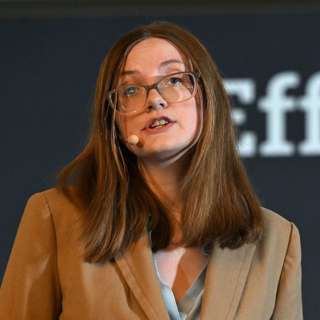
#207 – Sarah Eustis-Guthrie on why she shut down her charity, and why more founders should follow her lead

#207 – Sarah Eustis-Guthrie on why she shut down her charity, and why more founders should follow her lead

"I think one of the reasons I took [shutting down my charity] so hard is because entrepreneurship is all about this bets-based mindset. So you say, “I’m going to take a bunch of bets. I’m going to tak...

14 Nov 20242h 58min

Parenting insights from Rob and 8 past guests

Parenting insights from Rob and 8 past guests

With kids very much on the team's mind we thought it would be fun to review some comments about parenting featured on the show over the years, then have hosts Luisa Rodriguez and Rob Wiblin react to t...

8 Nov 20241h 35min
#206 – Anil Seth on the predictive brain and how to study consciousness

#206 – Anil Seth on the predictive brain and how to study consciousness

"In that famous example of the dress, half of the people in the world saw [blue and black], half saw [white and gold]. It turns out there’s individual differences in how brains take into account ambie...

1 Nov 20242h 33min
How much does a vote matter? (Article)

How much does a vote matter? (Article)

If you care about social impact, is voting important? In this piece, Rob investigates the two key things that determine the impact of your vote:The chances of your vote changing an election’s outcome....

28 Okt 202432min

#205 – Sébastien Moro on the most insane things fish can do

#205 – Sébastien Moro on the most insane things fish can do

"You have a tank split in two parts: if the fish gets in the compartment with a red circle, it will receive food, and food will be delivered in the other tank as well. If the fish takes the blue trian...

23 Okt 20243h 11min

Populärt inom Utbildning

historiepodden-se
rss-bara-en-till-om-missbruk-medberoende-2
det-skaver
harrisons-dramatiska-historia
nu-blir-det-historia
rss-viktmedicinpodden
roda-vita-rosen
johannes-hansen-podcast
allt-du-velat-veta
sektledare
rss-sjalsligt-avkladd
i-vantan-pa-katastrofen
not-fanny-anymore
rss-beratta-alltid-det-har
rss-max-tant-med-max-villman
alska-oss
sa-in-i-sjalen
rikatillsammans-om-privatekonomi-rikedom-i-livet
rss-basta-livet
polisutbildningspodden