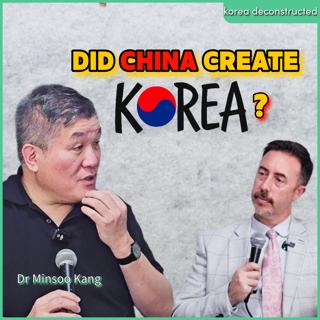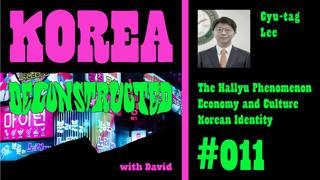
#011 The Hallyu Phenomeon, Economy and Culture, and Korean Identity with Dr. Gyu-tag Lee

#011 The Hallyu Phenomeon, Economy and Culture, and Korean Identity with Dr. Gyu-tag Lee

Hallyu is not a sudden phenomenon, Dr. Lee says. It's been an international culture since the 1990s. But from about the 2010s, enjoying Korean popular culture for non-Asians has become a new trend in cyberspace. This means Korean popularity is closely connected to technological changes in the media environment and industry. The two are interdependent. Despite the earlier popularity of Japanese cultural products, the promotion strategies used then were not very effective and there was not a concerted effort at spreading it to the rest of Asia. Locally, Dr. Lee talks of how one of his friends at high school was punished for playing a Japanese song at lunchtime.

Eventually, economic difficulties domestically pushed Korean cultural products outside of the country and seeking new markets. China's change from communism to capitalism provided a very fortuitous suitable landing pad for many of these products. In Korea, Dr. Lee suggests K-pop is normally considered music for teenagers. There is a social consensus that it is not really appropriate as a genre for people in their 20s. Thus, many people stop listening to it (or perhaps hide their interest) due to cultural conventions. However, international fans are not affected by such attitudes. Conversely, for them, the more knowledge and depth of understanding they show of K-pop, the trendier they are seen. K-pop can also serve as a gateway into other genres. For international fans, K-pop is not mainstream. Instead it speaks to minority and alternative cultures.

For Dr. Lee, K-pop should not just be understood as music: it is related to fashion, fan relationships, videos, and choreography. The fans now believe they are responsible for the artists' success. Thus they expect the idols and entertainment agencies to listen to their requests and desires. However, that democratic culture of fan-led artists is slowly being consumed by capitalism and the entertainment industry like punk and hip-hop were in the past. Moreover, despite K-pop being apolitical in nature, it's been used by the Democratic Party in the United States. Musicians and entertainment companies are aware of this politicization and it has become necessary for them to follow the trend and remain loyal to their fans.

Dr. Lee finishes by questioning what will happen to Hallyu going forward if it continues to internationalize. If the only thing remaining is the Korean ethnicity of the performers, then what will this mean for the culture industry and, more importantly, Korean identity in general. Can a balance be found?

Det här avsnittet är hämtat från ett öppet RSS-flöde och publiceras inte av Podme. Det kan innehålla reklam.

Avsnitt(130)

Who Was Ahn Chang Ho (안창호)? | Conversation with His Grandson Philip Ahn Cuddy (#130)

Who Was Ahn Chang Ho (안창호)? | Conversation with His Grandson Philip Ahn Cuddy (#130)

Who was Ahn Chang-ho, and what is the real legacy of one of Korea's most revered independence activists? In this episode of Korea Deconstructed, we sit down with his grandson, Philip Ahn Cuddy, to exp...

24 Maj 1h 27min

Korean Culture without the K | Colin Marshall #129

Korean Culture without the K | Colin Marshall #129

Colin Marshall is a Seoul-based essayist, broadcaster, and public speaker focusing on cities, language, and culture. Through his Substack newsletter, Books on Cities, he writes long-form essay-reviews...

2 Maj 1h 29min

Korean Dragons, Religion, and Culture Explained by David Mason | #128

Korean Dragons, Religion, and Culture Explained by David Mason | #128

How do dragons affect Korean culture, philosophy, and cosmology? I brought my friend Professor David Mason back into the studio to explore the differences between Asian and Western dragons. The "Drago...

23 Apr 1h 13min

Koreans, BTS, and Reactions to the Arirang Comeback #127

Koreans, BTS, and Reactions to the Arirang Comeback #127

When you live and work in Korea, it's hard to escape talk around BTS. Their comeback concert in Gwanghwamun generated a huge amount of media attention, both positive and negative. Moreover, the use of...

5 Apr 1h 18min

The Human Cost of Korean Cults | #126

The Human Cost of Korean Cults | #126

Why do people join cults? The reality is seemingly very complex. In this episode of Korea Deconstructed, I sit down with Peter Daley, a long-term resident of Korea and someone who has spent decades ob...

31 Mars 1h 34min

The God of Pyongyang: How Christianity Built North Korea | #125

The God of Pyongyang: How Christianity Built North Korea | #125

How was North Korea, a state that famously mandates atheism, built on a foundation of Christian fervor? In this episode, I sit down with Jonathan Cheng, the Wall Street Journal's China Bureau Chief, t...

22 Mars 1h 23min

The SEAbling War: Why Koreans and Southeast Asians are Fighting Online | #124

The SEAbling War: Why Koreans and Southeast Asians are Fighting Online | #124

What happens when you take the wrong camera to a Day6 K-pop concert? In this episode of Korea Deconstructed, we explore the recent "SEAbling War". Discussing viral memes to deeply uncomfortable conver...

15 Mars 1h 4min

100 Years of Queer Korean Fiction | Dr. Samuel Perry

100 Years of Queer Korean Fiction | Dr. Samuel Perry

What does it mean to be queer in a society often defined by its rigid traditions, colonial scars, and rapid neoliberal transformation? In this episode of Korea Deconstructed, we sit down with Dr. Samu...

9 Mars 1h 1min

Populärt inom Vetenskap

dumma-manniskor
allt-du-velat-veta
p3-dystopia
rss-vetenskapsradion
rss-ufobortom-rimligt-tvivel
medicinvetarna
bildningspodden
paranormalt-med-caroline-giertz
kapitalet-en-podd-om-ekonomi
det-morka-psyket
rss-vetenskapsradion-2
sexet
svd-nyhetsartiklar
vetenskapsradion
pojkmottagningen
ufo-sverige
rss-ronden
rss-personlighetspodden
halsorevolutionen
hacka-livet