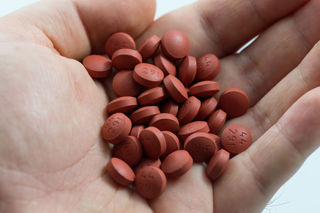

Opioid Miniseries Part III: Alternative to Opioids

Opioid Miniseries Part III: Alternative to Opioids

PRACTICE RECOMMENDATIONS

1. All emergency departments should implement ALTO programs and provide opioid-free pain treatment pathways for

the following conditions:

a. Acute on chronic opioid-tolerant radicular lower back pain

b. Opioid-naive musculoskeletal pain

c. Migraine or recurrent primary headache

d. Extremity fracture or joint dislocation

e. Gastroparesis-associated or chronic functional abdominal pain

f. Renal colic

2. Emergency departments should integrate ALTO into their computerized physician order entry systems to facilitate a seamless adoption by clinicians.

3. Low-dose, subdissociative ketamine (0.1-0.3 mg/kg) is an effective analgesic that can be opioid-sparing for many acute pain syndromes. Institutional guidelines and policies should be in place to enable clinicians and nurses who administer this agent for pain.

4. For musculoskeletal pain, consider a multimodal treatment approach using acetaminophen, NSAIDs, steroids, topical medications, trigger-point injections, and (for severe pain) ketamine.

5. For headache and migraine, consider a multimodal treatment approach that includes the administration of antiemetic agents, NSAIDs, steroids, valproic acid, magnesium, and triptans. Strongly consider cervical trigger-point injection.

6. For pain with a neuropathic component, consider gabapentin.

7. For pain with a tension component, consider a muscle relaxant.

8. For pain caused by renal colic, consider an NSAID, lidocaine infusion, and desmopressin nasal spray.

9. For chronic abdominal pain, consider low doses of haloperidol, diphenhydramine, and lidocaine infusion.

10. For extremity fracture or joint dislocation, consider the immediate use of nitrous oxide and low-dose ketamine while setting up for ultrasound-guided regional anesthesia.

11. For arthritic or tendinitis pain, consider an intra-articular steroid/anesthetic injection.

POLICY RECOMMENDATIONS

1. Hospitals should update institutional guidelines and put policies in place that enable clinicians to order and nurses to administer dose-dependent ketamine and IV lidocaine in non-ICU areas.

2. Emergency departments are encouraged to assemble an interdisciplinary pain management team that includes clinicians, nurses, pharmacists, physical therapists, social workers, and case managers.

3. Reimbursement should be available for any service directly correlated to pain management, the reduction of opioid use, and treatment of drug-addicted patients.

Avsnitt(1149)

Podcast 859: Teamwork Really Makes the Dream Work

Podcast 859: Teamwork Really Makes the Dream Work

Contributor: Aaron Lessen MD Educational Pearls: 33 Medical residents and 91 nurses at Massachusetts General Hospital were randomized into two groups: Intervention group: 15 PGY-1 residents assig...

10 Juli 20232min

Podcast 858: Whole Blood Pregnancy Test

Podcast 858: Whole Blood Pregnancy Test

Contributor: Meghan Hurley MD Educational Pearls: What do you do if you need a stat pregnancy test on an incapacitated patient? You can send a serum quantitative human chorionic gonadotropin (beta-H...

3 Juli 20234min

Podcast 857: Alice in Wonderland Jeopardy

Podcast 857: Alice in Wonderland Jeopardy

Contributor: Chris Holmes MD Educational Pearls: "It's a poor sort of memory that only works backwards" - Transient Global Amnesia A syndrome with sudden retrograde memory loss in which patients ...

26 Juni 20233min

Podcast 856: ED Errors and Counterstudy

Podcast 856: ED Errors and Counterstudy

Contributor: Nicholas Tsipis, MD Educational Pearls: What study was Dr. Tsipis talking about? In December of 2022, the Agency for Healthcare Research and Quality (AHRQ) put out a study titled "Diagn...

19 Juni 20234min

Podcast 855: QT Intervals

Podcast 855: QT Intervals

​​Contributor: Travis Barlock MD Educational Pearls The QT interval represents phases 2 and 3 of ventricular plateau and repolarization, respectively. As the QT interval lengthens, more sodium an...

12 Juni 20234min
Mental Health Monthly #16: Psychosis in the ED Part II

Mental Health Monthly #16: Psychosis in the ED Part II

Contributors: Andrew White MD & Travis Barlock MD In this follow-up episode Dr. Andrew White, a practicing psychiatrist with an addiction medicine fellowship, and Dr. Travis Barlock, an emergency phys...

7 Juni 202324min

Episode 854: Tranq (xylazine) with Heroin

Episode 854: Tranq (xylazine) with Heroin

Contributor: Aaron Lessen, MD Educational Pearls: What is Tranq? Tranq is the street name for xylazine, a sedative drug typically used in veterinary medicine. Xylazine has recently emerged as a re...

5 Juni 20232min

Podcast 853: Critical Care Medications - Vasopressors

Podcast 853: Critical Care Medications - Vasopressors

Contributor: Travis Barlock MD Educational Pearls: Three categories of pressors: inopressors, pure vasoconstrictors, and inodilators Inopressors:  Epinephrine - nonselective beta- and alpha-adr...

29 Maj 20235min

Populärt inom Vetenskap

dumma-manniskor
p3-dystopia
svd-nyhetsartiklar
allt-du-velat-veta
kapitalet-en-podd-om-ekonomi
rss-vetenskapsradion-2
medicinvetarna
rss-ufo-bortom-rimligt-tvivel-2
rss-vetenskapsradion
det-morka-psyket
bildningspodden
sexet
paranormalt-med-caroline-giertz
halsorevolutionen
hacka-livet
rss-spraket
har-vi-akt-till-mars-an
dumforklarat
rss-geopodden-2
rss-experimentet