
Opioid MIniseries Part IV: Harm Reduction

Opioid MIniseries Part IV: Harm Reduction

PRACTICE RECOMMENDATIONS

1. Patients who abuse opioids should be managed without judgement; addiction is a medical condition and not a moral failing. Caregivers should endeavor to meet patients "where they are," infusing empathy and understanding into the patient/medical provider relationship.

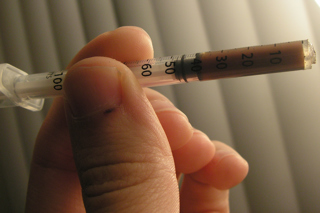
2. Every emergency clinician should be well-versed in the safe injection of heroin and other intravenous (IV) drugs, and understand the practical steps for minimizing the dangers of overdose, infection, and other complications. When treating patients with complications of IV drug use, injection habits should be discussed and instruction should be given about safe practices.

3. Emergency department patients who inject drugs should be referred to local syringe access programs, where they can obtain sterile injection materials and support services such as counseling, HIV/hepatitis testing, and referrals.

4. Emergency departments should provide naloxone to high-risk patients at discharge. If the drug is unavailable at the time of release, patients should receive a prescription and be informed about the over-the-counter availability of the drug in most Colorado pharmacies.

5. Emergency clinicians should be familiar with Colorado's regulations pertaining to naloxone. State laws eliminate liability risk for prescribing the drug, encourage good samaritan reporting of overdose, and make naloxone legal and readily available over the counter in most pharmacies.

6. Emergency department patients who receive prescriptions for opioids should be educated on their risks, safe storage methods, and the proper disposal of leftover medications.

POLICY RECOMMENDATIONS

1. Harm reduction agencies and community programs that provide resources for people who inject drugs (PWID) should be made readily available.

2. When local programs are unavailable for PWID, emergency departments should establish their own programs to provide services such as safe syringe exchanges.

Avsnitt(1145)

Podcast 738: Acute Mesenteric Ischemia

Podcast 738: Acute Mesenteric Ischemia

Contributor: Ian Gillman, PA-C Educational Pearls: Acute mesenteric ischemia is a condition where bowel loses blood supply from an acute occlusion of the mesenteric arteries A frequent sign is abdomi...

14 Dec 20212min

Podcast 737: TBI Outcomes

Podcast 737: TBI Outcomes

Contributor: Aaron Lessen, MD Educational Pearls: Study evaluating patient outcomes after traumatic brain injury (TBI) over 1 year Trial followed patients with severe TBI (GCS 3-8) and moderate TBI (...

13 Dec 20212min

Podcast 736: Seasonal Affective Disorder

Podcast 736: Seasonal Affective Disorder

Contributor: Adam Barkin, MD Educational Pearls: Seasonal Affective Disorder (SAD) a form of seasonal depression which can result in trouble sleeping, concentration difficulties, changes in appetite,...

7 Dec 20213min

Podcast 735: End Tidal CO2 and BiPAP

Podcast 735: End Tidal CO2 and BiPAP

Contributor: Aaron Lessen, MD Educational Pearls: End tidal CO2 is accurate to 1-4 mmHg in intubated patient but use with those on positive pressure ventilation like BiPAP is unclear Study looked at ...

6 Dec 20212min

Podcast 734: Push Dose Antibiotics

Podcast 734: Push Dose Antibiotics

Contributor: Aaron Lessen, MD Educational Pearls: Recent study at a hospital in Chicago with a shortage of normal saline decided to push IV ceftriaxone rather than the typical infusion of the antibio...

1 Dec 20212min

Podcast 733: Nitric Oxide for COVID

Podcast 733: Nitric Oxide for COVID

Contributor: Nick Hatch, MD Educational Pearls: Inhaled nitric oxide or Flolan may be considered in COVID Flolan is a prostaglandin can be inhaled or given IV These medications are classically us...

30 Nov 20215min

Podcast 732: Organophosphate Toxicity

Podcast 732: Organophosphate Toxicity

Educational Pearls: Organophosphates affect the cholinergic system by inhibiting acetylcholinesterase affecting muscarinic and nicotinic receptors Symptoms include lacrimation, salivation, bronchocon...

23 Nov 20215min

Podcast 731: Fluid Resuscitation in Burns

Podcast 731: Fluid Resuscitation in Burns

Contributor: Chris Holmes, MD Educational Pearls: Parkland Formula: 4 mL x [Total Body Surface Area Burned (%)] x [body weight (kg)] given in 24 hours 50% given over 8 hours and 50% given over the ...

22 Nov 20214min

Populärt inom Vetenskap

p3-dystopia
dumma-manniskor
svd-nyhetsartiklar
allt-du-velat-veta
kapitalet-en-podd-om-ekonomi
det-morka-psyket
dumforklarat
pojkmottagningen
rss-vetenskapsradion-2
rss-vetenskapsradion
rss-ufo-bortom-rimligt-tvivel
sexet
halsorevolutionen
rss-spraket
medicinvetarna
rss-experimentet
vetenskapsradion
paranormalt-med-caroline-giertz
4health-med-anna-sparre
rss-tidslinjen-podcast