Podcast #258: REBOA

Podcast #258: REBOA

Author: Dylan Luyten, M.D.

Educational Pearls

  • Resuscitative Endovascular Balloon Occlusion of the Aorta (REBOA).
  • Exsanguination is a major cause of mortality in trauma
  • One temporizing technique to buy time to definitive hemorrhage control is to occlude the aorta thereby shunting blood away from pelvis and lower extremities, increasing cardiac afterload to increase myocardial and brain perfusion.
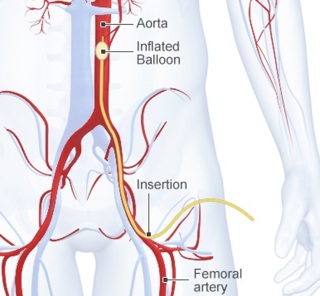
  • Rather than perform a thoracotomy to cross clamp aorta, a REBOA catheter may be introduced into the aorta via the common femoral artery and a balloon inflated in the descending aorta to occlude it.
  • The indications for REBOA include PEA arrest of brief duration attributable to exsanguination for sub-diaphragmatic source in a young, healthy patient, or severe hypovolemic shock or those in an agonal state due to non-compressible hemorrhage not responding to volume and in whom obstructive cause of shock has been ruled out.
  • Contraindicated in prolonged arrest, suspected proximal aortic injury, advanced age/comorbidities.
  • Controversies and evidence:

    • High quality evidence is lacking - as it is for much of what we do and even consider standard of care in trauma. It has not been shown to improve survival, which is hard to demonstrate.

    • Role in remote settings vs trauma centers unclear.

    • Further refinements of indication for use are likely to occur with time and experience.

  • Summarize - REBOA is a promising relatively new technology that may have potential to improve outcomes in the sickest of trauma patients.

Reference: https://lifeinthefastlane.com/ccc/resuscitative-endovascular-balloon-occlusion-aorta-reboa/

Avsnitt(1145)

EMSAC 2024

EMSAC 2024

Contributors: Col. (Dr.) Stacy Shackelford Dr. Sean Keenan Paramedic Alan Moreland Dr. Chris Tems Kara Napolitano From military-inspired trauma protocols to behavioral health alternatives and cardiac ...

26 Juli 202511min

Episode 966: Acetaminophen Toxicity

Episode 966: Acetaminophen Toxicity

Contributor: Jorge Chalit-Hernandez, OMS4 Educational Pearls: What is the toxic dose of acetaminophen? 7.5 grams, in an adult. The safe daily limit is 4 grams in an adult with a normally functioning...

21 Juli 20253min

Episode 965: Oxygen Administration in Trauma Patients

Episode 965: Oxygen Administration in Trauma Patients

Contributor: Aaron Lessen, MD Educational Pearls: Many trauma patients are placed on oxygen via non-rebreather A large, multicenter, controlled trial evaluated the outcomes of oxygen administration i...

14 Juli 20252min

Episode 964: Ketamine & Midazolam for Prehospital Seizure Management

Episode 964: Ketamine & Midazolam for Prehospital Seizure Management

Contributor: Aaron Lessen, MD Educational Pearls: Prehospital seizures are typically managed with intramuscular midazolam (Versed) Seizures theoretically involve the NMDA pathway, and ketamine is a p...

7 Juli 20254min

Episode 963: Antihypertensives and Emergency Room Considerations

Episode 963: Antihypertensives and Emergency Room Considerations

Contributor: Alec Coston, MD Educational Pearls: For patients presenting to the emergency room with hypertension, clinicians should determine if it is isolated and uncomplicated, or involves comorbidi...

30 Juni 20254min

Episode 962: HEART Score

Episode 962: HEART Score

Contributor: Taylor Lynch, MD Educational Pearls: How do we risk-stratify chest-pain patients? One option is the HEART score This score predicts a patient's 6-week risk of a major adverse cardiac ev...

23 Juni 20254min

Episode 961: Cell Phone Sign

Episode 961: Cell Phone Sign

Contributor: Aaron Lessen, MD Educational Pearls: A prospective study at the Mayo Clinic Rochester was conducted to examine whether patients actively using their phones on initial assessment in the E...

16 Juni 20251min

Episode 960: Frank's Sign - A Marker for Coronary Artery Disease

Episode 960: Frank's Sign - A Marker for Coronary Artery Disease

Contributor: Travis Barlock MD Educational Pearls Frank's sign is a curious physical exam finding first described in the literature in 1973 Bilateral earlobe creases are recognized as a marker of co...

9 Juni 20251min

Populärt inom Vetenskap

p3-dystopia
svd-nyhetsartiklar
pojkmottagningen
dumma-manniskor
allt-du-velat-veta
kapitalet-en-podd-om-ekonomi
det-morka-psyket
rss-vetenskapsradion
rss-experimentet
rss-ufo-bortom-rimligt-tvivel
paranormalt-med-caroline-giertz
medicinvetarna
rss-vetenskapsradion-2
bildningspodden
halsorevolutionen
dumforklarat
vetenskapsradion
rss-broccolipodden-en-podcast-som-inte-handlar-om-broccoli
4health-med-anna-sparre
rss-spraket