

Podcast 552: PE Management and Risk Stratification

Podcast 552: PE Management and Risk Stratification

Contributor: Dylan Luyten, MD

Educational Pearls:

  • After you diagnose a pulmonary embolism (PE) via CT or VQ scan, we need to categorize the PE as massive, sub-massive, or just PE to dictate treatment.
  • Massive PE: shock with hypotension due to an embolism, and the treatment of choice is thrombolysis with IV tPA with anticoagulation after lysis. Catheter thrombolysis is not used in the hemodynamically unstable patient but can be done after they are stable.
  • Sub-massive: signs of right heart strain/failure but hemodynamically stable. This can be EKG changes, positive biomarkers, or imaging findings. These patients can be treated with IV heparin as there may benefit from catheter directed thrombolysis which has been shown to lead to better functional outcomes.
  • Everything else can be stratified to determine whether inpatient even outpatient treatment is necessary
  • Pulmonary Embolism Severity Index (PESI) or Hestia criteria and can help determine if the patient is better suited for in or outpatient management.
  • Non massive or sub-massive PEs are treated with heparin/Lovenox bridged to Warfarin, a factor Xa inhibitor (ex. Xarelto), or direct oral anticoagulants (DOAC).

Editor's note: intravenous heparin is preferable to other anticoagulants when considering interventional radiology as it can be shut off and/or reversed if necessary prior to procedure

References

1. Sista, A. et al. Stratification, Imaging, and Management of Acute Massive and Submassive Pulmonary Embolism. 2017 Jul;284(1):5-24

2. Aujesky D, Obrosky DS, Stone RA, Auble TE, Perrier A, Cornuz J, Roy PM, Fine MJ. Derivation and validation of a prognostic model for pulmonary embolism. Am J Respir Crit Care Med. 2005 Oct 15;172(8):1041-6

3. Jimenez, D. et al. Risk stratification of patients with acute symptomatic pulmonary embolism. Intern Emerg Med. 2016 Feb;11(1):11-8.

Summarized by Jackson Roos, MS3 | Edited by Erik Verzemnieks, MD


Avsnitt(1146)

Podcast #243: Sphenopalatine Nerve Block

Podcast #243: Sphenopalatine Nerve Block

Author: Don Stader, M.D. Educational Pearls Cluster headaches are usually intense, unilateral, and involve the periorbital area. CN V (Trigeminal) provides sensory and autonomic innervation the face...

25 Aug 20174min
Podcast #242: Pott's Puffy Tumor

Podcast #242: Pott's Puffy Tumor

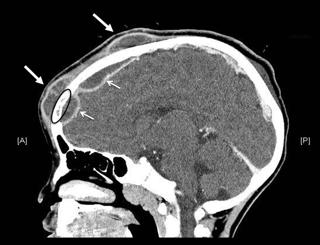
Author: Suzanne Chilton, M.D. Educational Pearls Pott's puffy tumor is a subperiosteal abscess of the frontal bone that arises from hematologic spread or direct infection via the frontal sinuses. The...

23 Aug 20173min
Podcast #241: GERD vs. MI

Podcast #241: GERD vs. MI

Author: Dave Rosenberg, M.D. Educational Pearls MI and GERD can present similarly. For example, 47% with angina report increased belching with an anginal attack, and 20% of people with an MI describe...

21 Aug 20173min

Podcast #240: Honey and Burns

Podcast #240: Honey and Burns

Podcast #240: Honey and Burns Author: Nick Hatch, M.D. Educational Pearls Honey can be used to treat burns because it has antibacterial properties. In one study, honey outperformed silver sulfadiazin...

19 Aug 20172min

Podcast #239: Tetanus in the ED

Podcast #239: Tetanus in the ED

Author: Rachel Beham, PharmD, Advanced Clinical Pharmacist - Emergency Medicine Educational Pearls Tetanus Ig is indicated in those who have no or unknown tetanus vaccination history who present with...

17 Aug 20173min
Podcast #238: Ultrasound in Cardiac Arrest

Podcast #238: Ultrasound in Cardiac Arrest

Author: Aaron Lessen M.D. Educational Pearls Ultrasound is helpful in the setting of cardiac arrest for finding a cause like cardiac tamponade or PE, but also for predicting outcomes for non-shockab...

15 Aug 20171min

Deep Dive #5: The Evolution of Sepsis Treatment

Deep Dive #5: The Evolution of Sepsis Treatment

Author: Susan Brion, M.D. Dr. Brion enlightens us on the ever-evolving standard of sepsis management.

11 Aug 201722min

Podcast #237: Phimosis vs. Paraphimosis

Podcast #237: Phimosis vs. Paraphimosis

Author: Sam Killian, M.D. Educational Pearls Phimosis refers to the inability to retract the distal foreskin over the glans penis in uncircumcised males. Paraphimosis is the entrapment of the foreski...

9 Aug 20174min

Populärt inom Vetenskap

p3-dystopia
dumma-manniskor
svd-nyhetsartiklar
allt-du-velat-veta
kapitalet-en-podd-om-ekonomi
det-morka-psyket
rss-ufo-bortom-rimligt-tvivel
sexet
rss-vetenskapsradion
pojkmottagningen
rss-vetenskapsradion-2
dumforklarat
rss-broccolipodden-en-podcast-som-inte-handlar-om-broccoli
halsorevolutionen
rss-spraket
bildningspodden
hacka-livet
rss-experimentet
medicinvetarna
rss-lara-fran-larda-en-fackbok-och-en-forfattare