
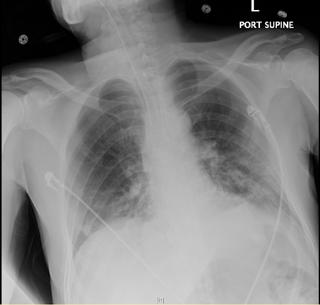
Podcast 552: PE Management and Risk Stratification

Podcast 552: PE Management and Risk Stratification

Contributor: Dylan Luyten, MD

Educational Pearls:

  • After you diagnose a pulmonary embolism (PE) via CT or VQ scan, we need to categorize the PE as massive, sub-massive, or just PE to dictate treatment.
  • Massive PE: shock with hypotension due to an embolism, and the treatment of choice is thrombolysis with IV tPA with anticoagulation after lysis. Catheter thrombolysis is not used in the hemodynamically unstable patient but can be done after they are stable.
  • Sub-massive: signs of right heart strain/failure but hemodynamically stable. This can be EKG changes, positive biomarkers, or imaging findings. These patients can be treated with IV heparin as there may benefit from catheter directed thrombolysis which has been shown to lead to better functional outcomes.
  • Everything else can be stratified to determine whether inpatient even outpatient treatment is necessary
  • Pulmonary Embolism Severity Index (PESI) or Hestia criteria and can help determine if the patient is better suited for in or outpatient management.
  • Non massive or sub-massive PEs are treated with heparin/Lovenox bridged to Warfarin, a factor Xa inhibitor (ex. Xarelto), or direct oral anticoagulants (DOAC).

Editor's note: intravenous heparin is preferable to other anticoagulants when considering interventional radiology as it can be shut off and/or reversed if necessary prior to procedure

References

1. Sista, A. et al. Stratification, Imaging, and Management of Acute Massive and Submassive Pulmonary Embolism. 2017 Jul;284(1):5-24

2. Aujesky D, Obrosky DS, Stone RA, Auble TE, Perrier A, Cornuz J, Roy PM, Fine MJ. Derivation and validation of a prognostic model for pulmonary embolism. Am J Respir Crit Care Med. 2005 Oct 15;172(8):1041-6

3. Jimenez, D. et al. Risk stratification of patients with acute symptomatic pulmonary embolism. Intern Emerg Med. 2016 Feb;11(1):11-8.

Summarized by Jackson Roos, MS3 | Edited by Erik Verzemnieks, MD


Avsnitt(1147)

Podcast 560:  Imaging in a COVID world

Podcast 560: Imaging in a COVID world

Contributor: Don Stader, MD Educational Pearls: COVID-19 commonly appears as a bilateral patchy infiltrate on chest radiograph, but this is a non-specific finding Sensitivities range from 17-70% f...

7 Maj 20206min

Mental Health Monthly #3: Maintaining Mental Health and Wellness for Healthcare Professionals

Mental Health Monthly #3: Maintaining Mental Health and Wellness for Healthcare Professionals

In this timely installment of Mental Health Monthly, mental health expert Lexi Eliades shares useful tips for identifying burnout and mental health decline as well as ways to maintain mental wellness ...

6 Maj 202010min
Podcast 559: Metabolic Acidosis

Podcast 559: Metabolic Acidosis

Contributor: Dylan Luyten, MD Educational Pearls Acidosis can be caused by a respiratory, metabolic, or mixed source A respiratory acidosis will have a low serum pH and elevated bicarbonate if it's c...

5 Maj 20203min
Podcast 558:  Rapid ARDS Review

Podcast 558: Rapid ARDS Review

Contributor: Don Stader, MD Educational Pearls: Acute respiratory distress syndrome (ARDS) is a catch all term for when lung injury leads to fluid collection in the air spaces of the lungs  Ventila...

4 Maj 20204min
COVID-19 Digest: Strokes in Young People with COVID

COVID-19 Digest: Strokes in Young People with COVID

Last week we looked at neurologic presentations of COVID-19; this week we'll look more closely at strokes in young people with COVID. A letter published 2 days ago in the NEJM with lead author Thomas ...

1 Maj 20208min

Podcast 557:  COVID-19 Lab Trends

Podcast 557: COVID-19 Lab Trends

Contributor: Don Stader, MD Educational Pearls: COVID-19 is diagnosed with a nasopharyngeal swab (q-tip). This unfortunately can be painful, but if the swab doesn't go deep into the nasal cavity th...

29 Apr 20207min
Podcast 556:  CSF - What is it good for?

Podcast 556: CSF - What is it good for?

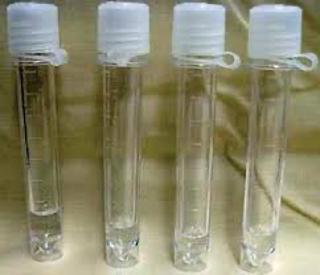
Contributor: Eric Miller, MD Educational Pearls: A cell count is performed on tubes 1 and 4 to account for changes that may occur from blood entering the first sample from the needle insertion Tube 2...

28 Apr 20206min

Podcast 555:  Anticoagulation vs. Antiplatelet

Podcast 555: Anticoagulation vs. Antiplatelet

Contributor: Don Stader, MD Educational Pearls: When do we give antiplatelet drugs or anti-coagulation drugs? Arterial issues get antiplatelet therapy Venous issues, or slow flow states, get antico...

27 Apr 20203min

Populärt inom Vetenskap

p3-dystopia
dumma-manniskor
svd-nyhetsartiklar
allt-du-velat-veta
medicinvetarna
rss-ufo-bortom-rimligt-tvivel
rss-experimentet
rss-vetenskapsradion-2
rss-vetenskapsradion
det-morka-psyket
sexet
kapitalet-en-podd-om-ekonomi
hacka-livet
dumforklarat
pojkmottagningen
rss-arkeologi-historia-podden-som-graver-i-vart-kulturlandskap
rss-personlighetspodden
paranormalt-med-caroline-giertz
vetenskap-och-halsa
halsorevolutionen