Podcast 552: PE Management and Risk Stratification

Podcast 552: PE Management and Risk Stratification

Contributor: Dylan Luyten, MD

Educational Pearls:

  • After you diagnose a pulmonary embolism (PE) via CT or VQ scan, we need to categorize the PE as massive, sub-massive, or just PE to dictate treatment.
  • Massive PE: shock with hypotension due to an embolism, and the treatment of choice is thrombolysis with IV tPA with anticoagulation after lysis. Catheter thrombolysis is not used in the hemodynamically unstable patient but can be done after they are stable.
  • Sub-massive: signs of right heart strain/failure but hemodynamically stable. This can be EKG changes, positive biomarkers, or imaging findings. These patients can be treated with IV heparin as there may benefit from catheter directed thrombolysis which has been shown to lead to better functional outcomes.
  • Everything else can be stratified to determine whether inpatient even outpatient treatment is necessary
  • Pulmonary Embolism Severity Index (PESI) or Hestia criteria and can help determine if the patient is better suited for in or outpatient management.
  • Non massive or sub-massive PEs are treated with heparin/Lovenox bridged to Warfarin, a factor Xa inhibitor (ex. Xarelto), or direct oral anticoagulants (DOAC).

Editor's note: intravenous heparin is preferable to other anticoagulants when considering interventional radiology as it can be shut off and/or reversed if necessary prior to procedure

References

1. Sista, A. et al. Stratification, Imaging, and Management of Acute Massive and Submassive Pulmonary Embolism. 2017 Jul;284(1):5-24

2. Aujesky D, Obrosky DS, Stone RA, Auble TE, Perrier A, Cornuz J, Roy PM, Fine MJ. Derivation and validation of a prognostic model for pulmonary embolism. Am J Respir Crit Care Med. 2005 Oct 15;172(8):1041-6

3. Jimenez, D. et al. Risk stratification of patients with acute symptomatic pulmonary embolism. Intern Emerg Med. 2016 Feb;11(1):11-8.

Summarized by Jackson Roos, MS3 | Edited by Erik Verzemnieks, MD


Avsnitt(1146)

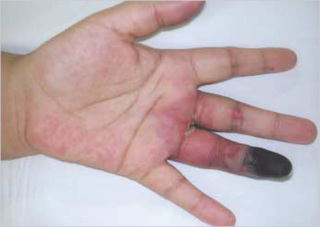
Podcast # 367: Digital Necrosis after Epinephrine Drip

Podcast # 367: Digital Necrosis after Epinephrine Drip

Podcast # 367: Digital Necrosis after Epinephrine Drip Author: Jared Scott, MD. Educational Pearls: Make sure to monitor for limb ischemia in all patients on vasopressors Good reminder that vasop...

17 Aug 20184min
Podcast # 366: Ehlers Danlos

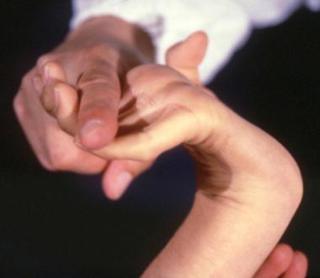
Podcast # 366: Ehlers Danlos

Podcast # 366: Ehlers Danlos Author: Gretchen Hinson, MD. Educational Pearls: Heritable mutation in collagen synthesis and expression commonly resulting in joint hyperextension and skin elasticity....

15 Aug 20184min

Podcast # 365: Renal Trigger Point Injections

Podcast # 365: Renal Trigger Point Injections

Author: Erik Verzemnieks, MD Educational Pearls: Single study in Japan demonstrated possible effectiveness of renal colic trigger point Patients had injection at the area of maximal tenderness on...

13 Aug 20181min
Podcast # 364: Other causes of ST elevation

Podcast # 364: Other causes of ST elevation

Author: Peter Bakes, MD Educational Pearls: Pericarditis, LBBB, LVH and left ventricular aneurysms can all present with ST elevation. Ventricular aneurysm will present days after a cardiac event ...

10 Aug 20186min
Podcast # 363:  Ketamine for Alcohol Withdrawal

Podcast # 363: Ketamine for Alcohol Withdrawal

Educational Pearls: Recent study has shown adjunctive ketamine can be useful in setting of alcohol withdrawal. Ketamine was associated with a decrease in the amount of benzodiazepines needed, lik...

8 Aug 20182min

Podcast # 362: Giant Hogweed

Podcast # 362: Giant Hogweed

Author: John Winkler, MD Educational Pearls: Tall flowering plant with phototoxic sap Direct skin contact with the sap can cause the skin to become photosensitive Severe blisters and even burns...

6 Aug 20182min

Podcast # 361: Vertiginous Dizziness

Podcast # 361: Vertiginous Dizziness

Author: Peter Bakes, MD Educational Pearls: Important to find out if patients mean dysequilibrium, lightheadedness, or vertigo when patients say they are "dizzy." Differentiate central vs. periph...

3 Aug 20186min
Podcast # 360: Epidural Abscess Screening

Podcast # 360: Epidural Abscess Screening

Author: Dylan Luyten, MD. Educational Pearls:   Dangerous causes of back pain: AAA, cauda equina syndrome, epidural abscess. Young person with back pain needs to be evaluated for injection drug use...

2 Aug 20184min

Populärt inom Vetenskap

dumma-manniskor
svd-nyhetsartiklar
p3-dystopia
kapitalet-en-podd-om-ekonomi
allt-du-velat-veta
rss-ufo-bortom-rimligt-tvivel
det-morka-psyket
medicinvetarna
rss-vetenskapsradion
rss-vetenskapsradion-2
sexet
rss-experimentet
pojkmottagningen
hacka-livet
rss-spraket
dumforklarat
rss-broccolipodden-en-podcast-som-inte-handlar-om-broccoli
halsorevolutionen
bildningspodden
rss-arkeologi-historia-podden-som-graver-i-vart-kulturlandskap