
Podcast 553: Airway Management in the Hypoxic COVID-19 Patient (Recorded 4/3/20)

Podcast 553: Airway Management in the Hypoxic COVID-19 Patient (Recorded 4/3/20)

Contributor: Dylan Luyten, MD

Educational pearls:

  • Clinical management of COVID-19 is rapidly evolving, relying on case reports and clinical experience
  • In just a month, the consensus around management of COVID patients with severe hypoxia has shifted from an early intubation strategy to other, non-invasive means
  • Intubating early can quickly consume ventilator resources, require increased intensive care monitoring, and likely leads to longer hospital stays and once COVID patients are intubated, extubation can take days to weeks.
  • In Italy, ventilator supplies were depleted leading to the use of helmet CPAP machines, which appeared to be effective in management of respiratory distress in COVID, though not available for use in the US
  • Non-invasive ventilation such as CPAP/BiPAP is thought to increase risk to staff for infection via aerosolization, and has often been avoided in COVID patients
  • High flow nasal cannulas appear to pose less of a risk of aerosolization of viral particles (especially when a surgical mask is placed over the patient's nose, mouth and apparatus)
  • Anecdotal evidence from NYC has shown success allowing conscious patients to maintain hypoxia on HFN, where they will self prone to help with lung recruitment, and seemingly do well despite persistent saturations in the 80s or less
  • Hospitals around the country are moving away from the intubate early methodology in favor of high flow oxygen therapy as long as they are not having issues with work of breathing or other complications
  • The pathophysiology of respiratory distress and hypoxia in COVID patients is evolving as well, and some presentations appear similar to disease processes such as high altitude pulmonary edema (HAPE) rather than acute respiratory distress syndrome (ARDS), in that patients are quite well appearing despite phenomenally low oximetry readings.
    • These select patients appear to be excellent candidates for non-invasive means rather than an early intubation strategy

Editor's note: do not take lightly that intubation is one of the highest risk aerosolization generating procedures, along with many peri-intubation procedures like suctioning, BVM, etc.

References

[1]. Sorbello, M. et al. The Italian coronavirus disease 2019 outbreak: recommendations from clinical practice. Anaesthesia. 2020 Mar 27.

[2]. Giwa, AL. Desai A. Duca A. Novel 2019 coronavirus SARS-CoV-2 (COVID-19): An updated overview for emergency clinicians. Emerg Med Pract. 2020 May 1;22(5):1-28.

[3]. Ather B, Edemekong PF. Airborne Precautions. [Updated 2020 Feb 17]. In: StatPearls [Internet]. Treasure Island (FL): StatPearls Publishing; 2020 Jan.

Summarized by Jackson Roos, MS3 | Edited by Erik Verzemnieks, MD

Photo Credit: New England Journal of Medicine

https://www.nejm.org/doi/full/10.1056/NEJMc2007589?query=RP

Avsnitt(1146)

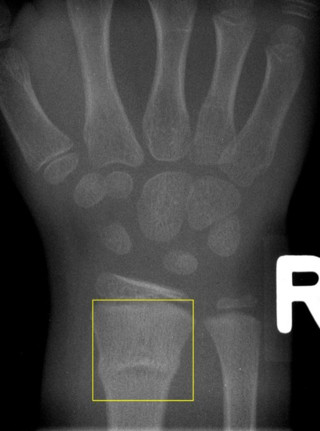
Podcast 834:  Peds Buckle Fractures

Podcast 834: Peds Buckle Fractures

Contributor: Aaron Lessen, MD Educational Pearls: Torus (Buckle) fractures are a commonly encountered pediatric fracture pattern Typically presents as wrist pain secondary to a child falling on outs...

29 Nov 20223min
Podcast 833: NS vs LR

Podcast 833: NS vs LR

Contributor: Travis Barlock, MD Educational Pearls: Normal Saline (NS) contains 154 mEq of both Sodium (Na) and Chloride (Cl), and has a pH of 5.5 Normal Na and Cl in adult humans are about 140 mEq...

28 Nov 20225min
CA Bridge Program and Health Disparities in the Opioid Epidemic

CA Bridge Program and Health Disparities in the Opioid Epidemic

Happy Thanksgiving EMM listeners, Mason here wanting to extend a special thank you to all of you for tuning in to our show. Today we are featuring a special episode on health disparities in the opioid...

23 Nov 202251min

Podcast 832: STD Checks

Podcast 832: STD Checks

Educational Pearls: Most common sexually transmitted disease (STD) in North America: Human Papillomavirus (HPV) From the emergency department patients should be connected to follow-up care and educ...

22 Nov 20225min

Podcast 831: O2 Targets

Podcast 831: O2 Targets

Contributor: Aaron Lessen,MD Educational Pearls: Recent study looked at mechanically ventilated patients in ED and ICU to determine if O2 saturation level impacted patient outcomes 2541 patients ra...

21 Nov 20223min
Podcast 830: Peripheral IV Flow Rates

Podcast 830: Peripheral IV Flow Rates

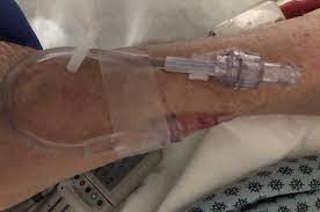
Contributor: Travis Barlock, MD Educational Pearls: Gauge and length of catheter are determinants of flow rate Smaller gauges produce higher flow rate Longer catheters reduce flow rate Common IV...

15 Nov 20223min

Podcast 829: Monkeypox

Podcast 829: Monkeypox

Contributor: Aaron Lessen, MD Educational Pearls: Monkeypox transmission is still occurring in the United States Transmitted by contact to exposed lesion MSM are a high-risk group for monkeypox inf...

14 Nov 20224min

Podcast 828: TXA Dosing Update

Podcast 828: TXA Dosing Update

Contributor: Nick Hatch, MD Educational Pearls: In the setting of traumatic injury, tranexamic acid (TXA) is given to stabilize clots which minimizes bleeding and decreases risk of hemorrhagic shock ...

8 Nov 20224min

Populärt inom Vetenskap

p3-dystopia
dumma-manniskor
svd-nyhetsartiklar
allt-du-velat-veta
kapitalet-en-podd-om-ekonomi
det-morka-psyket
rss-ufo-bortom-rimligt-tvivel
sexet
rss-vetenskapsradion
pojkmottagningen
rss-vetenskapsradion-2
dumforklarat
rss-broccolipodden-en-podcast-som-inte-handlar-om-broccoli
halsorevolutionen
rss-spraket
bildningspodden
hacka-livet
rss-experimentet
medicinvetarna
rss-lara-fran-larda-en-fackbok-och-en-forfattare