
Podcast 553: Airway Management in the Hypoxic COVID-19 Patient (Recorded 4/3/20)

Podcast 553: Airway Management in the Hypoxic COVID-19 Patient (Recorded 4/3/20)

Contributor: Dylan Luyten, MD

Educational pearls:

  • Clinical management of COVID-19 is rapidly evolving, relying on case reports and clinical experience
  • In just a month, the consensus around management of COVID patients with severe hypoxia has shifted from an early intubation strategy to other, non-invasive means
  • Intubating early can quickly consume ventilator resources, require increased intensive care monitoring, and likely leads to longer hospital stays and once COVID patients are intubated, extubation can take days to weeks.
  • In Italy, ventilator supplies were depleted leading to the use of helmet CPAP machines, which appeared to be effective in management of respiratory distress in COVID, though not available for use in the US
  • Non-invasive ventilation such as CPAP/BiPAP is thought to increase risk to staff for infection via aerosolization, and has often been avoided in COVID patients
  • High flow nasal cannulas appear to pose less of a risk of aerosolization of viral particles (especially when a surgical mask is placed over the patient's nose, mouth and apparatus)
  • Anecdotal evidence from NYC has shown success allowing conscious patients to maintain hypoxia on HFN, where they will self prone to help with lung recruitment, and seemingly do well despite persistent saturations in the 80s or less
  • Hospitals around the country are moving away from the intubate early methodology in favor of high flow oxygen therapy as long as they are not having issues with work of breathing or other complications
  • The pathophysiology of respiratory distress and hypoxia in COVID patients is evolving as well, and some presentations appear similar to disease processes such as high altitude pulmonary edema (HAPE) rather than acute respiratory distress syndrome (ARDS), in that patients are quite well appearing despite phenomenally low oximetry readings.
    • These select patients appear to be excellent candidates for non-invasive means rather than an early intubation strategy

Editor's note: do not take lightly that intubation is one of the highest risk aerosolization generating procedures, along with many peri-intubation procedures like suctioning, BVM, etc.

References

[1]. Sorbello, M. et al. The Italian coronavirus disease 2019 outbreak: recommendations from clinical practice. Anaesthesia. 2020 Mar 27.

[2]. Giwa, AL. Desai A. Duca A. Novel 2019 coronavirus SARS-CoV-2 (COVID-19): An updated overview for emergency clinicians. Emerg Med Pract. 2020 May 1;22(5):1-28.

[3]. Ather B, Edemekong PF. Airborne Precautions. [Updated 2020 Feb 17]. In: StatPearls [Internet]. Treasure Island (FL): StatPearls Publishing; 2020 Jan.

Summarized by Jackson Roos, MS3 | Edited by Erik Verzemnieks, MD

Photo Credit: New England Journal of Medicine

https://www.nejm.org/doi/full/10.1056/NEJMc2007589?query=RP

Avsnitt(1146)

Podcast 747: Food Impaction

Podcast 747: Food Impaction

Contributor: Ricky Dhaliwal, MD Educational Pearls: Esophageal food impaction can be managed in the ED prior to calling GI for endoscopy Coca-cola, glucagon, benzodiazepines, calcium channel blockers...

17 Jan 20223min

Podcast 746: Elderly Head Trauma on Anticoagulation

Podcast 746: Elderly Head Trauma on Anticoagulation

Contributor: Aaron Lessen, MD Educational Pearls: Biggest study to date examined new protocol for repeat head CT in anticoagulated elderly patients with head trauma and an initial negative head CT ...

11 Jan 20223min
Podcast 745: Nitrous-Induced B12 Deficiency

Podcast 745: Nitrous-Induced B12 Deficiency

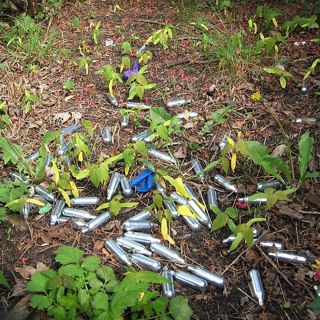
Contributor: Alicia Oberle, MD Educational Pearls: Nitrous oxide (N2O) can cause a vitamin B12 deficiency in patients after regular use N2O is used in procedural sedation but also as a popular recrea...

10 Jan 20222min

Podcast 744: Glucagon for Beta Blocker Toxicity

Podcast 744: Glucagon for Beta Blocker Toxicity

Educational Pearls: Glucagon can be used to treat hypoglycemia and esophageal foreign body, but it can also be used in beta-blocker toxicity to bypass cardiac beta-blockade The superior option for tr...

4 Jan 20222min

Podcast 743: Rust Rings

Podcast 743: Rust Rings

Contributor: Jared Scott, MD Educational Pearls: A rust ring can occur after a metallic foreign body is left in the eye for a prolonged period of time Issues occur when the rust ring is left as it ca...

3 Jan 20225min

Podcast 742: Pulse Check During CPR

Podcast 742: Pulse Check During CPR

Contributor: Aaron Lessen, MD Educational Pearls: Pulse checks are necessary during CPR to check for return of spontaneous circulation (ROSC) Previous studies have shown that assessing ROSC with palp...

29 Dec 20213min

Podcast 741: Calcium for Cardiac Arrest

Podcast 741: Calcium for Cardiac Arrest

Contributor: Aaron Lessen, MD Educational Pearls: Study of nearly 400 patients evaluating giving calcium during cardiac arrest with the endpoint as return of spontaneous circulation (ROSC) Compared g...

28 Dec 20212min
Podcast 740: Placenta Previa

Podcast 740: Placenta Previa

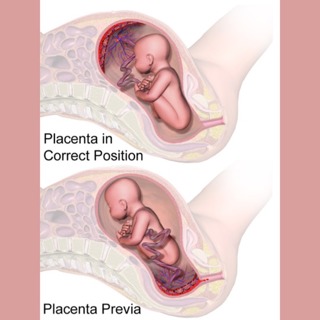
Contributor: Peter Bakes, MD Educational Pearls: High concern causes of third trimester vaginal bleeding include placenta previa, placental abruption, or vasa previa In placenta previa, the placenta ...

21 Dec 20213min

Populärt inom Vetenskap

dumma-manniskor
svd-nyhetsartiklar
p3-dystopia
kapitalet-en-podd-om-ekonomi
allt-du-velat-veta
rss-ufo-bortom-rimligt-tvivel
det-morka-psyket
rss-vetenskapsradion
sexet
medicinvetarna
rss-vetenskapsradion-2
rss-experimentet
pojkmottagningen
dumforklarat
hacka-livet
rss-spraket
bildningspodden
rss-broccolipodden-en-podcast-som-inte-handlar-om-broccoli
rss-lara-fran-larda-en-fackbok-och-en-forfattare
intergalaktiskt