
Podcast 553: Airway Management in the Hypoxic COVID-19 Patient (Recorded 4/3/20)

Podcast 553: Airway Management in the Hypoxic COVID-19 Patient (Recorded 4/3/20)

Contributor: Dylan Luyten, MD

Educational pearls:

  • Clinical management of COVID-19 is rapidly evolving, relying on case reports and clinical experience
  • In just a month, the consensus around management of COVID patients with severe hypoxia has shifted from an early intubation strategy to other, non-invasive means
  • Intubating early can quickly consume ventilator resources, require increased intensive care monitoring, and likely leads to longer hospital stays and once COVID patients are intubated, extubation can take days to weeks.
  • In Italy, ventilator supplies were depleted leading to the use of helmet CPAP machines, which appeared to be effective in management of respiratory distress in COVID, though not available for use in the US
  • Non-invasive ventilation such as CPAP/BiPAP is thought to increase risk to staff for infection via aerosolization, and has often been avoided in COVID patients
  • High flow nasal cannulas appear to pose less of a risk of aerosolization of viral particles (especially when a surgical mask is placed over the patient's nose, mouth and apparatus)
  • Anecdotal evidence from NYC has shown success allowing conscious patients to maintain hypoxia on HFN, where they will self prone to help with lung recruitment, and seemingly do well despite persistent saturations in the 80s or less
  • Hospitals around the country are moving away from the intubate early methodology in favor of high flow oxygen therapy as long as they are not having issues with work of breathing or other complications
  • The pathophysiology of respiratory distress and hypoxia in COVID patients is evolving as well, and some presentations appear similar to disease processes such as high altitude pulmonary edema (HAPE) rather than acute respiratory distress syndrome (ARDS), in that patients are quite well appearing despite phenomenally low oximetry readings.
    • These select patients appear to be excellent candidates for non-invasive means rather than an early intubation strategy

Editor's note: do not take lightly that intubation is one of the highest risk aerosolization generating procedures, along with many peri-intubation procedures like suctioning, BVM, etc.

References

[1]. Sorbello, M. et al. The Italian coronavirus disease 2019 outbreak: recommendations from clinical practice. Anaesthesia. 2020 Mar 27.

[2]. Giwa, AL. Desai A. Duca A. Novel 2019 coronavirus SARS-CoV-2 (COVID-19): An updated overview for emergency clinicians. Emerg Med Pract. 2020 May 1;22(5):1-28.

[3]. Ather B, Edemekong PF. Airborne Precautions. [Updated 2020 Feb 17]. In: StatPearls [Internet]. Treasure Island (FL): StatPearls Publishing; 2020 Jan.

Summarized by Jackson Roos, MS3 | Edited by Erik Verzemnieks, MD

Photo Credit: New England Journal of Medicine

https://www.nejm.org/doi/full/10.1056/NEJMc2007589?query=RP

Avsnitt(1147)

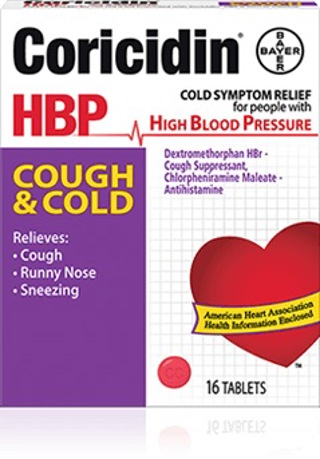
Podcast 539:  Coricidin Abuse

Podcast 539: Coricidin Abuse

Contributor:  Rachel Beham, PharmD Educational Pearls: Coricidin HBP Cough & Cold (dextromethorphan and chlorpheniramine) is one of the more commonly abused over-the-counter medications Dextromethorp...

10 Feb 20203min

Podcast 538:  Low Maintenance Boxer's Fracture

Podcast 538: Low Maintenance Boxer's Fracture

Contributor: Jared Scott, MD Educational Pearls: A distal 5th metacarpal neck fracture is often referred to as a "boxer's fracture" and a common fracture encountered in the emergency department Splin...

4 Feb 20202min

Podcast 537:  Thoughts on Cardiac Arrest

Podcast 537: Thoughts on Cardiac Arrest

Contributor:  Don Stader, MD Educational Pearls: High-quality compressions are an essential, and probably one of the most important, part of cardiac arrest  Actual evidence for drugs in cardiac arres...

3 Feb 20205min

UnfilterED #4: Dr. Vivek Tayal

UnfilterED #4: Dr. Vivek Tayal

Dr. Vivek Tayal of Carolinas Medical Center, a pioneer of using ultrasound in the emergency department, reflects on his role in establishing ultrasound use in emergency medicine and much more! Ultra...

29 Jan 202045min
Podcast 536:  Epistaxis 101

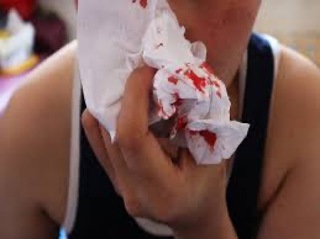
Podcast 536: Epistaxis 101

Contributor:  Dylan Luyten, MD Educational Pearls: Clear the nasal passages - have the patient, if stable, blow their nose to dislodge any clot that might be in the way Searching for the source of bl...

28 Jan 20208min
Podcast 535: A Prescription for Falls

Podcast 535: A Prescription for Falls

Contributor: Aaron Lessen, MD Educational Pearls: Emergency department evaluation of falls, particularly in the elderly, should include an assessment of risk factors Common causes of falls in th...

28 Jan 20202min

Mental Health Monthly #1: Decision Making Capacity

Mental Health Monthly #1: Decision Making Capacity

In the first episode of this new series, the complexities of decision making capacity are discussed. References and Further Reading: [1] Appelbaum, P. S. (2007). Assessment of patients' competence to...

22 Jan 202010min
Podcast 534: Nerve Agents

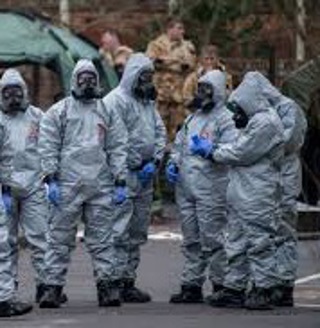
Podcast 534: Nerve Agents

Author: Michael Hunt, MD Educational Pearls: Organophosphate "nerve agents" were developed in the 1930's These agents have cholinergic effects, which can be remembered by the mnemonic "SLUDGE" Sali...

21 Jan 20205min

Populärt inom Vetenskap

p3-dystopia
dumma-manniskor
svd-nyhetsartiklar
allt-du-velat-veta
kapitalet-en-podd-om-ekonomi
rss-ufo-bortom-rimligt-tvivel
sexet
paranormalt-med-caroline-giertz
hacka-livet
rss-vetenskapsradion-2
det-morka-psyket
dumforklarat
rss-experimentet
rss-spraket
medicinvetarna
halsorevolutionen
4health-med-anna-sparre
bildningspodden
rss-tidslinjen-podcast
vetenskapsradion