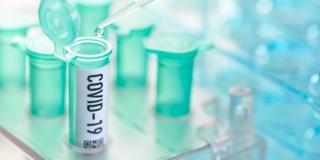

Podcast 557:  COVID-19 Lab Trends

Podcast 557: COVID-19 Lab Trends

Contributor: Don Stader, MD

Educational Pearls:

  • COVID-19 is diagnosed with a nasopharyngeal swab (q-tip). This unfortunately can be painful, but if the swab doesn't go deep into the nasal cavity the sample can be inadequate leading to false negatives (missed infections).
  • The sensitivity of the COVID-19 RT PCR test is low, ranging from 66-80% in various studies. Another study has shown 23% of patients who initially tested negative but had COVID-19 symptoms will test positive when re-tested. So test highly suspicious patients twice.

  • COVID has shown to have an effect on CBC. White blood cell counts are often normal (no leukocytosis), but there is often lymphopenia, or low lymphocytes, and thrombocytopenia. Interestingly, low platelets have appeared to have prognostic value in that lower platelets often indicate worse patient outcomes.
  • Coagulation studies are showing very elevated D-Dimers which has sparked the debate as to whether COVID-19 causes a hypercoagulable state. The increased incidence of MI/heart attacks and strokes in COVID patients supports this argument.
  • While D-Dimers can help point towards a diagnosis of pulmonary embolism, in the setting of highly likely COVID-19 infections, getting a CTA looking for a PE is probably unnecessary unless there's also suspicion for PE.
  • C-reactive protein (CRP) and procalcitonin are two common inflammatory markers. A CRP can help indicate how sick a patient is and procalcitonin can help determine if the infection is bacterial or viral in nature.
  • CRP levels are often elevated in COVID patients, and studies are showing a high CRP is linked to worse patient outcomes.
  • Elevations in procalcitonin can be used to see if there's a concomitant bacterial infection, meaning patients need antibiotics in addition to supportive care for the COVID-19.
  • Flu season is coming to a close, but data has shown a 5-10% co-infection rate of COVID-19 with influenza. As expected patient outcomes have been worse in those with both infections.

References

1) Farkas, Josh. "COVID-19." EMCrit Project, 21 Apr. 2020, emcrit.org/ibcc/covid19/#labs.

2) Guan W. et al. Clinical Characteristics of Coronavirus Disease 2019 in China. February 28, 2020, updated on March 6, 2020, at NEJM.org. DOI: 10.1056/NEJMoa2002032

3)Young BE, Ong SWX, Kalimuddin S, et al. Epidemiologic Features and Clinical Course of Patients Infected With SARS-CoV-2 in Singapore. JAMA. 2020;323(15):1488–1494. doi:10.1001/jama.2020.3204

4) Wang M. et al. Clinical diagnosis of 8274 samples with 2019-novel coronavirus in Wuhan. medRxiv 2020.02.12.20022327; doi: https://doi.org/10.1101/2020.02.12.20022327

Summarized by Jackson Roos, MS4 | Edited by Erik Verzemnieks, MD

Avsnitt(1146)

Podcast 819: Indiscriminate Lactate Testing

Podcast 819: Indiscriminate Lactate Testing

Contributor: Jared Scott, MD Educational Pearls: Elevated lactate levels can be a useful indicator of critical illness in patients who meet SIRS criteria Lactate can also be elevated due to ot...

10 Okt 20225min
Podcast 818: Local Anesthetics and LAST

Podcast 818: Local Anesthetics and LAST

Contributor: Don Stader, MD Educational Pearls: There are two major groups of local anesthetics: Amide and Esther To recall what group an anesthetic belongs to, use this memory trick: Amide has...

4 Okt 20226min

Podcast 817: MI Risk during Elections

Podcast 817: MI Risk during Elections

Contributor: Aaron Lessen, MD Educational Pearls: 2020 retrospective study with dat from two California hospitals compared rates of cardiovascular admissions in a five day period two weeks before and...

3 Okt 20222min

Podcast 816: Ventilator Management in Asthmatics

Podcast 816: Ventilator Management in Asthmatics

Contributor: Aaron Lessen, MD Educational Pearls: The management of severe asthma or COPD exacerbation is complex, especially when the patient requires intubation/ventilation Asthma is an obstructive...

27 Sep 20224min
Podcast 815: Fluid Resuscitation in Pancreatitis

Podcast 815: Fluid Resuscitation in Pancreatitis

Contributor: Aaron Lessen, MD Educational Pearls: Historically, pancreatitis has been treated with aggressive IV fluid rehydration. Recently published data shows this may not be appropriate. A random...

26 Sep 20223min

Podcast 814: Post-concussion Treatment

Podcast 814: Post-concussion Treatment

Contributor: Aaron Lessen, MD Educational Pearls: Recent study looked at the impact of screen time on duration of post-concussive symptoms 125 patients aged 12-25 diagnosed with a concussion were ran...

19 Sep 20222min

Podcast 813: Pulse Oximetry

Podcast 813: Pulse Oximetry

Contributor: Travis Barlock, MD Educational Pearls: Most oxygen in the body is bound to hemoglobin, forming oxyhemoglobin. Less than 1% of the oxygen in the body is dissolved in plasma.  Pulse Oximet...

13 Sep 20224min

Podcast 812: PO Medications

Podcast 812: PO Medications

Contributor: Nick Tsipis, MD Educational Pearls: PO medications are less frequently used in the ED due to their longer onset of action The position the patient is in when given PO medications ...

12 Sep 20223min

Populärt inom Vetenskap

p3-dystopia
dumma-manniskor
svd-nyhetsartiklar
allt-du-velat-veta
det-morka-psyket
kapitalet-en-podd-om-ekonomi
pojkmottagningen
sexet
rss-ufo-bortom-rimligt-tvivel
rss-vetenskapsradion-2
rss-vetenskapsradion
dumforklarat
halsorevolutionen
rss-broccolipodden-en-podcast-som-inte-handlar-om-broccoli
medicinvetarna
rss-experimentet
bildningspodden
vetenskapsradion
hacka-livet
intergalaktiskt