Podcast 560:  Imaging in a COVID world

Podcast 560: Imaging in a COVID world

Contributor: Don Stader, MD

Educational Pearls:

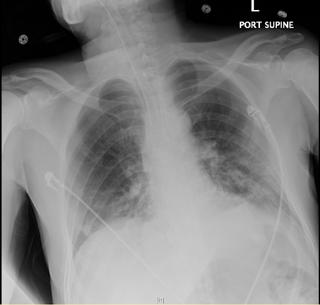
  • COVID-19 commonly appears as a bilateral patchy infiltrate on chest radiograph, but this is a non-specific finding
    • Sensitivities range from 17-70% for COVID-19
    • Many other viral pneumonias such as RSV and influenza can have similar findings
  • Point-of-care ultrasound (POCUS) demonstrates B-lines, water-fall sign, or hepatization of the lung, but these are also non-specific
  • Computerized tomography (CT) appears to be one of the more sensitive tests for detecting COVID-19, demonstrating ground-glass opacities - often before or without the patient having symptoms
    • However, routine use of CT for diagnosis COVID-19 is strongly discouraged by many medical societies and the CDC
  • Imaging may not be necessary in most patients presenting with suspected COVID-19 for multiple reasons:
    • Diagnosis is often clinical suspicion, with or without confirmatory PCR testing (if available)
    • Imaging does little to change the management in the majority of patients with COVID-19
    • Obtaining imaging exposes additional healthcare workers
    • Cleaning protocols for units (especially CT) can be extensive and require significant downtime of the machine, thereby leading to delays in care

References

  1. Farkas, Josh. "COVID-19." EMCrit Project, 21 Apr. 2020, emcrit.org/ibcc/covid19/#labs.
  2. Guan W. et al. Clinical Characteristics of Coronavirus Disease 2019 in China. February 28, 2020, updated on March 6, 2020, at NEJM.org. DOI: 10.1056/NEJMoa2002032

Summarized by Jackson Roos, MS4 | Edited by Erik Verzemnieks, MD

Avsnitt(1145)

EMSAC 2024

EMSAC 2024

Contributors: Col. (Dr.) Stacy Shackelford Dr. Sean Keenan Paramedic Alan Moreland Dr. Chris Tems Kara Napolitano From military-inspired trauma protocols to behavioral health alternatives and cardiac ...

26 Juli 202511min

Episode 966: Acetaminophen Toxicity

Episode 966: Acetaminophen Toxicity

Contributor: Jorge Chalit-Hernandez, OMS4 Educational Pearls: What is the toxic dose of acetaminophen? 7.5 grams, in an adult. The safe daily limit is 4 grams in an adult with a normally functioning...

21 Juli 20253min

Episode 965: Oxygen Administration in Trauma Patients

Episode 965: Oxygen Administration in Trauma Patients

Contributor: Aaron Lessen, MD Educational Pearls: Many trauma patients are placed on oxygen via non-rebreather A large, multicenter, controlled trial evaluated the outcomes of oxygen administration i...

14 Juli 20252min

Episode 964: Ketamine & Midazolam for Prehospital Seizure Management

Episode 964: Ketamine & Midazolam for Prehospital Seizure Management

Contributor: Aaron Lessen, MD Educational Pearls: Prehospital seizures are typically managed with intramuscular midazolam (Versed) Seizures theoretically involve the NMDA pathway, and ketamine is a p...

7 Juli 20254min

Episode 963: Antihypertensives and Emergency Room Considerations

Episode 963: Antihypertensives and Emergency Room Considerations

Contributor: Alec Coston, MD Educational Pearls: For patients presenting to the emergency room with hypertension, clinicians should determine if it is isolated and uncomplicated, or involves comorbidi...

30 Juni 20254min

Episode 962: HEART Score

Episode 962: HEART Score

Contributor: Taylor Lynch, MD Educational Pearls: How do we risk-stratify chest-pain patients? One option is the HEART score This score predicts a patient's 6-week risk of a major adverse cardiac ev...

23 Juni 20254min

Episode 961: Cell Phone Sign

Episode 961: Cell Phone Sign

Contributor: Aaron Lessen, MD Educational Pearls: A prospective study at the Mayo Clinic Rochester was conducted to examine whether patients actively using their phones on initial assessment in the E...

16 Juni 20251min

Episode 960: Frank's Sign - A Marker for Coronary Artery Disease

Episode 960: Frank's Sign - A Marker for Coronary Artery Disease

Contributor: Travis Barlock MD Educational Pearls Frank's sign is a curious physical exam finding first described in the literature in 1973 Bilateral earlobe creases are recognized as a marker of co...

9 Juni 20251min

Populärt inom Vetenskap

p3-dystopia
dumma-manniskor
svd-nyhetsartiklar
allt-du-velat-veta
kapitalet-en-podd-om-ekonomi
det-morka-psyket
dumforklarat
pojkmottagningen
rss-vetenskapsradion-2
rss-vetenskapsradion
rss-ufo-bortom-rimligt-tvivel
sexet
halsorevolutionen
rss-spraket
medicinvetarna
rss-experimentet
vetenskapsradion
paranormalt-med-caroline-giertz
4health-med-anna-sparre
rss-tidslinjen-podcast