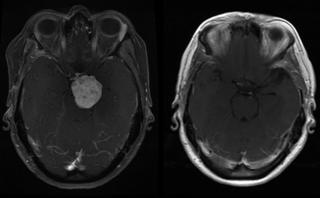
Podcast 582:  Gadolinium - The Contrast of MRI

Podcast 582: Gadolinium - The Contrast of MRI

Contributor: Michael Hunt, MD

Educational Pearls:

  • Contrast agents are commonly used for X-rays and CT's to better characterize disease, but contrast doesn't work with MRI. That's where the element Gadolinium comes into play.
  • Gadolinium, element 64, is ferromagnetic (attracted to iron) below 68 degrees and above that temperature it's paramagnetic which makes it useful in MRI (Magnetic Resonance Imaging).
  • Gadolinium is toxic alone, but when paired with chelators it can be used in humans and allows for better characterization of tumors or abnormal tissue on MRI.
  • It helps identify this abnormal tissue because when MRI causes polarization of our body's cells, the gadolinium, which has the maximum number of unpaired electrons in its orbital shells, alters the rate of decay in abnormal tissue highlighting abnormalities on imaging.
  • Gadolinium can also be used in the treatment of cancers because it collects in the cells of abnormal tissue, allowing for more targeted therapies.
  • In people exposed to gadolinium, the anaphylaxis rate is low, below 1/1000, and in rare cases there are reports of kidney injury and nephrogenic systemic fibrosis which is why it's not recommended in renal failure patients.

References

1)Ibrahim MA, Hazhirkarzar B, Dublin AB. Magnetic Resonance Imaging (MRI) Gadolinium. [Updated 2020 Mar 9]. In: StatPearls [Internet]. Treasure Island (FL): StatPearls Publishing; 2020 Jan-. Available from: https://www.ncbi.nlm.nih.gov/books/NBK482487/

2)Pasquini L, Napolitano A, Visconti E, et al. Gadolinium-Based Contrast Agent-Related Toxicities [published correction appears in CNS Drugs. 2018 May 15;:]. CNS Drugs. 2018;32(3):229-240. doi:10.1007/s40263-018-0500-1

Summarized by Jackson Roos, MS4 | Edited by Erik Verzemnieks, MD

Avsnitt(1145)

Podcast #208: Vocal Cord Dysfunction

Podcast #208: Vocal Cord Dysfunction

Author: Martin O'Bryan M.D. Educational Pearls: Vocal cord dysfunction can mimic other causes of stridor, such as asthma and upper airway obstruction. Patients are often very anxious because of the d...

24 Maj 20174min

Podcast #207: Boxer's Fracture

Podcast #207: Boxer's Fracture

Author: Sam Killian, M.D. Educational Pearls: Defined as fracture of neck (distal segment) of 5th metacarpal. Intrinsic muscles of hand pull segment to palmar aspect of hand. 30 degrees of angulation...

22 Maj 20174min
Podcast #206: Urethral Injuries

Podcast #206: Urethral Injuries

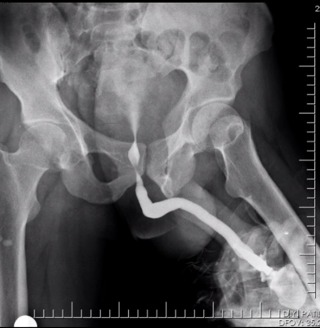
Author: Jared Scott, M.D. Educational Pearls: DDx for blood at urethral meatus includes: pelvic fracture, ruptured bladder, kidney laceration, penile trauma. Retrograde Urethrogram (RUG) must be perf...

20 Maj 20174min
Podcast #205: Post Cardiac Arrest Temperature Control

Podcast #205: Post Cardiac Arrest Temperature Control

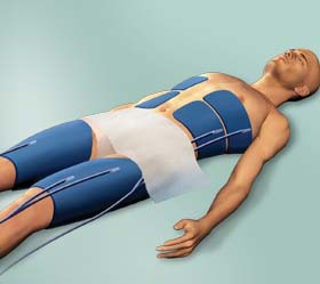
Author: Michael Hunt, M.D. Educational Pearls: Research has shown that the higher temperatures post-cardiac arrests may lead to poorer outcomes. Initially, 33 deg C was the target temp. However, more...

18 Maj 20173min
Deep Dive #3: The New Standard in Stroke Treatment

Deep Dive #3: The New Standard in Stroke Treatment

Authors: Rebecca van Vliet MS, APN; Michelle Whaley MSN, CNS, CCNS, ANVP-VC The Stroke Team at Swedish Medical Center gives us a taste of how they are breaking records with door-to-needle time in man...

16 Maj 201738min
Podcast #204: Thoracotomy

Podcast #204: Thoracotomy

Author: Aaron Lessen M.D. Educational Pearls: Thoracotomy is a potentially life-saving procedure. However, outcomes are often poor and the procedure itself poses many risks to provider and patient....

14 Maj 20172min
Podcast #203: Wine, Milk and… Vaccines!?

Podcast #203: Wine, Milk and… Vaccines!?

Author: Dave Rosenberg M.D. Educational Pearls: Louis Pasteur developed the technique that is now known as pasteurization. It was first used in the wine-producing regions of France, and eventually in...

12 Maj 20174min
Podcast #202: Tide Pods

Podcast #202: Tide Pods

Author: Susan Brion M.D. Educational Pearls: Laundry and dishwasher detergent pods resemble candy and can be ingested by children. These tide pods are very highly concentrated and can cause chemical ...

10 Maj 20173min

Populärt inom Vetenskap

p3-dystopia
dumma-manniskor
svd-nyhetsartiklar
allt-du-velat-veta
kapitalet-en-podd-om-ekonomi
det-morka-psyket
pojkmottagningen
dumforklarat
rss-vetenskapsradion-2
rss-vetenskapsradion
sexet
halsorevolutionen
rss-ufo-bortom-rimligt-tvivel
rss-spraket
rss-experimentet
vetenskapsradion
rss-broccolipodden-en-podcast-som-inte-handlar-om-broccoli
medicinvetarna
bildningspodden
4health-med-anna-sparre