Podcast 582:  Gadolinium - The Contrast of MRI

Podcast 582: Gadolinium - The Contrast of MRI

Contributor: Michael Hunt, MD

Educational Pearls:

  • Contrast agents are commonly used for X-rays and CT's to better characterize disease, but contrast doesn't work with MRI. That's where the element Gadolinium comes into play.
  • Gadolinium, element 64, is ferromagnetic (attracted to iron) below 68 degrees and above that temperature it's paramagnetic which makes it useful in MRI (Magnetic Resonance Imaging).
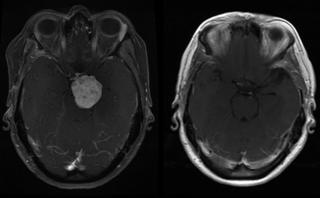
  • Gadolinium is toxic alone, but when paired with chelators it can be used in humans and allows for better characterization of tumors or abnormal tissue on MRI.
  • It helps identify this abnormal tissue because when MRI causes polarization of our body's cells, the gadolinium, which has the maximum number of unpaired electrons in its orbital shells, alters the rate of decay in abnormal tissue highlighting abnormalities on imaging.
  • Gadolinium can also be used in the treatment of cancers because it collects in the cells of abnormal tissue, allowing for more targeted therapies.
  • In people exposed to gadolinium, the anaphylaxis rate is low, below 1/1000, and in rare cases there are reports of kidney injury and nephrogenic systemic fibrosis which is why it's not recommended in renal failure patients.

References

1)Ibrahim MA, Hazhirkarzar B, Dublin AB. Magnetic Resonance Imaging (MRI) Gadolinium. [Updated 2020 Mar 9]. In: StatPearls [Internet]. Treasure Island (FL): StatPearls Publishing; 2020 Jan-. Available from: https://www.ncbi.nlm.nih.gov/books/NBK482487/

2)Pasquini L, Napolitano A, Visconti E, et al. Gadolinium-Based Contrast Agent-Related Toxicities [published correction appears in CNS Drugs. 2018 May 15;:]. CNS Drugs. 2018;32(3):229-240. doi:10.1007/s40263-018-0500-1

Summarized by Jackson Roos, MS4 | Edited by Erik Verzemnieks, MD

Avsnitt(1145)

Podcast 702: Paralytic Awareness

Podcast 702: Paralytic Awareness

Contributor: Aaron Lessen, MD Educational Pearls: Known risk factors for being awake and paralyzed in the OR include only receiving IV medications, long-acting paralytics, and no formal monitoring sy...

9 Aug 20212min

Podcast 701: Elevated Blood Pressure Readings

Podcast 701: Elevated Blood Pressure Readings

Contributor: Aaron Lessen, MD Educational Pearls: Recent retrospective cohort study looked at elevated BP readings in the ED and correlation to underlying hypertension Large cohort of over 30,000 pat...

3 Aug 20213min
Podcast 700: Analgesics for Acute Musculoskeletal Pain

Podcast 700: Analgesics for Acute Musculoskeletal Pain

Contributor: Aaron Lessen, MD Educational Pearls: Recent RCT compared pain relief in patients receiving five medications for acute musculoskeletal pain Acetaminophen 1000mg/ibuprofen 400 mg Acetam...

2 Aug 20212min
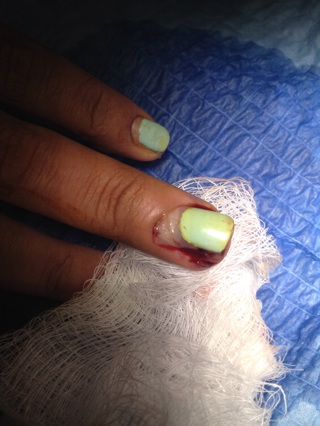
Podcast 699: Pediatric Fingernail Avulsions

Podcast 699: Pediatric Fingernail Avulsions

Contributor: Aaron Lessen, MD Educational Pearls: Traditionally, fingernails were replaced after avulsion using sutures Sometimes artificial material was placed when the fingernail was not available ...

28 Juli 20213min

Podcast 698: Empathy, Burnout, and Patient Satisfaction

Podcast 698: Empathy, Burnout, and Patient Satisfaction

Contributor: Aaron Lessen, MD Educational Pearls: Survey of EM physicians to self-report empathy and burnout levels and correlated with patient satisfaction scores Patient satisfaction was not affect...

27 Juli 20212min
Podcast 697: Kounis Syndrome

Podcast 697: Kounis Syndrome

Contributor: Aaron Lessen, MD Educational Pearls: Kounis syndrome is an allergic acute coronary syndrome Triggers include medications (antibiotics), insect bites, or other common allergens Believed t...

26 Juli 20213min
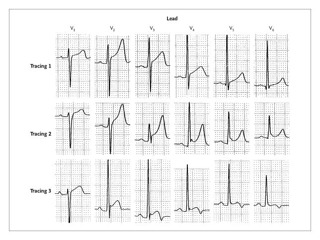
Podcast 696: ST Elevation and Differential Diagnoses

Podcast 696: ST Elevation and Differential Diagnoses

Contributor: Peter Bakes, MD Educational Pearls: ST elevation clinical guidelines for myocardial infarction include: 2.5 mm elevation for males 2 mm elevation in males >40 in V2 and V3 1.5 mm elev...

21 Juli 20214min
Podcast 695: Einstein and Cellophane

Podcast 695: Einstein and Cellophane

Educational Pearls: Albert Einstein had chronic abdominal pain as a middle-aged man Dr. Rudolph Nissen, founder of the Nissen fundoplication, performed exploratory surgery for this pain and found an ...

20 Juli 20213min

Populärt inom Vetenskap

p3-dystopia
dumma-manniskor
svd-nyhetsartiklar
allt-du-velat-veta
det-morka-psyket
kapitalet-en-podd-om-ekonomi
pojkmottagningen
sexet
rss-ufo-bortom-rimligt-tvivel
rss-vetenskapsradion-2
rss-vetenskapsradion
dumforklarat
halsorevolutionen
rss-broccolipodden-en-podcast-som-inte-handlar-om-broccoli
medicinvetarna
rss-experimentet
bildningspodden
vetenskapsradion
hacka-livet
intergalaktiskt