On the Streets #9: Advanced Applications of Capnography

On the Streets #9: Advanced Applications of Capnography

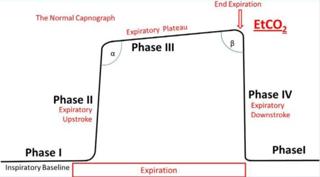
Capnography is the measurement of the partial pressure of exhaled CO2 and is an indirect measurement of your cellular respiration. It is displayed visually as a block-like waveform during the exhalation phase of respiration and monitors ventilation in real-time. Capnography is the gold standard for monitoring sedated and intubated patients in the hospital and the field and can be used in many other situations to discern more information about your patient.

Our host Jordan Ourada is joined by Dr. Eric Hill who is a board certified Emergency Physician, EMS Director for 9 agencies around Colorado, a retired military physician with the Army, former paramedic firefighter and combat veteran to discuss advanced applications of capnography to monitor a range of different patients in the pre-hospital setting. Tune in to learn how to apply capnography to monitor your patients and detect serious conditions like sepsis and DKA and initiate time-sensitive interventions that reduce mortality in patients.

Quick Educational Pearls:

  1. Normal range is between 35 - 45 mmHg
  2. Low capnography indicates they are blowing off CO2
  3. High capnography indicates they are retaining CO2
  4. Normal waveform morphology is box-like with gradual expiratory plateau after expiratory upstroke
  5. Monitor your patient's status and interpret the capnography numbers, rate and waveforms accordingly

Time Stamps

1:32 Capnography definition

6:36 Normal range

7:40 Reading capnography waveforms

12:36 Capnography monitoring in sedated/intubated patients

13:36 Intubation monitoring

18:03 VQ match vs mismatch

21:42 Asthmatic patients

24:30 Capnography cannula

26:24 Cardiac arrest uses

31:28 Acid-base physiology

37:28 Diabetic patients

40:15 COPD patients

41:42 CHF patients

45:18 Head injury patients

52:07 Sepsis detection and subsequent prehospital management

1:08:15 Closing thoughts on using capnography in the field

REFERENCES

  • Brandt, P. "Current Capnography Field Uses." JEMS. 2010, Nov.

  • DiCorpo,P.,etal."CapnographyProvidesBiggerPhysiological

    Picture to Maximize Patient Care." JEMS. 2015, Nov.

  • Eckstein,M.,etal."End-tidalCO2asapredictorofsurvivalinout-of- hospital cardiac arrest." Prehosp Disaster Med. 2011 Jun;26(3):148-50

  • Kodali,B."Physicsofcapnography."2014

  • Poste,J.,etal."Airmedicaltransportofseverelyhead-injured patients undergoing paramedic rapid sequence intubation." Air Med J. 2004 Jul-Aug;23(4):36-40

  • Davis, D., et al. "Predictors of Intubation Success and Therapeutic Value of Paramedic Airway Management in a Large, Urban EMS System." Prehospital Emergency Care. 2006: Vol. 10, Iss. 3.

  • Grmec, S. "Comparison of three different methods to confirm endotracheal tube placement in emergency intubation." Intensive Care Medicine. 2002; 28: 701-4.

  • Silvestri, et al. "The Effectiveness of out of hospital use of continuous end-tidal carbon dioxide monitoring on the rate of unrecognized misplaced intubation within a regional emergency medical services system." Ann Emerg Med. 2005; 45: 497- 503.

  • Hartman, et al. "Systematic Review and Meta- Analysis of End-Tidal Carbon Dioxide Values Associated With Return of Spontaneous Circulation During Cardiopulmonary Resuscitation." Journal Intensive Care Med. 2015, Oct;30 (7) 426-35.

  • Levine, et al. "End-tidal carbon dioxide and outcome of out-of-hospital cardiac arrest." N England J Med. 1997, Jul 31; 337(5): 301-6.

  • AHA 2015 Guidelines Update for Cardiopulmonary Resuscitation and Emergency Cardiovascular Care Science With Treatment Recommendations

  • Hunter CL, et al. "A prehospital screening tool utilizing end-tidal carbon dioxide predicts sepsis and severe sepsis." American Journal of Emergency Medicine. 2016 May; 34(5):813-819.

  • Bou Chebi, R, et al. "Diagnostic value of end tidal capnography in patients with hyperglycemia in the emergency department." BMC Emerg Med. 2016 Jan 29; 16:7

  • Soleimanpour, H, et al. "Predictive value of capnography for suspected diabetic ketoacidosis in the emergency department." West J Emerg Med. 2013;14(6): 590-4.

The Emergency Medical Minute is excited to announce that we are now offering AMA PRA Category 1 credits™ via online course modules. To access these and for more information, visit our website at www.emergencymedicalminute.com/cme-courses/ and create an account.

Avsnitt(1147)

Brewcast Part VI: Synthetic Marijuana

Brewcast Part VI: Synthetic Marijuana

Author: Erik Verzemnieks, M.D. Topic: Erik speaks about how slightly altering the chemical composition of marijuana can create a drug with drastic effects on the human body. WARNING: Explicit Language

7 Juli 201712min

Brewcast Part V: Researching Cannabis

Brewcast Part V: Researching Cannabis

Author: Sophie Yorkwilliams -B.A. (Psychology) -Dual Ph.D. Candidate, Clinical Psychology and Neuroscience. Expected graduation: 2020 Topic: Studying cannabis comes with its own set of challenges. Fin...

6 Juli 201717min
Brewcast Part IV: A Physician's Perspective on Medical Marijuana

Brewcast Part IV: A Physician's Perspective on Medical Marijuana

Authors: Don Stader, M.D. & Peter Pryor, M.D. Topic: What caused Dr. Pryor to leave emergency medicine and enter the realm of medical marijuana?

5 Juli 201723min
Brewcast Part III: Cannabinoid Hyperemesis Syndrome

Brewcast Part III: Cannabinoid Hyperemesis Syndrome

Author: Rachael Duncan, PharmD BCPS BCCCP Topic: Rachel explains the science behind one of the most common maladies thought to be induced by chronic cannabis use.

4 Juli 201714min
Brewcast Part II: Pharmacology of Cannabis

Brewcast Part II: Pharmacology of Cannabis

Author: Brett Marlin, M.D. Topics: Brett explains the biochemical and physiological properties of cannabis.

3 Juli 201718min
Brewcast Part I: The History of Cannabis in Medicine

Brewcast Part I: The History of Cannabis in Medicine

Author: Don Stader, M.D Topic: Don kicks things off with an overview of the history of marijuana and how it has made its way into medicine.

2 Juli 201720min
Podcast #224: Troponin

Podcast #224: Troponin

Author: Sam Killian, M.D. Educational Pearls Not every troponin elevation is an MI. Trop elevates in about an hour in ACS and stays elevated for days. Non-MI conditions that cause elevated troponin: ...

1 Juli 20174min
Podcast #223: Acyclovir Toxicity

Podcast #223: Acyclovir Toxicity

Author: Nick Hatch, M.D. Educational Pearls Acyclovir toxicity can uncommonly cause altered mental status, low blood glucose, hallucinations and myoclonic jerks. Toxicity often occurs in the setting ...

29 Juni 20172min

Populärt inom Vetenskap

p3-dystopia
dumma-manniskor
svd-nyhetsartiklar
allt-du-velat-veta
kapitalet-en-podd-om-ekonomi
rss-ufo-bortom-rimligt-tvivel
sexet
rss-vetenskapsradion-2
paranormalt-med-caroline-giertz
rss-experimentet
hacka-livet
medicinvetarna
det-morka-psyket
dumforklarat
4health-med-anna-sparre
halsorevolutionen
rss-spraket
bildningspodden
pojkmottagningen
rss-personlighetspodden