

Mental Health Monthly #5: Borderline Personality Disorder

Mental Health Monthly #5: Borderline Personality Disorder

For this episode of Mental Health Monthly, EMM is honored to collaborate with the hosts of Millennial Mental Health Channel podcast to explain Borderline Personality Disorder and tips to manage patients with this diagnosis in the Emergency Department. Dr. Justin Romano is a third year psychiatry resident in Omaha, Nebraska and Eddie Carrillo is a licensed mental health therapist currently working at partial hospitalization and IOP eating disorder program in Portland, Oregon. Their podcast Millennial Mental Health Channel seeks to explore the world of mental health from their two professional perspectives.

You can listen to their podcast on all major streaming platforms including Apple Podcasts, Spotify and Google Podcasts.

Follow them on Twitter and Instagram @millennialmhc

Contributors: Dr. Justin Romano and Eddie Carrillo, M.A., LPC

Educational Pearls:

  • 4% of the general population has Bipolar Personality Disorder (BPD) and 9% of all emergency room visits involve patients with BPD.
  • BPD is defined as a pervasive pattern of instability of interpersonal relationships, self-image, affect and marked impulsivity beginning by early adulthood and present in a variety of contexts.
  • There are 9 symptoms of BPD. In order to meet criteria for diagnosis you need 5 of the 9.
  • Symptoms include:
    • Frantic efforts to avoid real or imagined abandonment
    • Pattern of unstable and intense interpersonal relationships, characterized by alternating between extremes of idealization and devaluation
    • Identity disturbance: markedly and persistently unstable self-image or sense of self
    • Impulsivity in at least two areas that are potentially self-damaging
    • Recurrent suicidal behaviors, gestures, threats or self-mutilating behavior
    • Affect instability due to marked reactivity of mood
    • Chronic feelings of emptiness
    • Inappropriate intense anger or difficulty controlling anger
    • Transient stress related paranoid ideation or severe dissociative symptoms
  • Pathophysiology behind BPD: Overactivation of the amygdala within the limbic system which controls fear, anxiety and anger.
  • Often patients with BPD have dealt with an increased amount of trauma in their lives. They have one of the highest suicide rates at 10%.
  • Behaviors in individuals with BPD are often due to an invalidating environment in an attempt to reconnect with people they love.
  • Tips to managing patients in the emergency room with BPD.
  • Stay calm, consistent and caring and validate their feelings with:
    • Body language: sit at eye level, make good eye contact, nod your head when they talk, and use repeat back clarification questions.
    • Facial expressions: be cognizant of your facial expressions. Patients with BPD are more likely to interpret a neutral face as angry.
    • Set boundaries and stick to your word. Patients with BPD can be described as manipulative, but often they are unaware they are doing this.
    • Give validating statements. This will ensure the patient you are listening and working with them to solve their problems.

Summarized by Emily Mack, OMSIII

Avsnitt(1145)

Podcast 841: Wound Care

Podcast 841: Wound Care

Contributor: Aaron Lessen, MD Educational Pearls: Wound care in the emergency department aims to prevent future infection Copious wound irrigation is the important step in preventing wound infection ...

3 Jan 20233min
Podcast 840: Abnormal Pediatric Vitals at Discharge

Podcast 840: Abnormal Pediatric Vitals at Discharge

Contributor: Aaron Lessen, MD Educational Pearls: Pediatric patients frequently have vital signs considered abnormal for age at discharge Large multicenter study recently evaluated if pediatric patie...

29 Dec 20223min
Podcast 839: Causes of Pancreatitis

Podcast 839: Causes of Pancreatitis

Contributor: Travis Barlock, MD Educational Pearls: The causes of pancreatitis can be remembered with the mnemonic: "GET SMASHED" G: Gallstones (Most common cause of pancreatitis overall) E: Ethan...

19 Dec 20223min
Podcast 838: Sternoclavicular Septic Arthritis

Podcast 838: Sternoclavicular Septic Arthritis

Contributor: Aaron Lessen, MD Educational Pearls: Septic arthritis of the sternoclavicular joint is uncommon accounting for Immunosuppression and IV drug use increases the risk  Can account for up ...

13 Dec 20224min

Podcast 837: Snakebites

Podcast 837: Snakebites

Contributor: Meghan Hurley, MD Educational Pearls: Venomous snakes in the United States include species from the family Elapidae and subfamily Crotalinae In prehospital setting, elevate the bitten ex...

12 Dec 20226min

Podcast 836: Humming to get EJ

Podcast 836: Humming to get EJ

Contributor: Jared Scott, MD Educational Pearls: Two conventional ways to aid in external jugular vein (EJ) catheter placement are Trendelenburg's position and Valsalva's maneuver by patient One stu...

6 Dec 20223min
Podcast 835: Syncope Review

Podcast 835: Syncope Review

Contributor: Meghan Hurley, MD Educational Pearls: Syncope is defined as a loss of consciousness with an immediate return to baseline Differential is broad Cardiogenic Structural (aortic stenosis, ...

5 Dec 20226min
Podcast 834:  Peds Buckle Fractures

Podcast 834: Peds Buckle Fractures

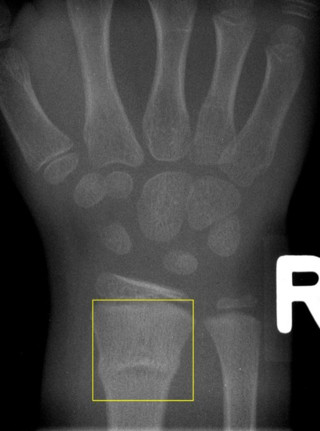
Contributor: Aaron Lessen, MD Educational Pearls: Torus (Buckle) fractures are a commonly encountered pediatric fracture pattern Typically presents as wrist pain secondary to a child falling on outs...

29 Nov 20223min

Populärt inom Vetenskap

p3-dystopia
dumma-manniskor
svd-nyhetsartiklar
allt-du-velat-veta
kapitalet-en-podd-om-ekonomi
det-morka-psyket
dumforklarat
pojkmottagningen
rss-vetenskapsradion-2
rss-vetenskapsradion
rss-ufo-bortom-rimligt-tvivel
sexet
halsorevolutionen
rss-spraket
medicinvetarna
rss-experimentet
vetenskapsradion
paranormalt-med-caroline-giertz
4health-med-anna-sparre
rss-tidslinjen-podcast