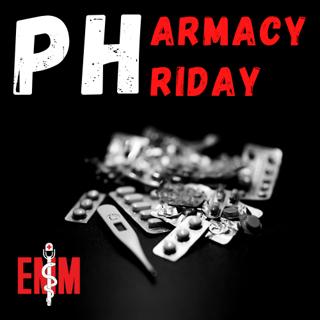

Pharmacy Phriday #6: Tik Tok Benadryl Challenge and Diphenhydramine Toxicity

Pharmacy Phriday #6: Tik Tok Benadryl Challenge and Diphenhydramine Toxicity

Contributor: Ruben Marrero-Vasquez, PharmD

Educational Pearls:

  • ACEP and FDA have both issued warnings about the viral Tik Tok Benadryl (diphenhydramine) challenge where individuals voluntarily overdose on diphenhydramine which can cause fatal toxicity
  • Diphenhydramine is typically dosed at 0.5-1 mg/kg in pediatric patients Q4-6 PRN and carries a fatal dose of 20-40 mg/kg but anywhere from 3-5x recommended dose does can cause toxicity
  • Diphenhydramine toxicity causes both central and peripheral anticholinergic toxicity
    • Central anticholinergic toxicity symptoms: delirium, agitation, combativeness, confusion, restlessness, hallucinations, ataxia, tremor and seizures
    • Peripheral anticholinergic toxicity symptoms: tachycardia, dry flushed skin, dry mucus membranes, thick secretions, dilation of pupils, urinary retention, and decreased bowel sounds
  • Pneumatic to help you remember anticholinergic toxidrome:
    • Red as a beet
    • Dry as a bone
    • Blind as a bat
    • Mad as a hatter
    • Hot as a hare
    • Full as a flask
  • Management typically only requires supportive care, agitation from central anticholinergic delirium can be hardest aspect to treat, IV benzodiapines are first line treatment to control and may require large doses to prevent rhabdomyolysis and hyperthermia
  • Diphenhydramine toxicity has been associated with blockade of sodium and potentially potassium channels increasing risk of arrhythmia and seizures. Cardiac changes can include: QRS widening, myocardial depression, QT prolongation and torasades-type ventricular tachycardia.
    • Wide QRS complexes indicate delayed ventricular depolarization caused by sodium channel blockade, bolus of sodium bicarbonate can be used dosed 1-2 mEq/kg followed by continuous infusion
    • Prolonged QT: restoration of low serum potassium and magnesium to high normal range
  • Benzodiazipines should be used as first line therapy for toxin induced seizures
    • Don't use fosphenytoin or phenytoin sodium channel blockers as they can worsen cardiac conduction

References

  1. Olson KR, Anderson IB, Benowitz NL, Blanc PD, Clark RF, Kearney TE, Kim-Katz SY, Wu AH. Diphenhydramine. In: Poisoning & Drug Overdose. 7th ed.McGraw Hll; 2018: 544-545.
  2. FDA Warns About Serious Problems With High Doses Of The Allergy Medicine Diphenhydramine (Benadryl).(09/24/2020). CDC website. Accessed December 01, 2020. https://www.fda.gov/drugs/drug-safety-and-availability/fda-warns-about-serious-problems-high-doses-allergy-medicine-diphenhydramine-benadryl.
  3. Su M, Goldman M. Anticholinergic Poisoning. UpToDate. https://www.uptodate.com/contents/anticholinergic-poisoning?search=diphenhydramine overdose&source=search_result&selectedTitle=1~150&usage_type=default&display_rank=1. Published October 6, 2020. Accessed December 26, 2020.

Summarized by Mason Tuttle

Avsnitt(1145)

Carepoint Journal Club: Trauma Discussion

Carepoint Journal Club: Trauma Discussion

Carepoint Journal Club is a quarterly series with discussions about a medical topic, brought to you by Carepoint's Emergency Physicians.

22 Dec 202545min

Episode 987: Cough Suppressants

Episode 987: Cough Suppressants

Contributor: Meghan Hurley, MD Educational Pearls:  OTC Medications Dextromethorphan (DM) Most common OTC cough suppressant Minimal efficacy: Little evidence that it shortens the duration or severit...

15 Dec 20257min

Episode 986: Lateral Canthotomy in Emergency Settings

Episode 986: Lateral Canthotomy in Emergency Settings

Contributor: Taylor Lynch, MD Educational Pearls: What is orbital compartment syndrome, and how is it assessed in the emergency room? Orbital compartment syndrome (OCS) is an emergent ophthalmic cond...

8 Dec 20254min

Episode 985: Amiodarone vs. Lidocaine

Episode 985: Amiodarone vs. Lidocaine

Contributor: Aaron Lessen, MD Educational Pearls: How do amiodarone and lidocaine work on the heart? Amiodarone Blocks potassium channels (Class III effect). Also blocks sodium and calcium channels....

8 Dec 20252min

Episode 984: Fish Hooks

Episode 984: Fish Hooks

Contributor: Megan Hurley, MD Educational Pearls: Assess first: confirm the hook isn't near vital structures. Automatic subspecialty consult for eye involvement or proximity to carotid artery, radial...

24 Nov 20254min

Episode 983: Head-of-Bed Position in Large Vessel Occlusion Strokes

Episode 983: Head-of-Bed Position in Large Vessel Occlusion Strokes

Contributor: Aaron Lessen MD Educational Pearls:  Recent prospective randomized clinical trial assessed optimal head-of-bed positioning in patients with LVO 0º vs. 30º elevation Objective was to det...

18 Nov 20252min

Episode 982: Epistaxis Management

Episode 982: Epistaxis Management

Contributor: Meghan Hurley, MD Educational Pearls: 1. Initial Assessment Start with a physical examination: Determine if the bleed is anterior or posterior. Perform a primary survey: assess ai...

10 Nov 20256min

Episode 981: Electrical Burns

Episode 981: Electrical Burns

Contributor: Travis Barlock, MD Educational Pearls: Quick Statistics on Electrical Burns: Electrical burns compose roughly 2 to 9% of all burns that come into emergency departments. The majority of p...

3 Nov 20253min

Populärt inom Vetenskap

p3-dystopia
svd-nyhetsartiklar
pojkmottagningen
dumma-manniskor
allt-du-velat-veta
det-morka-psyket
rss-experimentet
rss-ufo-bortom-rimligt-tvivel
kapitalet-en-podd-om-ekonomi
paranormalt-med-caroline-giertz
medicinvetarna
rss-vetenskapsradion-2
rss-vetenskapsradion
halsorevolutionen
bildningspodden
dumforklarat
vetenskapsradion
4health-med-anna-sparre
sexet
rss-broccolipodden-en-podcast-som-inte-handlar-om-broccoli