
Podcast 673: Leaving the ED with Naloxone

Podcast 673: Leaving the ED with Naloxone

Contributor: Don Stader, MD

Educational Pearls:

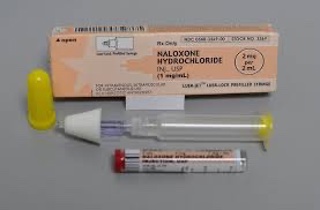
  • Patients are more likely to survive an opioid overdose if they have naloxone
  • 10% risk of death in the year following an opioid overdose of patients seen in the ED
  • Those who receive naloxone:
    • Have better survival rates
    • Are more likely to enter recovery
    • Are more likely to use the naloxone on another person who has overdosed
  • Better to give the patient naloxone at discharge from the ED as rates of filling prescriptions are low
  • Any patient who uses illicit drugs, chronic opioid medications, or opioids with benzodiazepines are good candidates for naloxone at discharge
  • Remember to instruct the patient and those who live with them on how to use it

References

Gunn AH, Smothers ZPW, Schramm-Sapyta N, Freiermuth CE, MacEachern M, Muzyk AJ. The Emergency Department as an Opportunity for Naloxone Distribution. West J Emerg Med. 2018;19(6):1036-1042. doi:10.5811/westjem.2018.8.38829

Olfson M, Wall M, Wang S, Crystal S, Blanco C. Risks of fatal opioid overdose during the first year following nonfatal overdose. Drug Alcohol Depend. 2018;190:112-119. doi:10.1016/j.drugalcdep.2018.06.004

Olfson M, Crystal S, Wall M, Wang S, Liu SM, Blanco C. Causes of Death After Nonfatal Opioid Overdose [published correction appears in JAMA Psychiatry. 2018 Aug 1;75(8):867]. JAMA Psychiatry. 2018;75(8):820-827. doi:10.1001/jamapsychiatry.2018.1471

http://naloxoneproject.com/

Summarized by John Spartz, MS3 | Edited by Erik Verzemnieks, MD

The Emergency Medical Minute is excited to announce that we are now offering AMA PRA Category 1 credits™ via online course modules. To access these and for more information, visit our website at www.emergencymedicalminute.com/cme-courses/ and create an account.

Donate to EMM today!


Avsnitt(1145)

Episode 951: Pediatric Febrile Seizures

Episode 951: Pediatric Febrile Seizures

Contributor: Taylor Lynch, MD Educational Pearls: Pediatric febrile seizures are defined as seizures that occur between the ages of six months to five years in the presence of a fever greater than o...

7 Apr 20256min

Episode 950: Ultrasound Pulse Check During Cardiac Arrest

Episode 950: Ultrasound Pulse Check During Cardiac Arrest

Contributor: Aaron Lessen, MD Educational Pearls: Point-of-care ultrasound (POCUS) is used to assess cardiac activity during cardiac arrest and can identify potential reversible causes such as peric...

31 Mars 20252min

Episode 949: Hoover's Sign

Episode 949: Hoover's Sign

Contributor: Travis Barlock, MD Educational Pearls: What is Hoover's sign used to identify? This physical exam maneuver differentiates between organic vs. functional (previously known as psychogenic...

24 Mars 20251min

Episode 948: CYP Inducers and Inhibitors

Episode 948: CYP Inducers and Inhibitors

Contributor: Jorge Chalit-Hernandez, OMS3 Educational Pearls: CYP enzymes are responsible for the metabolism of many medications, drugs, and other substances CYP3A4 is responsible for the majorit...

17 Mars 20253min

Episode 947: Hypercapnia

Episode 947: Hypercapnia

Educational Pearls: Physiologic stimulation of ventilation occurs through changes in levels of: Arterial carbon dioxide (PaCO2) Arterial oxygen (PaO2) Hypercapnia is an elevated level of CO2...

10 Mars 20253min

Episode 946: Time to Defibrillation

Episode 946: Time to Defibrillation

Contributor: Aaron Lessen, MD Educational Pearls: Quick background info Cardiac arrest is when the heart stops pumping blood for any reason. This is different from a heart attack in which the heart ...

3 Mars 20252min

Episode 945: Ketorolac vs. Ibuprofen

Episode 945: Ketorolac vs. Ibuprofen

Contributor: Ricky Dhaliwal, MD Educational Pearls:  Ketorolac and ibuprofen are NSAIDs with equivalent efficacy for pain in the emergency department Oral ibuprofen provides the same relief as in...

24 Feb 20253min

Episode 944: Colchicine Overdose

Episode 944: Colchicine Overdose

Contributor: Aaron Lessen, MD Educational Pearls: Colchicine is most commonly used for the prevention and treatment of gout There is research investigating the anti-inflammatory and cardioprotect...

17 Feb 20253min

Populärt inom Vetenskap

p3-dystopia
svd-nyhetsartiklar
pojkmottagningen
dumma-manniskor
allt-du-velat-veta
kapitalet-en-podd-om-ekonomi
det-morka-psyket
rss-vetenskapsradion
rss-experimentet
rss-ufo-bortom-rimligt-tvivel
paranormalt-med-caroline-giertz
medicinvetarna
rss-vetenskapsradion-2
bildningspodden
halsorevolutionen
dumforklarat
vetenskapsradion
rss-broccolipodden-en-podcast-som-inte-handlar-om-broccoli
4health-med-anna-sparre
rss-spraket