
Podcast 685: Cultural Sensitivity with LGBTIQ+ Patients

Podcast 685: Cultural Sensitivity with LGBTIQ+ Patients

Contributor: Dr. Nick Gorton, MD

Educational Pearls:

  • Use transgender people's correct names and pronouns, the Russell study found a 56% reduction in suicide behavior with chosen name usage
  • ⅕ to ½ of transgender people report they avoided seeking care in the ED because of fear of transphobic treatment
  • Understanding the definitions of gender identity, gender expression, assigned sex at birth, physical attraction, and emotional attraction are necessary for improving treatment of the LGBTIQ+ community
  • Explain reasons for asking questions that address physical characteristics and/or sexual attraction
  • Lastly, if you make a mistake simply correct the mistake, apologize, and immediately move on

References

Transgender Unicorn

TransLine

Treatment Guideline

Silicone pumping handout for patients and providers

https://www.ustranssurvey.org/reports

Pollitt, A. M., Ioverno, S., Russell, S. T., Li, G., & Grossman, A. H. (2019). Predictors and mental health benefits of chosen name use among transgender youth. Youth & society, 0044118X19855898.

Russell, S. T., Pollitt, A. M., Li, G., & Grossman, A. H. (2018). Chosen name use is linked to reduced depressive symptoms, suicidal ideation, and suicidal behavior among transgender youth. Journal of Adolescent Health, 63(4), 503-505.

Samuels, E. A., Tape, C., Garber, N., Bowman, S., & Choo, E. K. (2018). "Sometimes you feel like the freak show": a qualitative assessment of emergency care experiences among transgender and gender-nonconforming patients. Annals of emergency medicine, 71(2), 170-182.

Thompson-Blum, D. N., Coleman, T. A., Phillips, N. E., Richardson, S., Travers, R., Coulombe, S., ... & Davis, C. (2021). Experiences of Transgender Participants in Emergency Departments: Findings from the OutLook Study. Transgender Health.

Bauer, G. R., Scheim, A. I., Deutsch, M. B., & Massarella, C. (2014). Reported emergency department avoidance, use, and experiences of transgender persons in Ontario, Canada: results from a respondent-driven sampling survey. Annals of emergency medicine, 63(6), 713-720.

*Ongoing LGBTQIA+ topics are identified through collaborations with local Denver organization the Queer Umbrella as part of a new longitudinal effort to raise awareness of health disparities affecting the LGBTQIA+ community.

Stay tuned as we continue to provide educational content to support this community and uplift LGBTQIA+ health providers and their practices all year long.

Avsnitt(1149)

Podcast #216: Roller Coasters and Kidney Stones

Podcast #216: Roller Coasters and Kidney Stones

Author: Aaron Lessen, M.D. Educational Pearls: Anecdotal evidence suggests that roller coasters may help with kidney stones. A recent study used a model of a kidney and ureter with different sized s...

13 Juni 20171min
Opioid MIniseries Part IV: Harm Reduction

Opioid MIniseries Part IV: Harm Reduction

PRACTICE RECOMMENDATIONS 1. Patients who abuse opioids should be managed without judgement; addiction is a medical condition and not a moral failing. Caregivers should endeavor to meet patients "where...

8 Juni 201748min
Opioid Miniseries Part III: Alternative to Opioids

Opioid Miniseries Part III: Alternative to Opioids

PRACTICE RECOMMENDATIONS 1. All emergency departments should implement ALTO programs and provide opioid-free pain treatment pathways for the following conditions: a. Acute on chronic opioid-tolerant r...

8 Juni 201749min

Opioid Miniseries Part II: Limiting Opioids in the Emergency Department

Opioid Miniseries Part II: Limiting Opioids in the Emergency Department

RACTICE RECOMMENDATIONS 1. Opioids are inherently dangerous, highly addictive drugs with significant abuse potential, numerous side effects, lethality in overdose, rapid development of tolerance, and ...

8 Juni 20171h 8min
Opioid Miniseries Part I: Medicine's Greatest Folly

Opioid Miniseries Part I: Medicine's Greatest Folly

The Emergency Medical Minute proudly presents an educational podcast series sponsored by the Colorado Hospital Association addressing our the United States' opioid epidemic.

7 Juni 201749min
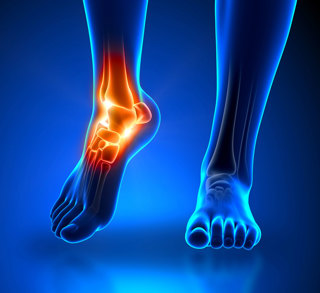
Podcast #215: Ankle Pain

Podcast #215: Ankle Pain

Author: Donald Stader, M.D. Educational Pearls: The most common ankle injury mechanism is an inversion. Most common broken bone in the ankle is the fibula. During exam, it is important to palpate ove...

7 Juni 20174min

Podcast #214: Dizziness

Podcast #214: Dizziness

Author: Aaron Lessen, M.D. Educational Pearls: We can differentiate verto into benign problems such as vestibular problem (peripheral problem), or something more worrisome that originates in the brai...

5 Juni 20171min

Podcast #213: Oats and Potatoes

Podcast #213: Oats and Potatoes

Author: Michael Hunt, M.D. Educational Pearls: Oats have been shown to lower LDL. Oat bran is the most effective way to consume oats to lower LDL. A Swedish study of 69,000 people who ate at least 3 ...

3 Juni 20172min

Populärt inom Vetenskap

svd-nyhetsartiklar
dumma-manniskor
p3-dystopia
allt-du-velat-veta
rss-ufo-bortom-rimligt-tvivel-2
rss-vetenskapsradion-2
medicinvetarna
det-morka-psyket
rss-vetenskapsradion
kapitalet-en-podd-om-ekonomi
vetenskapsradion
bildningspodden
rss-geopodden-2
sexet
hacka-livet
rss-arkeologi-historia-podden-som-graver-i-vart-kulturlandskap
halsorevolutionen
rss-experimentet
4health-med-anna-sparre
ideer-som-forandrar-varlden