Mental Health Monthly #8: Trauma-Informed Care

Mental Health Monthly #8: Trauma-Informed Care

Contributor: Randi Libbon, MD

The Core features of trauma-informed care include:

  1. Patient empowerment, choice and collaboration. This means educating patients and allowing patients to make choices about their care when possible. Collaboration helps to level the power differential between patients and providers through shared decision making.
  2. Safety and sensitivity: Developing health care settings and activities that ensure patients' physical and emotional safety taking into account their diverse backgrounds of gender, sexuality, race, culture, and ethnicity
  3. Trustworthiness and transparency: Creating clear expectations with patients about what proposed treatments entail, who will provide services, and how care will be provided.

Resources:

Reeves E. A synthesis of the literature on trauma-informed care. Issues Ment Health Nurs. 2015;36(9):698-709. doi: 10.3109/01612840.2015.1025319. PMID: 26440873.

Molloy L, Fields L, Trostian B, Kinghorn G. Trauma-informed care for people presenting to the emergency department with mental health issues. Emerg Nurse. 2020 Mar 10;28(2):30-35. doi: 10.7748/en.2020.e1990. Epub 2020 Feb 25. PMID: 32096370.

Key ingredients for Trauma-informed care from SAMHSA

https://www.samhsa.gov/sites/default/files/programs_campaigns/childrens_mental_health/atc-whitepaper-040616.pdf

The National Childhood Traumatic Stress Network:

https://www.nctsn.org/trauma-informed-care

The Science of Adverse Childhood Events and Toxic Stress:

https://www.acesaware.org/ace-fundamentals/the-science-of-aces-toxic-stress/

From the Institute for Health Care Improvement:

http://www.ihi.org/communities/blogs/how-trauma-informed-care-can-help-patients-and-clinicians-during-behavioral-health-emergencies

Avsnitt(1145)

Podcast #201: Task Interruption

Podcast #201: Task Interruption

Author: Mark Kozlowski M.D. Educational Pearls: Humans cannot "multitask" effectively - a more accurate term is "task interruption." When doing more than one task at once, we are more likely to forge...

8 Maj 20173min
Podcast #200: Non-traumatic Back Pain

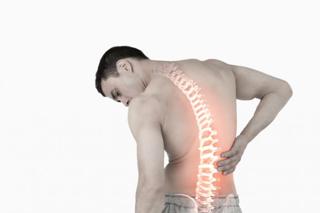
Podcast #200: Non-traumatic Back Pain

Author: Don Stader M.D. Educational Pearls: Non-traumatic back pain is a very common complaint in the Emergency Department. Conditions that can manifest with back pain include: ruptured abdominal aor...

6 Maj 20172min
Podcast #199: Prolonged QT with Zofran

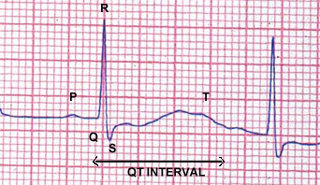
Podcast #199: Prolonged QT with Zofran

Author: Arthur Lessen M.D. Educational Pearls: Zofran (ondansetron) is generally safe to use for the treatment of nausea and vomiting. However, it can prolong the QT interval and increase the chance ...

4 Maj 20173min

Podcast #198: Imodium

Podcast #198: Imodium

Author: Aaron Lessen M.D. Educational Pearls: Imodium (loperamide) is a mu-opioid receptor agonist. Traditionally, it is used as an anti-diarrheal. It is also abused recreationally for an opioid high...

2 Maj 20173min
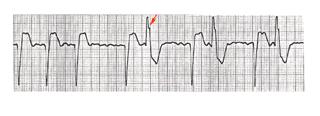
Podcast #197: Ashman Phenomenon

Podcast #197: Ashman Phenomenon

Author: Dylan Luyten M.D. Educational Pearls: Ashman's Phenomenon occurs in the setting atrial fibrillation and mimics ventricular tachycardia, but is harmless. On ECG, the pattern of Ashman Phenomen...

30 Apr 20171min
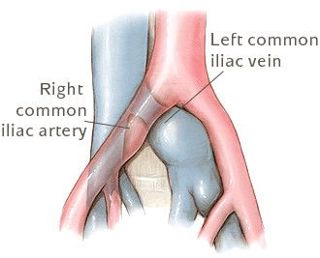
Podcast #196: DVT and May-Thurner Syndrome

Podcast #196: DVT and May-Thurner Syndrome

Author: Samuel Killian M.D. Educational Pearls: Lower extremity DVTs are extremely common. There are more left lower extremity DVT due to anatomical variation. May-Thurner Syndrome is a form of anato...

28 Apr 20172min

Podcast #195: How to Properly Inject Heroin

Podcast #195: How to Properly Inject Heroin

Author: Don Stader, M.D Educational Pearls: It is important for providers to know how to use IV drugs properly so that they can instruct their patients on how to avoid injury. Heroin use is increasin...

26 Apr 20177min
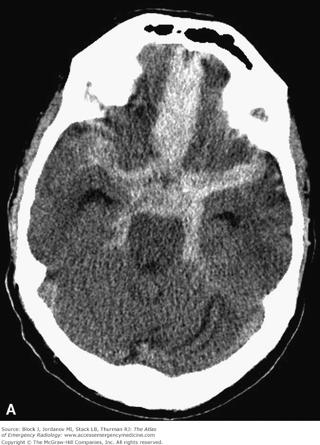
Podcast #194: Atruamatic ICH

Podcast #194: Atruamatic ICH

Author: Peter Bakes, M.D Educational Pearls Intracerebral hemorrhage is an intracranial bleed within the brain tissue or ventricles. Subarachnoid aneurysm causes about 50% of all ICH. Amyloid deposit...

24 Apr 20179min

Populärt inom Vetenskap

p3-dystopia
dumma-manniskor
svd-nyhetsartiklar
allt-du-velat-veta
pojkmottagningen
kapitalet-en-podd-om-ekonomi
det-morka-psyket
dumforklarat
rss-vetenskapsradion-2
halsorevolutionen
rss-vetenskapsradion
rss-ufo-bortom-rimligt-tvivel
rss-spraket
rss-experimentet
sexet
medicinvetarna
vetenskapsradion
paranormalt-med-caroline-giertz
4health-med-anna-sparre
rss-broccolipodden-en-podcast-som-inte-handlar-om-broccoli