Podcast 732: Organophosphate Toxicity

Podcast 732: Organophosphate Toxicity

Educational Pearls:

  • Organophosphates affect the cholinergic system by inhibiting acetylcholinesterase affecting muscarinic and nicotinic receptors
  • Symptoms include lacrimation, salivation, bronchoconstriction, blurred vision, bradycardia, bronchorrhea, emesis, and diarrhea
  • Initially, the patient should be decontaminated to prevent further organophosphate exposure
  • Treatment consists of atropine every 5 minutes, 1-3 mg to start and doubling the dose each time it is given until reversal of symptoms is seen
  • Atropine only works on muscarinic receptors, so nicotinic receptor activation continues despite atropine administration resulting in muscle contractions and eventually respiratory arrest
  • Pralidoxime (2-PAM) should also be given to prevent the nicotinic effects and maturation of the organophosphate-acetylcholinesterase complex

References

Robb EL, Baker MB. Organophosphate Toxicity. [Updated 2021 Jul 26]. In: StatPearls [Internet]. Treasure Island (FL): StatPearls Publishing; 2021 Jan-. Available from: https://www.ncbi.nlm.nih.gov/books/NBK470430/

Summarized by John Spartz, MS4 | Edited by Erik Verzemnieks, MD

*********************

The Emergency Medical Minute is excited to announce that we are now offering AMA PRA Category 1 credits™ via online course modules. To access these and for more information, visit our website at https://emergencymedicalminute.org/cme-courses/ and create an account.

Donate to EMM today!

Diversity and Inclusion Award


Avsnitt(1147)

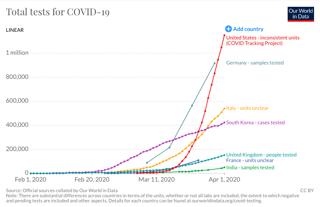
COVID-19 in the United States: Where are the tests?

COVID-19 in the United States: Where are the tests?

A dive into how the United States responded to an emerging pandemic and the pitfalls along the way that led to stalled testing capacity across the country before community transmission was confirmed. ...

2 Apr 202010min

Husband & Wife, Both ER Clinicians, Share Their Experience Having COVID-19

Husband & Wife, Both ER Clinicians, Share Their Experience Having COVID-19

Long time friends of EMM, Aaron and Bree, share their experiences on the frontlines in the ED, coping with COVID, managing anxiety and quarantining with their family.

1 Apr 202036min
COVID-19 Digest: Do NSAIDs Make COVID-19 More Severe? (Recorded 3/30/20, 18:00 MST)

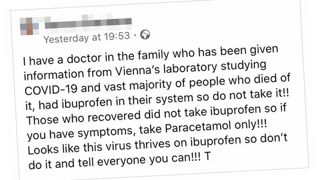
COVID-19 Digest: Do NSAIDs Make COVID-19 More Severe? (Recorded 3/30/20, 18:00 MST)

In the past two weeks, warnings, questions, and misinformation concerning COVID-19 and NSAID use have been spreading...no pun intended..virally. The pace of this evolving pandemic and the equally quic...

31 Mars 202018min

Podcast 552: PE Management and Risk Stratification

Podcast 552: PE Management and Risk Stratification

Contributor: Dylan Luyten, MD Educational Pearls: After you diagnose a pulmonary embolism (PE) via CT or VQ scan, we need to categorize the PE as massive, sub-massive, or just PE to dictate treatment...

30 Mars 20209min
COVID-19 Digest: If You've Had COVID-19, Can You Get it Again? / Convalescent Serum (Recorded 3/26/20, 18:00 MST)

COVID-19 Digest: If You've Had COVID-19, Can You Get it Again? / Convalescent Serum (Recorded 3/26/20, 18:00 MST)

Host: Elizabeth Esty, MD Research By: Elizabeth Esty and Nathan Novotny References: Osumi M. Questions raised over COVID-19 reinfection after Japanese woman develops illness again. The Japan Times. h...

27 Mars 202010min

ER Doc Infected with COVID-19 Shares Experience

ER Doc Infected with COVID-19 Shares Experience

Recorded 3/26/20

27 Mars 202020min

COVID-19: Hydroxychloroquine & Azithromycin / Anosmia / The Aerosolized vs. Droplet Debate (Recorded 3/24/20, 18:00 MST)

COVID-19: Hydroxychloroquine & Azithromycin / Anosmia / The Aerosolized vs. Droplet Debate (Recorded 3/24/20, 18:00 MST)

The circumstances surrounding the COVID-19 virus are quickly evolving and that means that EMM will have to as well. For the foreseeable future, EMM will be releasing COVID-19 updates. In this series, ...

25 Mars 202015min
Podcast 551:  PPIs are Not Benign

Podcast 551: PPIs are Not Benign

Contributor: Don Stader, MD Educational Pearls: PPIs (Proton pump inhibitors) reduce stomach acid levels and are commonly prescribed in patients with GERD or peptic ulcer disease Stopping a PPI after...

23 Mars 20203min

Populärt inom Vetenskap

p3-dystopia
dumma-manniskor
svd-nyhetsartiklar
allt-du-velat-veta
kapitalet-en-podd-om-ekonomi
rss-ufo-bortom-rimligt-tvivel
sexet
rss-vetenskapsradion-2
paranormalt-med-caroline-giertz
rss-experimentet
hacka-livet
medicinvetarna
det-morka-psyket
dumforklarat
4health-med-anna-sparre
halsorevolutionen
rss-spraket
bildningspodden
pojkmottagningen
rss-personlighetspodden