Podcast 818: Local Anesthetics and LAST

Podcast 818: Local Anesthetics and LAST

Contributor: Don Stader, MD

Educational Pearls:

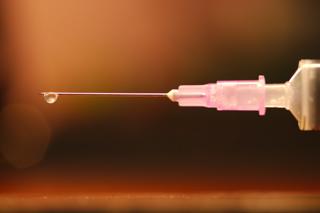
  • There are two major groups of local anesthetics: Amide and Esther
    • To recall what group an anesthetic belongs to, use this memory trick:

Amide has an 'i' in the name and Amide anesthetics have 2 'i's e.g., Lidocaine.
Ester has no 'i' and most common Ester anesthetics have only one 'i' e.g., Tetracaine.

  • In a true allergy and/or contraindication to both local anesthetic groups, diphenhydramine is an acceptable alternative.
  • Epinephrine is administered with local anesthetics to decrease bleeding, increase duration of action, and minimize systemic spread of the anesthetic, thus reducing toxicity.
  • Symptoms of Local Anesthetic Systemic Toxicity (LAST) may begin with dizziness, confusion and/or slurred speech, and can progress to cardiovascular collapse and death.
  • Treat LAST with lipid emulsion therapy i.e. 'Intralipids' to create a lipid sink that absorbs anesthetic agent
    • Administer initial 1.5 ml/kg bolus (approximately 100 ml in 70 mg adult) followed by infusion rate of 0.25 mg/kg/hour. Do not surpass 10 mg/kg total.

References

Dickerson DM, Apfelbaum JL. Local anesthetic systemic toxicity. Aesthet Surg J. 2014;34(7):1111-1119. doi:10.1177/1090820X14543102

Bina B, Hersh EV, Hilario M, Alvarez K, McLaughlin B. True Allergy to Amide Local Anesthetics: A Review and Case Presentation. Anesth Prog. 2018;65(2):119-123. doi:10.2344/anpr-65-03-06

Macfarlane AJR, Gitman M, Bornstein KJ, El-Boghdadly K, Weinberg G. Updates in our understanding of local anaesthetic systemic toxicity: a narrative review. Anaesthesia. 2021;76 Suppl 1:27-39. doi:10.1111/anae.15282

Summarized by Kirsten Hughes, MS4 | Edited by John Spartz MD & Erik Verzemnieks, MD

In an effort to promote diversity, equity, and inclusion in Emergency Medicine, The Emergency Medical Minute is proud to present our 2nd annual Diversity and Inclusion Award. We support increasing the representation of underrepresented groups in medicine and extend this award to individuals applying to emergency medicine residencies during the 2022-2023 cycle. For information on award eligibility and the application process, visithttps://emergencymedicalminute.com/edi-award/

Donate to EMM today!


Avsnitt(1145)

On the Streets #12: Salient Pre-hospital Considerations for Neurosurgical Emergencies - a Smorgasbord Part II

On the Streets #12: Salient Pre-hospital Considerations for Neurosurgical Emergencies - a Smorgasbord Part II

In this podcast, we are back again with host, Jordan Ourada, and neurosurgeon, Dr. Eddie Tsvankin as they discuss an exciting and mind-blowing array of topics pertaining to neurosurgery. Listen as Dr....

20 Okt 202147min
Podcast 722: Lower Extremity Dislocations

Podcast 722: Lower Extremity Dislocations

Contributor: Donald Stader, MD Educational Pearls: Hip Dislocation Prolonged dislocations can impair blood supply to femoral head Hip dislocation for >6 hours puts patient at high risk for needing ...

19 Okt 20216min

Podcast 721: Blakemore & Minnesota Tubes: Part II

Podcast 721: Blakemore & Minnesota Tubes: Part II

Contributor: Dylan Luyten, MD Educational Pearls: To place a Blakemore/Minnesota Tube: Insert into esophagus under visualization Inflate gastric port with 60 cc of air and obtain a chest xray to en...

18 Okt 20217min

On the Streets #11: Salient Pre-hospital Considerations for Neurosurgical Emergencies - a Smorgasbord

On the Streets #11: Salient Pre-hospital Considerations for Neurosurgical Emergencies - a Smorgasbord

On this episode of On The Streets, host, Jordan Ourada sits down with neurosurgeon/neurooncologist Dr. Eddie Tsvankin to discuss various topics concerning neurosurgery and how EMS workers in the field...

13 Okt 20211h 4min
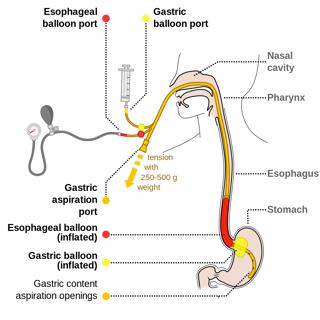
Podcast 720: Blakemore & Minnesota Tubes: Part I

Podcast 720: Blakemore & Minnesota Tubes: Part I

Contributor: Dylan Luyten, MD Educational Pearls: Minnesota Tube has an extra port for suctioning otherwise is the same as a Blakemore Tube Indicated in MASSIVE upper GI bleeding often due to esophag...

12 Okt 20215min

Podcast 719: Normal Saline vs. Tap Water for Wound Irrigation

Podcast 719: Normal Saline vs. Tap Water for Wound Irrigation

Contributor: Ricky Dhaliwal, MD Educational Pearls: Multiple RCTs and a Cochrane Review found there is no difference in wound infection rates when irrigating with tap water  Pressure of the water and...

11 Okt 20213min
Podcast 718: Renal Failure Follow Up

Podcast 718: Renal Failure Follow Up

Contributor: Aaron Lessen, MD Educational Pearls: Patients with acute renal failure often need medical management for hyperkalemia Those with severe electrolyte derangements or absent renal function ...

5 Okt 20213min
Podcast 717: A cautionary tale of renal failure

Podcast 717: A cautionary tale of renal failure

Contributor: Aaron Lessen, MD Educational Pearls: Hyperkalemia can cause EKG changes such as a widened QRS The fastest electrolyte results can be obtained off a VBG with electrolytes or point-of-car...

4 Okt 20213min

Populärt inom Vetenskap

p3-dystopia
dumma-manniskor
svd-nyhetsartiklar
allt-du-velat-veta
kapitalet-en-podd-om-ekonomi
det-morka-psyket
pojkmottagningen
dumforklarat
rss-vetenskapsradion-2
rss-vetenskapsradion
sexet
halsorevolutionen
rss-ufo-bortom-rimligt-tvivel
rss-spraket
rss-experimentet
vetenskapsradion
rss-broccolipodden-en-podcast-som-inte-handlar-om-broccoli
medicinvetarna
bildningspodden
4health-med-anna-sparre