Podcast 862: How to Apply a Painful Stimulus

Podcast 862: How to Apply a Painful Stimulus

Contributor: Travis Barlock MD

Educational Pearls:

When might you need to apply a painful stimulus in a medical setting?

  • The main reason is to assess the patient's level of consciousness, such as when they are waking up from anesthesia or have potentially suffered a brain injury.

  • It can be part of the Glasgow Coma Scale (GCS) if patients are not responding to auditory stimuli.

  • Possible levels of consciousness include Alert, Lethargic, Obtunded, and Comatose (ALOC)

What are the approved ways to apply a painful stimulus to assess central nervous system function?

  • Trapezius squeeze. Grab the trapezius muscle and twist (contraindicated in clavicle fractures).

  • Supraorbital rim pressure. Find the notch in the supraorbital rim of the patient and push hard with your thumb (contraindicated in facial fractures).

  • Mandibular pressure (not mentioned). Press hard at the angle of the jaw on the mandibular nerve (contraindicated in mandible fractures).

  • Sternal rub. Push down with your knuckles into the patient's sternum and rub vigorously (contraindicated in chest injury/surgery).

  • Each technique should be done for between 15 and 30 seconds.

  • If skin damage is observed in one location, move to a different location. This is especially true of the sternal rub.

Important note: Peripheral techniques such as nail tip pressure should only be used to evaluate spinal nerve reflexes and not as a method of assessing the level of consciousness.

References

  1. Lower J. Using pain to assess neurologic response. Nursing. 2003 Jun;33(6):56-7. doi: 10.1097/00152193-200306000-00047. PMID: 12799591.

  2. Middleton PM. Practical use of the Glasgow Coma Scale; a comprehensive narrative review of GCS methodology. Australas Emerg Nurs J. 2012 Aug;15(3):170-83. doi: 10.1016/j.aenj.2012.06.002. Epub 2012 Aug 3. PMID: 22947690.

  3. Mistovich JJ, Krost W, Limmer DD. Beyond the basics: patient assessment. Emerg Med Serv. 2006 Jul;35(7):72-7; quiz 78-9. PMID: 16878751.

  4. Naalla R, Chitirala P, Chittaluru P, Atreyapurapu V. Sternal rub causing presternal abrasion in a patient with capsuloganglionic haemorrhage. BMJ Case Rep. 2014 Apr 7;2014:bcr2014204028. doi: 10.1136/bcr-2014-204028. PMID: 24711478; PMCID: PMC3987201.

Summarized by Jeffrey Olson, MS2 | Edited by Jorge Chalit, OMSII

Avsnitt(1145)

Podcast 826: STEMI Equivalents

Podcast 826: STEMI Equivalents

Contributor: Travis Barlock, MD Educational Pearls: The presence of a STEMI has traditionally been used to determine if a patient with acute chest pain requires urgent cath lab management STEMI indi...

1 Nov 20224min

Podcast 825: ALS vs PD Transport

Podcast 825: ALS vs PD Transport

Contributor: Aaron Lessen, MD Educational Pearls: In urban settings, it is becoming more common for police to transport critical patients from scene to hospital A 2022 multicenter observational study...

31 Okt 20222min

Podcast 824: Catheter-Related Blood Infections

Podcast 824: Catheter-Related Blood Infections

Contributor: Travis Barlock, MD Educational Pearls: Catheter related blood infections were thought to be caused by skin flora seeding the catheter. Thus, significant effort is applied to sterility an...

25 Okt 20223min

Podcast 823: Immediate Resuscitative Thoracotomy

Podcast 823: Immediate Resuscitative Thoracotomy

Contributor: Jared Scott, MD Educational Pearls: Immediate resuscitative thoracotomy can be performed in the ED to gain rapid access to the thoracic cavity in cases of traumatic cardiac arrest Wester...

24 Okt 20227min
Podcast 822: Meralgia Paresthetica

Podcast 822: Meralgia Paresthetica

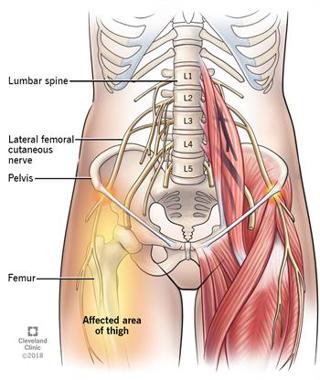
Contributor: Aaron Lessen, MD Educational Pearls: Lateral Cutaneous Femoral Nerve Entrapment Syndrome, also known as Meralgia Paresthetica, results from entrapment of the lateral cutaneous femoral ne...

18 Okt 20223min
Podcast 821: EKGs in Syncope

Podcast 821: EKGs in Syncope

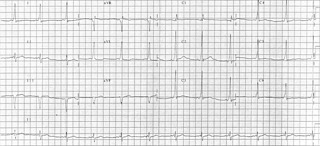
Contributor: Travis Barlock, MD Educational Pearls: An EKG should be obtained quickly after a syncopal event to identify possible life-threatening causes such as ischemia and arrhythmia WOBBLER is a...

17 Okt 20224min

Podcast 820: Who Qualifies for Take-Home Naloxone

Podcast 820: Who Qualifies for Take-Home Naloxone

Contributor: Don Stader, MD Educational Pearls: Home naloxone is traditionally given to those at high risk for opioid overdose such as those in the ED due to an opioid overdose, opioid intoxication, ...

11 Okt 20224min

Podcast 819: Indiscriminate Lactate Testing

Podcast 819: Indiscriminate Lactate Testing

Contributor: Jared Scott, MD Educational Pearls: Elevated lactate levels can be a useful indicator of critical illness in patients who meet SIRS criteria Lactate can also be elevated due to ot...

10 Okt 20225min

Populärt inom Vetenskap

svd-nyhetsartiklar
p3-dystopia
dumma-manniskor
pojkmottagningen
allt-du-velat-veta
det-morka-psyket
kapitalet-en-podd-om-ekonomi
rss-experimentet
dumforklarat
rss-vetenskapsradion-2
halsorevolutionen
rss-ufo-bortom-rimligt-tvivel
medicinvetarna
rss-vetenskapsradion
paranormalt-med-caroline-giertz
bildningspodden
rss-spraket
sexet
vetenskapsradion
4health-med-anna-sparre