Podcast 862: How to Apply a Painful Stimulus

Podcast 862: How to Apply a Painful Stimulus

Contributor: Travis Barlock MD

Educational Pearls:

When might you need to apply a painful stimulus in a medical setting?

  • The main reason is to assess the patient's level of consciousness, such as when they are waking up from anesthesia or have potentially suffered a brain injury.

  • It can be part of the Glasgow Coma Scale (GCS) if patients are not responding to auditory stimuli.

  • Possible levels of consciousness include Alert, Lethargic, Obtunded, and Comatose (ALOC)

What are the approved ways to apply a painful stimulus to assess central nervous system function?

  • Trapezius squeeze. Grab the trapezius muscle and twist (contraindicated in clavicle fractures).

  • Supraorbital rim pressure. Find the notch in the supraorbital rim of the patient and push hard with your thumb (contraindicated in facial fractures).

  • Mandibular pressure (not mentioned). Press hard at the angle of the jaw on the mandibular nerve (contraindicated in mandible fractures).

  • Sternal rub. Push down with your knuckles into the patient's sternum and rub vigorously (contraindicated in chest injury/surgery).

  • Each technique should be done for between 15 and 30 seconds.

  • If skin damage is observed in one location, move to a different location. This is especially true of the sternal rub.

Important note: Peripheral techniques such as nail tip pressure should only be used to evaluate spinal nerve reflexes and not as a method of assessing the level of consciousness.

References

  1. Lower J. Using pain to assess neurologic response. Nursing. 2003 Jun;33(6):56-7. doi: 10.1097/00152193-200306000-00047. PMID: 12799591.

  2. Middleton PM. Practical use of the Glasgow Coma Scale; a comprehensive narrative review of GCS methodology. Australas Emerg Nurs J. 2012 Aug;15(3):170-83. doi: 10.1016/j.aenj.2012.06.002. Epub 2012 Aug 3. PMID: 22947690.

  3. Mistovich JJ, Krost W, Limmer DD. Beyond the basics: patient assessment. Emerg Med Serv. 2006 Jul;35(7):72-7; quiz 78-9. PMID: 16878751.

  4. Naalla R, Chitirala P, Chittaluru P, Atreyapurapu V. Sternal rub causing presternal abrasion in a patient with capsuloganglionic haemorrhage. BMJ Case Rep. 2014 Apr 7;2014:bcr2014204028. doi: 10.1136/bcr-2014-204028. PMID: 24711478; PMCID: PMC3987201.

Summarized by Jeffrey Olson, MS2 | Edited by Jorge Chalit, OMSII

Avsnitt(1149)

Podcast 636: May-Thurner Syndrome

Podcast 636: May-Thurner Syndrome

Contributor: Sam Killian, MD Educational Pearls: iliac vein compression syndrome is also called May-Thurner Syndrome The left leg more frequently develops deep venous thrombosis (DVT) in part because...

1 Feb 20213min
Pharmacy Phriday #8: Atropine with Ketamine for Conscious Sedation of Pediatrics

Pharmacy Phriday #8: Atropine with Ketamine for Conscious Sedation of Pediatrics

Educational Pearls: Atropine has been shown to reduce hypersalivation as well as nausea and vomiting induced by ketamine sedation. Atropine can increase the occurrence of a transient rash, as well a...

29 Jan 20213min
Podcast 635: Wide Complex Tachycardias

Podcast 635: Wide Complex Tachycardias

Contributor: Peter Bakes, MD Educational Pearls: Two main differentials for wide complex tachycardia (WCT) include ventricular tachycardia (most common) and supraventricular tachycardia with aberranc...

26 Jan 20215min
Podcast 634: D10 for Hypoglycemia

Podcast 634: D10 for Hypoglycemia

Contributor: Dylan Luyten, MD Educational Pearls: D10 may be a better alternative to D50 in correcting hypoglycemia Risks of D50: Can cause extravasation injury Risk of rebound hypoglycemia D10 ...

25 Jan 20214min
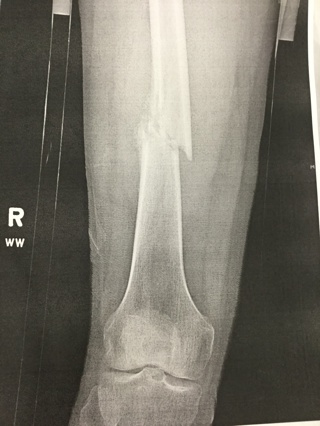
Podcast 633: Pathologic Femur Fractures

Podcast 633: Pathologic Femur Fractures

Contributor: Jared Scott, MD Educational Pearls: Pathologic bone fractures occur due to weakened bones from chronic disease and with less force when compared to non-pathologic fractures Can be due to...

19 Jan 20215min
Podcast 632: Neonatal Jaundice

Podcast 632: Neonatal Jaundice

Contributor: Jared Scott, MD Educational Pearls: Bilirubin is natural breakdown product of red blood cells but can be neurotoxic if levels become too high Fetal red blood cells are fragile and break ...

18 Jan 20216min

Pharmacy Phriday #7: Bactrim Adverse Events

Pharmacy Phriday #7: Bactrim Adverse Events

Contributor: Cheyenne Bean, PharmD Educational Pearls: Bactrim (TMP-SMX) is a sulfa antibiotic used for a number of infections but can have untoward effects. Hypoglycemia can be induced by the sulfa ...

15 Jan 20214min
Podcast 631: UK COVID-19 Mutation

Podcast 631: UK COVID-19 Mutation

Contributor: Gretchen Hinson, MD Educational Pearls: Viruses mutate frequently and a new variant of COVID has been found in the United Kingdom. Mutations typically occur due to transcription errors d...

13 Jan 20215min

Populärt inom Vetenskap

svd-nyhetsartiklar
dumma-manniskor
p3-dystopia
allt-du-velat-veta
rss-ufo-bortom-rimligt-tvivel-2
rss-vetenskapsradion-2
medicinvetarna
det-morka-psyket
rss-vetenskapsradion
kapitalet-en-podd-om-ekonomi
vetenskapsradion
bildningspodden
rss-geopodden-2
sexet
hacka-livet
rss-arkeologi-historia-podden-som-graver-i-vart-kulturlandskap
halsorevolutionen
rss-experimentet
4health-med-anna-sparre
ideer-som-forandrar-varlden