Mental Health Monthly #17: Mania

Mental Health Monthly #17: Mania

Contributors:

Andrew White MD - Outpatient Psychiatrist; Fellowship Trained in Addiction Psychiatry; Denver Health

Travis Barlock MD - Emergency Medicine Physician; Swedish Medical Center

Summary

In this episode of Mental Health Monthly, Dr. Travis Barlock hosts Dr. Andrew White to discuss the elements of mania that may be encountered in the emergency department. The discussion includes a helpful mnemonic to assess mania, work-up and treatment in the ED, underlying causes of mania, mental health holds, inpatient treatment, and the role of sleep in mania.

Educational Pearls

  • Initial assessment of suspected mania can be done via DIGFAST:

    • Distractibility - Individual that is unable to carry a linear, goal-directed conversation

    • Impulsivity - Executive functioning is impaired and patients are unable to control their behaviors

    • Grandiosity - Elevated mood and sense of self to delusions of grandeur

    • Flight of ideas - Usually described as racing thoughts

    • Agitation - Increase in psychomotor activity; start several projects of which they have little previous knowledge

    • Sleep decrease - Typically, manic episodes start with insomnia and can devolve into multiday sleeplessness

    • Talkativeness - More talkative than usual with pressured speech and a tangential thought process

  • Interviewing patients requires an understanding of mood-based mania vs. psychosis-based mania

    • An individual with mood-based mania will more likely be restless, whereas a patient with psychosis-based mania will be more relaxed from a psychomotor standpoint

  • Treatment of manic patients in the ED includes the use of antipsychotics to manage acute symptomatology

    • Management can be informed and directed by the patient's history i.e. known medications that have worked for the patient

  • ED management of manic patients involves a work-up for a broad differential including agitated delirium, substance-induced mania, metabolic disorders, and autoimmune diseases.

  • Some individuals experience manic episodes from marijuana and other illicit substances

  • Antidepressants used in bipolar patients for suspected depression may induce mania

    • Important to avoid using antidepressants as first-line therapy

  • Mental health holds can be beneficial in patients with grave disabilities from mania

    • Oftentimes, undertreatment of manic episodes leads to re-hospitalization

  • Inpatient treatment:

    • Environment is important - ensure that patients get solo rooms if possible to minimize stimulation

    • Antipsychotics, including risperidone and olanzapine, with or without a benzodiazepine, are useful for short-term agitation

    • Long-term treatment involves coupled pharmacological treatments with non-pharmacological treatments

  • Sleep

    • Fractured sleep is one of the earliest warning signs that someone has an imminent manic episode

    • Poor sleep can be an inciting factor for mania, which then turns into a cycle that further propagates a patient's manic episode

Summarized and edited by Jorge Chalit, OMSII | Studio production by Jeffrey Olson, MS2

Avsnitt(1148)

Podcast #265: The 2017 Flu Vaccine

Podcast #265: The 2017 Flu Vaccine

Author: Rachel Beham, PharmD, Advanced Clinical Pharmacist - Emergency Medicine Educational Pearls CDC recommends using the inactivated, injectable flu vaccine in those 6 months and older. The live a...

30 Okt 20174min
Podcast #264: Witnessed Cardiac Arrest

Podcast #264: Witnessed Cardiac Arrest

Author: Aaron Lessen, M.D. Educational Pearls For patients with in-hospital cardiac arrest, intubation in the 1st 15 minutes of resuscitation was associated with worse outcomes (mortality, neurologic...

27 Okt 20172min

Podcast #263: Early Antibiotics in Sepsis

Podcast #263: Early Antibiotics in Sepsis

Educational Pearls After the first hour, every 1 hour delay in antibiotics in a patient with septic shock patient is associated with a 4% increase in mortality. In patients with high suspicion for se...

25 Okt 20172min

Podcast #262: Pertussis

Podcast #262: Pertussis

Author: Julian Orenstein, M.D. Educational Pearls Colorado has a high population of unvaccinated children, and is at increased risk for pertussis outbreaks. The causative organism is Bordetella pertu...

23 Okt 20174min

Deep Dive #7: Domestic Violence

Deep Dive #7: Domestic Violence

Authors: Katie Sprinkel, MD Emergency Medicine Physician SANE Medical Director, Medical Center of Aurora Amy Ferrin, Senior Deputy District Attorney County Court Supervisor Office of the District A...

16 Okt 201737min
Podcast #261: Icatibant

Podcast #261: Icatibant

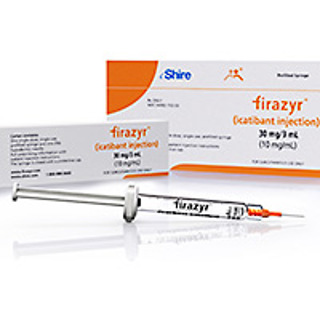
Author: Aaron Lessen, M.D. Educational Pearls Icatibant was introduced to treat ACE-inhibitor induced angioendema. This type of angioedema is refractory to epinephrine and antihistamines, and is like...

13 Okt 20172min
Podcast #260: Preoxygenation

Podcast #260: Preoxygenation

Author: David Rosenberg, M.D. Educational Pearls Preoxygenation is done before rapid sequence intubation, and should be done even if SaO2 is at 100%. Preoxygenation is done to fill the lungs with oxy...

11 Okt 20172min

Podcast #259: Transient Ischemic Attacks

Podcast #259: Transient Ischemic Attacks

Podcast #259: TIA Author: Peter Bakes, M.D. Educational Pearls A TIA is defined as focal neurological deficit that resolves within 24 hours and has negative imaging. The etiology is a transient throm...

9 Okt 20177min

Populärt inom Vetenskap

dumma-manniskor
svd-nyhetsartiklar
p3-dystopia
allt-du-velat-veta
kapitalet-en-podd-om-ekonomi
rss-ufo-bortom-rimligt-tvivel
rss-vetenskapsradion-2
det-morka-psyket
rss-vetenskapsradion
medicinvetarna
bildningspodden
sexet
rss-geopodden-2
vetenskapsradion
rss-experimentet
4health-med-anna-sparre
halsorevolutionen
rss-spraket
rss-arkeologi-historia-podden-som-graver-i-vart-kulturlandskap
hacka-livet