Mental Health Monthly #17: Mania

Mental Health Monthly #17: Mania

Contributors:

Andrew White MD - Outpatient Psychiatrist; Fellowship Trained in Addiction Psychiatry; Denver Health

Travis Barlock MD - Emergency Medicine Physician; Swedish Medical Center

Summary

In this episode of Mental Health Monthly, Dr. Travis Barlock hosts Dr. Andrew White to discuss the elements of mania that may be encountered in the emergency department. The discussion includes a helpful mnemonic to assess mania, work-up and treatment in the ED, underlying causes of mania, mental health holds, inpatient treatment, and the role of sleep in mania.

Educational Pearls

  • Initial assessment of suspected mania can be done via DIGFAST:

    • Distractibility - Individual that is unable to carry a linear, goal-directed conversation

    • Impulsivity - Executive functioning is impaired and patients are unable to control their behaviors

    • Grandiosity - Elevated mood and sense of self to delusions of grandeur

    • Flight of ideas - Usually described as racing thoughts

    • Agitation - Increase in psychomotor activity; start several projects of which they have little previous knowledge

    • Sleep decrease - Typically, manic episodes start with insomnia and can devolve into multiday sleeplessness

    • Talkativeness - More talkative than usual with pressured speech and a tangential thought process

  • Interviewing patients requires an understanding of mood-based mania vs. psychosis-based mania

    • An individual with mood-based mania will more likely be restless, whereas a patient with psychosis-based mania will be more relaxed from a psychomotor standpoint

  • Treatment of manic patients in the ED includes the use of antipsychotics to manage acute symptomatology

    • Management can be informed and directed by the patient's history i.e. known medications that have worked for the patient

  • ED management of manic patients involves a work-up for a broad differential including agitated delirium, substance-induced mania, metabolic disorders, and autoimmune diseases.

  • Some individuals experience manic episodes from marijuana and other illicit substances

  • Antidepressants used in bipolar patients for suspected depression may induce mania

    • Important to avoid using antidepressants as first-line therapy

  • Mental health holds can be beneficial in patients with grave disabilities from mania

    • Oftentimes, undertreatment of manic episodes leads to re-hospitalization

  • Inpatient treatment:

    • Environment is important - ensure that patients get solo rooms if possible to minimize stimulation

    • Antipsychotics, including risperidone and olanzapine, with or without a benzodiazepine, are useful for short-term agitation

    • Long-term treatment involves coupled pharmacological treatments with non-pharmacological treatments

  • Sleep

    • Fractured sleep is one of the earliest warning signs that someone has an imminent manic episode

    • Poor sleep can be an inciting factor for mania, which then turns into a cycle that further propagates a patient's manic episode

Summarized and edited by Jorge Chalit, OMSII | Studio production by Jeffrey Olson, MS2

Avsnitt(1145)

Podcast 702: Paralytic Awareness

Podcast 702: Paralytic Awareness

Contributor: Aaron Lessen, MD Educational Pearls: Known risk factors for being awake and paralyzed in the OR include only receiving IV medications, long-acting paralytics, and no formal monitoring sy...

9 Aug 20212min

Podcast 701: Elevated Blood Pressure Readings

Podcast 701: Elevated Blood Pressure Readings

Contributor: Aaron Lessen, MD Educational Pearls: Recent retrospective cohort study looked at elevated BP readings in the ED and correlation to underlying hypertension Large cohort of over 30,000 pat...

3 Aug 20213min
Podcast 700: Analgesics for Acute Musculoskeletal Pain

Podcast 700: Analgesics for Acute Musculoskeletal Pain

Contributor: Aaron Lessen, MD Educational Pearls: Recent RCT compared pain relief in patients receiving five medications for acute musculoskeletal pain Acetaminophen 1000mg/ibuprofen 400 mg Acetam...

2 Aug 20212min
Podcast 699: Pediatric Fingernail Avulsions

Podcast 699: Pediatric Fingernail Avulsions

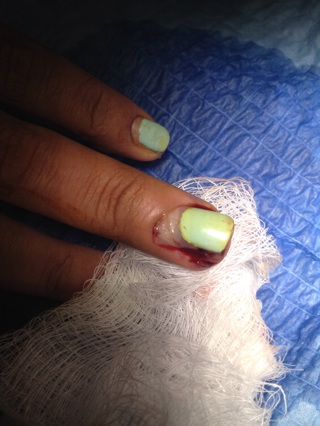
Contributor: Aaron Lessen, MD Educational Pearls: Traditionally, fingernails were replaced after avulsion using sutures Sometimes artificial material was placed when the fingernail was not available ...

28 Juli 20213min

Podcast 698: Empathy, Burnout, and Patient Satisfaction

Podcast 698: Empathy, Burnout, and Patient Satisfaction

Contributor: Aaron Lessen, MD Educational Pearls: Survey of EM physicians to self-report empathy and burnout levels and correlated with patient satisfaction scores Patient satisfaction was not affect...

27 Juli 20212min
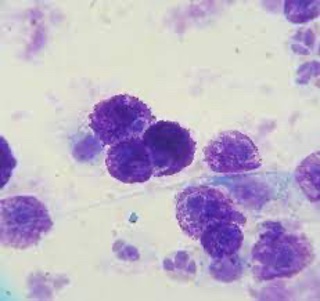
Podcast 697: Kounis Syndrome

Podcast 697: Kounis Syndrome

Contributor: Aaron Lessen, MD Educational Pearls: Kounis syndrome is an allergic acute coronary syndrome Triggers include medications (antibiotics), insect bites, or other common allergens Believed t...

26 Juli 20213min
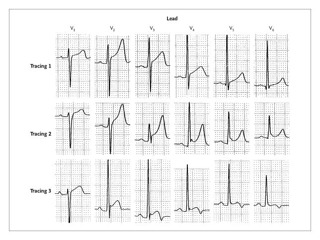
Podcast 696: ST Elevation and Differential Diagnoses

Podcast 696: ST Elevation and Differential Diagnoses

Contributor: Peter Bakes, MD Educational Pearls: ST elevation clinical guidelines for myocardial infarction include: 2.5 mm elevation for males 2 mm elevation in males >40 in V2 and V3 1.5 mm elev...

21 Juli 20214min

Podcast 695: Einstein and Cellophane

Podcast 695: Einstein and Cellophane

Educational Pearls: Albert Einstein had chronic abdominal pain as a middle-aged man Dr. Rudolph Nissen, founder of the Nissen fundoplication, performed exploratory surgery for this pain and found an ...

20 Juli 20213min

Populärt inom Vetenskap

svd-nyhetsartiklar
p3-dystopia
dumma-manniskor
pojkmottagningen
allt-du-velat-veta
det-morka-psyket
kapitalet-en-podd-om-ekonomi
rss-experimentet
dumforklarat
rss-vetenskapsradion-2
halsorevolutionen
rss-ufo-bortom-rimligt-tvivel
medicinvetarna
rss-vetenskapsradion
paranormalt-med-caroline-giertz
bildningspodden
rss-spraket
sexet
vetenskapsradion
4health-med-anna-sparre