
Mental Health Monthly #17: Mania

Mental Health Monthly #17: Mania

Contributors:

Andrew White MD - Outpatient Psychiatrist; Fellowship Trained in Addiction Psychiatry; Denver Health

Travis Barlock MD - Emergency Medicine Physician; Swedish Medical Center

Summary

In this episode of Mental Health Monthly, Dr. Travis Barlock hosts Dr. Andrew White to discuss the elements of mania that may be encountered in the emergency department. The discussion includes a helpful mnemonic to assess mania, work-up and treatment in the ED, underlying causes of mania, mental health holds, inpatient treatment, and the role of sleep in mania.

Educational Pearls

  • Initial assessment of suspected mania can be done via DIGFAST:

    • Distractibility - Individual that is unable to carry a linear, goal-directed conversation

    • Impulsivity - Executive functioning is impaired and patients are unable to control their behaviors

    • Grandiosity - Elevated mood and sense of self to delusions of grandeur

    • Flight of ideas - Usually described as racing thoughts

    • Agitation - Increase in psychomotor activity; start several projects of which they have little previous knowledge

    • Sleep decrease - Typically, manic episodes start with insomnia and can devolve into multiday sleeplessness

    • Talkativeness - More talkative than usual with pressured speech and a tangential thought process

  • Interviewing patients requires an understanding of mood-based mania vs. psychosis-based mania

    • An individual with mood-based mania will more likely be restless, whereas a patient with psychosis-based mania will be more relaxed from a psychomotor standpoint

  • Treatment of manic patients in the ED includes the use of antipsychotics to manage acute symptomatology

    • Management can be informed and directed by the patient's history i.e. known medications that have worked for the patient

  • ED management of manic patients involves a work-up for a broad differential including agitated delirium, substance-induced mania, metabolic disorders, and autoimmune diseases.

  • Some individuals experience manic episodes from marijuana and other illicit substances

  • Antidepressants used in bipolar patients for suspected depression may induce mania

    • Important to avoid using antidepressants as first-line therapy

  • Mental health holds can be beneficial in patients with grave disabilities from mania

    • Oftentimes, undertreatment of manic episodes leads to re-hospitalization

  • Inpatient treatment:

    • Environment is important - ensure that patients get solo rooms if possible to minimize stimulation

    • Antipsychotics, including risperidone and olanzapine, with or without a benzodiazepine, are useful for short-term agitation

    • Long-term treatment involves coupled pharmacological treatments with non-pharmacological treatments

  • Sleep

    • Fractured sleep is one of the earliest warning signs that someone has an imminent manic episode

    • Poor sleep can be an inciting factor for mania, which then turns into a cycle that further propagates a patient's manic episode

Summarized and edited by Jorge Chalit, OMSII | Studio production by Jeffrey Olson, MS2

Avsnitt(1145)

Mental Health Monthly #7: Urine Toxicology in the ED

Mental Health Monthly #7: Urine Toxicology in the ED

This episode of Mental Health Monthly we will be discussing drugs screens in the Emergency Department with Dr. Justin Romano and Eddie Carillo. Dr. Justin Romano is a current psychiatry resident and E...

10 Feb 202114min
Podcast 639: Rib Fractures in the Elderly

Podcast 639: Rib Fractures in the Elderly

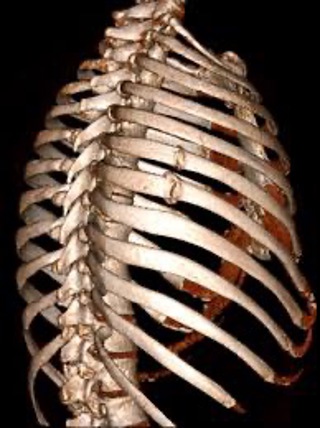
Contributor: Aaron Lessen, MD Educational Pearls: Retrospective review of 5,021 patients over 65 with 2 or more rib fractures recently published 3577 (78 %) were admitted to non-ICU setting 1.1% of ...

9 Feb 20213min
Podcast 638: Pyogenic Liver Abscess

Podcast 638: Pyogenic Liver Abscess

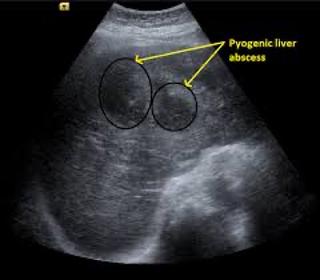
Contributor: Aaron Lessen, MD Educational Pearls: Pyogenic liver abscesses can be caused by Intra-abdominal infection progressing to peritonitis which then drains into liver Bacteremia leading to h...

8 Feb 20213min

Podcast 637: LSD

Podcast 637: LSD

Contributor: Katie Sprinkel, MD Educational Pearls: Commonly known as "acid," LSD is seeing a resurgence in the population as a recreational hallucination Onset is about 30 minutes with peak pharmaco...

2 Feb 20216min

Podcast 636: May-Thurner Syndrome

Podcast 636: May-Thurner Syndrome

Contributor: Sam Killian, MD Educational Pearls: iliac vein compression syndrome is also called May-Thurner Syndrome The left leg more frequently develops deep venous thrombosis (DVT) in part because...

1 Feb 20213min

Pharmacy Phriday #8: Atropine with Ketamine for Conscious Sedation of Pediatrics

Pharmacy Phriday #8: Atropine with Ketamine for Conscious Sedation of Pediatrics

Educational Pearls: Atropine has been shown to reduce hypersalivation as well as nausea and vomiting induced by ketamine sedation. Atropine can increase the occurrence of a transient rash, as well a...

29 Jan 20213min

Podcast 635: Wide Complex Tachycardias

Podcast 635: Wide Complex Tachycardias

Contributor: Peter Bakes, MD Educational Pearls: Two main differentials for wide complex tachycardia (WCT) include ventricular tachycardia (most common) and supraventricular tachycardia with aberranc...

26 Jan 20215min

Podcast 634: D10 for Hypoglycemia

Podcast 634: D10 for Hypoglycemia

Contributor: Dylan Luyten, MD Educational Pearls: D10 may be a better alternative to D50 in correcting hypoglycemia Risks of D50: Can cause extravasation injury Risk of rebound hypoglycemia D10 ...

25 Jan 20214min

Populärt inom Vetenskap

p3-dystopia
dumma-manniskor
svd-nyhetsartiklar
allt-du-velat-veta
kapitalet-en-podd-om-ekonomi
det-morka-psyket
dumforklarat
pojkmottagningen
rss-vetenskapsradion-2
rss-vetenskapsradion
rss-ufo-bortom-rimligt-tvivel
sexet
halsorevolutionen
rss-spraket
medicinvetarna
rss-experimentet
vetenskapsradion
paranormalt-med-caroline-giertz
4health-med-anna-sparre
rss-tidslinjen-podcast