Episode 894: DKA and HHS

Episode 894: DKA and HHS

Contributor: Ricky Dhaliwal, MD

Educational Pearls:

What are DKA and HHS?

  • DKA (Diabetic Ketoacidosis) and HHS (Hyperosmolar Hyperglycemic State) are both acute hyperglycemic states.

DKA

  • More common in type 1 diabetes.

  • Triggered by decreased circulating insulin.

    • The body needs energy but cannot use glucose because it can't get it into the cells.

    • This leads to increased metabolism of free fatty acids and the increased production of ketones.

    • The buildup of ketones causes acidosis.

    • The kidneys attempt to compensate for the acidosis by increasing diuresis.

  • These patients present as dry and altered, with sweet-smelling breath and Kussmaul (fast and deep) respirations.

HSS

  • More common in type 2 diabetes.

  • In this condition there is still enough circulating insulin to avoid the breakdown of fats for energy but not enough insulin to prevent hyperglycemia.

  • Serum glucose levels are very high – around 600 to 1200 mg/dl.

  • Also presents similarly to DKA with the patient being dry and altered.

Important labs to monitor

  • Serum glucose

  • Potassium

  • Phosphorus

  • Magnesium

  • Anion gap (Na - Cl - HCO3)

  • Renal function (Creatinine and BUN)

  • ABG/VBG for pH

  • Urinalysis and urine ketones by dipstick

Treatment

  • Identify the cause, i.e. Has the patient stopped taking their insulin?

  • Aggressive hydration with isotonic fluids.

    • Normal Saline (NS) vs Lactated Ringers (LR)?

      • LR might resolve the DKA/HHS faster with less risk of hypernatremia.

  • Should you bolus with insulin?

  • No, just start a drip.

    • 0.1-0.14 units per kg of insulin.

  • Make sure you have your potassium back before starting insulin as the insulin can shift the potassium into the cells and lead to dangerous hypokalemia.

  • Should you treat hyponatremia?

    • Make sure to correct for hyperglycemia before treating. This artificially depresses the sodium.

  • Should you give bicarb?

    • Replace if the pH < 6.9. Otherwise, it won't do anything to help.

  • Don't intubate, if the patient is breathing fast it is because they are compensating for their acidosis.

References

  1. Andrade-Castellanos, C. A., Colunga-Lozano, L. E., Delgado-Figueroa, N., & Gonzalez-Padilla, D. A. (2016). Subcutaneous rapid-acting insulin analogues for diabetic ketoacidosis. The Cochrane database of systematic reviews, 2016(1), CD011281. https://doi.org/10.1002/14651858.CD011281.pub2

  2. Chaithongdi, N., Subauste, J. S., Koch, C. A., & Geraci, S. A. (2011). Diagnosis and management of hyperglycemic emergencies. Hormones (Athens, Greece), 10(4), 250–260. https://doi.org/10.14310/horm.2002.1316

  3. Dhatariya, K. K., Glaser, N. S., Codner, E., & Umpierrez, G. E. (2020). Diabetic ketoacidosis. Nature reviews. Disease primers, 6(1), 40. https://doi.org/10.1038/s41572-020-0165-1

  4. Duhon, B., Attridge, R. L., Franco-Martinez, A. C., Maxwell, P. R., & Hughes, D. W. (2013). Intravenous sodium bicarbonate therapy in severely acidotic diabetic ketoacidosis. The Annals of pharmacotherapy, 47(7-8), 970–975. https://doi.org/10.1345/aph.1S014

  5. Modi, A., Agrawal, A., & Morgan, F. (2017). Euglycemic Diabetic Ketoacidosis: A Review. Current diabetes reviews, 13(3), 315–321. https://doi.org/10.2174/1573399812666160421121307

  6. Self, W. H., Evans, C. S., Jenkins, C. A., Brown, R. M., Casey, J. D., Collins, S. P., Coston, T. D., Felbinger, M., Flemmons, L. N., Hellervik, S. M., Lindsell, C. J., Liu, D., McCoin, N. S., Niswender, K. D., Slovis, C. M., Stollings, J. L., Wang, L., Rice, T. W., Semler, M. W., & Pragmatic Critical Care Research Group (2020). Clinical Effects of Balanced Crystalloids vs Saline in Adults With Diabetic Ketoacidosis: A Subgroup Analysis of Cluster Randomized Clinical Trials. JAMA network open, 3(11), e2024596. https://doi.org/10.1001/jamanetworkopen.2020.24596

Summarized by Jeffrey Olson MS2 | Edited by Meg Joyce & Jorge Chalit, OMSII

Avsnitt(1150)

Podcast #213: Oats and Potatoes

Podcast #213: Oats and Potatoes

Author: Michael Hunt, M.D. Educational Pearls: Oats have been shown to lower LDL. Oat bran is the most effective way to consume oats to lower LDL. A Swedish study of 69,000 people who ate at least 3 ...

3 Juni 20172min

Podcast #212: Knights Who Say Pessary

Podcast #212: Knights Who Say Pessary

Author: Jared Scott, M.D. Educational Pearls: A pessary is a device inserted into the vagina for medical purposes. Examples include birth control and mechanical support of the pelvic structures. In o...

1 Juni 20173min
Podcast #211: E-cigarettes

Podcast #211: E-cigarettes

Author: Michael Hunt, M.D. Educational Pearls: Children under age of 6 are at greatest risk of accidental nicotine overdose from ingestion. Biphasic presentation: Hyperadrenergic = nausea, vomiting...

31 Maj 20173min

Podcast #210: Bear Mauling

Podcast #210: Bear Mauling

Author: Jared Scott M.D. Educational Pearls: Bear mauling is not a common issue in the ED. The Ursus americanus (black bear) is the most common in Colorado, but Ursus arctos horribilis (grizzly bear)...

28 Maj 20174min
Podcast #209: Rabbit Done Died

Podcast #209: Rabbit Done Died

Author: Sam Killian, M.D. Educational Pearls: "The Rabbit Has Died" is a lesser used phrase to denote finding out one is pregnant. During a test used in the 1930s, the "Rabbit's Test," a rabbit was i...

26 Maj 20176min
Podcast #208: Vocal Cord Dysfunction

Podcast #208: Vocal Cord Dysfunction

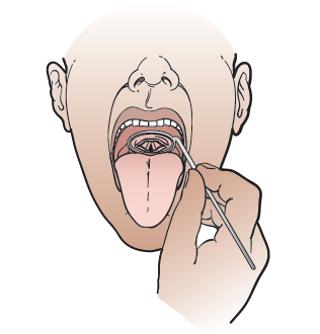
Author: Martin O'Bryan M.D. Educational Pearls: Vocal cord dysfunction can mimic other causes of stridor, such as asthma and upper airway obstruction. Patients are often very anxious because of the d...

24 Maj 20174min

Podcast #207: Boxer's Fracture

Podcast #207: Boxer's Fracture

Author: Sam Killian, M.D. Educational Pearls: Defined as fracture of neck (distal segment) of 5th metacarpal. Intrinsic muscles of hand pull segment to palmar aspect of hand. 30 degrees of angulation...

22 Maj 20174min
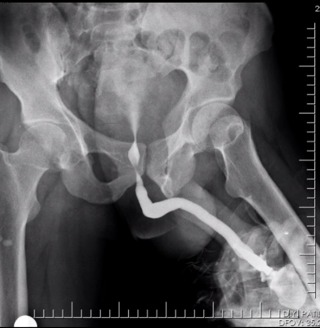
Podcast #206: Urethral Injuries

Podcast #206: Urethral Injuries

Author: Jared Scott, M.D. Educational Pearls: DDx for blood at urethral meatus includes: pelvic fracture, ruptured bladder, kidney laceration, penile trauma. Retrograde Urethrogram (RUG) must be perf...

20 Maj 20174min

Populärt inom Vetenskap

dumma-manniskor
p3-dystopia
svd-nyhetsartiklar
allt-du-velat-veta
kapitalet-en-podd-om-ekonomi
rss-vetenskapsradion
rss-ufo-bortom-rimligt-tvivel-2
rss-vetenskapsradion-2
det-morka-psyket
sexet
rss-experimentet
medicinvetarna
paranormalt-med-caroline-giertz
halsorevolutionen
bildningspodden
dumforklarat
rss-spraket
hacka-livet
rss-odla
rss-geopodden-2