Episode 894: DKA and HHS

Episode 894: DKA and HHS

Contributor: Ricky Dhaliwal, MD

Educational Pearls:

What are DKA and HHS?

  • DKA (Diabetic Ketoacidosis) and HHS (Hyperosmolar Hyperglycemic State) are both acute hyperglycemic states.

DKA

  • More common in type 1 diabetes.

  • Triggered by decreased circulating insulin.

    • The body needs energy but cannot use glucose because it can't get it into the cells.

    • This leads to increased metabolism of free fatty acids and the increased production of ketones.

    • The buildup of ketones causes acidosis.

    • The kidneys attempt to compensate for the acidosis by increasing diuresis.

  • These patients present as dry and altered, with sweet-smelling breath and Kussmaul (fast and deep) respirations.

HSS

  • More common in type 2 diabetes.

  • In this condition there is still enough circulating insulin to avoid the breakdown of fats for energy but not enough insulin to prevent hyperglycemia.

  • Serum glucose levels are very high – around 600 to 1200 mg/dl.

  • Also presents similarly to DKA with the patient being dry and altered.

Important labs to monitor

  • Serum glucose

  • Potassium

  • Phosphorus

  • Magnesium

  • Anion gap (Na - Cl - HCO3)

  • Renal function (Creatinine and BUN)

  • ABG/VBG for pH

  • Urinalysis and urine ketones by dipstick

Treatment

  • Identify the cause, i.e. Has the patient stopped taking their insulin?

  • Aggressive hydration with isotonic fluids.

    • Normal Saline (NS) vs Lactated Ringers (LR)?

      • LR might resolve the DKA/HHS faster with less risk of hypernatremia.

  • Should you bolus with insulin?

  • No, just start a drip.

    • 0.1-0.14 units per kg of insulin.

  • Make sure you have your potassium back before starting insulin as the insulin can shift the potassium into the cells and lead to dangerous hypokalemia.

  • Should you treat hyponatremia?

    • Make sure to correct for hyperglycemia before treating. This artificially depresses the sodium.

  • Should you give bicarb?

    • Replace if the pH < 6.9. Otherwise, it won't do anything to help.

  • Don't intubate, if the patient is breathing fast it is because they are compensating for their acidosis.

References

  1. Andrade-Castellanos, C. A., Colunga-Lozano, L. E., Delgado-Figueroa, N., & Gonzalez-Padilla, D. A. (2016). Subcutaneous rapid-acting insulin analogues for diabetic ketoacidosis. The Cochrane database of systematic reviews, 2016(1), CD011281. https://doi.org/10.1002/14651858.CD011281.pub2

  2. Chaithongdi, N., Subauste, J. S., Koch, C. A., & Geraci, S. A. (2011). Diagnosis and management of hyperglycemic emergencies. Hormones (Athens, Greece), 10(4), 250–260. https://doi.org/10.14310/horm.2002.1316

  3. Dhatariya, K. K., Glaser, N. S., Codner, E., & Umpierrez, G. E. (2020). Diabetic ketoacidosis. Nature reviews. Disease primers, 6(1), 40. https://doi.org/10.1038/s41572-020-0165-1

  4. Duhon, B., Attridge, R. L., Franco-Martinez, A. C., Maxwell, P. R., & Hughes, D. W. (2013). Intravenous sodium bicarbonate therapy in severely acidotic diabetic ketoacidosis. The Annals of pharmacotherapy, 47(7-8), 970–975. https://doi.org/10.1345/aph.1S014

  5. Modi, A., Agrawal, A., & Morgan, F. (2017). Euglycemic Diabetic Ketoacidosis: A Review. Current diabetes reviews, 13(3), 315–321. https://doi.org/10.2174/1573399812666160421121307

  6. Self, W. H., Evans, C. S., Jenkins, C. A., Brown, R. M., Casey, J. D., Collins, S. P., Coston, T. D., Felbinger, M., Flemmons, L. N., Hellervik, S. M., Lindsell, C. J., Liu, D., McCoin, N. S., Niswender, K. D., Slovis, C. M., Stollings, J. L., Wang, L., Rice, T. W., Semler, M. W., & Pragmatic Critical Care Research Group (2020). Clinical Effects of Balanced Crystalloids vs Saline in Adults With Diabetic Ketoacidosis: A Subgroup Analysis of Cluster Randomized Clinical Trials. JAMA network open, 3(11), e2024596. https://doi.org/10.1001/jamanetworkopen.2020.24596

Summarized by Jeffrey Olson MS2 | Edited by Meg Joyce & Jorge Chalit, OMSII

Avsnitt(1146)

Podcast 515: Non-Accidental Trauma

Podcast 515: Non-Accidental Trauma

Contributor: Jared Scott, MD Educational Pearls: Non-accidental trauma (NAT) to children is commonly missed by medical providers Try to remember TEN-4-FACES as a useful aide for concerning patterns t...

1 Nov 20194min
Podcast 514: Pain Control While on Naltrexone

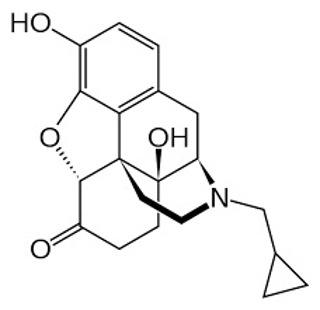
Podcast 514: Pain Control While on Naltrexone

Author: Don Stader, MD Educational Pearls: Suboxone, methadone, and naltrexone are commonly used as treatments for opiate use disorder.  Naltrexone is a full mu-opiate receptor antagonist, making acu...

30 Okt 20192min

Podcast 513: Plague

Podcast 513: Plague

Author: John Winkler, MD Educational Pearls: The plague (black death) is caused by the Yersinia Pestis bacteria. This bacteria is spread by fleas and carried by rats. It is very contagious and only n...

27 Okt 20192min

Podcast 512: Abstinence is Bad, mmmkay?

Podcast 512: Abstinence is Bad, mmmkay?

Author: Don Stader, MD Educational Pearls: Abstinence from substances such as tobacco or alcohol are effective strategies to achieve long term sobriety However, abstinence is not an effective strateg...

22 Okt 20194min

Podcast 511: Ebola Treatment

Podcast 511: Ebola Treatment

Author: Rachel Beham, PharmD Educational Pearls: There are currently many Ebola vaccines that are being studied, and one (recombinant VZV-Ebola vaccine) is currently being used in Africa. This vaccin...

17 Okt 20194min

Podcast # 510: Ebola

Podcast # 510: Ebola

Author: John Winkler, MD Educational Pearls: There is a new outbreak of Ebola in The Congo. This is likely due to civil war and rebel attacks on healthcare workers in the area. Ebola is now spreadin...

16 Okt 20193min

Podcast 509: Circadian Rhythm and Shift Work, From Z to Z

Podcast 509: Circadian Rhythm and Shift Work, From Z to Z

Contributor: Jared Scott, MD Educational Pearls: Sleep deprivation and disturbed sleep cycles increases the risk of many acute and chronic medical issues such as motor vehicle accidents, diabetes, ca...

12 Okt 201915min

Podcast 508: Are you with child?

Podcast 508: Are you with child?

Contributor: Chris Holmes, MD Educational Pearls: In ancient Egypt, pregnant women would urinate over barley and wheat seeds to help determine the sex of thier fetus, as well as if they were pregnant...

10 Okt 20194min

Populärt inom Vetenskap

dumma-manniskor
svd-nyhetsartiklar
p3-dystopia
kapitalet-en-podd-om-ekonomi
allt-du-velat-veta
rss-ufo-bortom-rimligt-tvivel
det-morka-psyket
medicinvetarna
rss-vetenskapsradion
rss-vetenskapsradion-2
sexet
rss-experimentet
pojkmottagningen
hacka-livet
rss-spraket
dumforklarat
rss-broccolipodden-en-podcast-som-inte-handlar-om-broccoli
halsorevolutionen
bildningspodden
rss-arkeologi-historia-podden-som-graver-i-vart-kulturlandskap