
Episode 894: DKA and HHS

Episode 894: DKA and HHS

Contributor: Ricky Dhaliwal, MD

Educational Pearls:

What are DKA and HHS?

  • DKA (Diabetic Ketoacidosis) and HHS (Hyperosmolar Hyperglycemic State) are both acute hyperglycemic states.

DKA

  • More common in type 1 diabetes.

  • Triggered by decreased circulating insulin.

    • The body needs energy but cannot use glucose because it can't get it into the cells.

    • This leads to increased metabolism of free fatty acids and the increased production of ketones.

    • The buildup of ketones causes acidosis.

    • The kidneys attempt to compensate for the acidosis by increasing diuresis.

  • These patients present as dry and altered, with sweet-smelling breath and Kussmaul (fast and deep) respirations.

HSS

  • More common in type 2 diabetes.

  • In this condition there is still enough circulating insulin to avoid the breakdown of fats for energy but not enough insulin to prevent hyperglycemia.

  • Serum glucose levels are very high – around 600 to 1200 mg/dl.

  • Also presents similarly to DKA with the patient being dry and altered.

Important labs to monitor

  • Serum glucose

  • Potassium

  • Phosphorus

  • Magnesium

  • Anion gap (Na - Cl - HCO3)

  • Renal function (Creatinine and BUN)

  • ABG/VBG for pH

  • Urinalysis and urine ketones by dipstick

Treatment

  • Identify the cause, i.e. Has the patient stopped taking their insulin?

  • Aggressive hydration with isotonic fluids.

    • Normal Saline (NS) vs Lactated Ringers (LR)?

      • LR might resolve the DKA/HHS faster with less risk of hypernatremia.

  • Should you bolus with insulin?

  • No, just start a drip.

    • 0.1-0.14 units per kg of insulin.

  • Make sure you have your potassium back before starting insulin as the insulin can shift the potassium into the cells and lead to dangerous hypokalemia.

  • Should you treat hyponatremia?

    • Make sure to correct for hyperglycemia before treating. This artificially depresses the sodium.

  • Should you give bicarb?

    • Replace if the pH < 6.9. Otherwise, it won't do anything to help.

  • Don't intubate, if the patient is breathing fast it is because they are compensating for their acidosis.

References

  1. Andrade-Castellanos, C. A., Colunga-Lozano, L. E., Delgado-Figueroa, N., & Gonzalez-Padilla, D. A. (2016). Subcutaneous rapid-acting insulin analogues for diabetic ketoacidosis. The Cochrane database of systematic reviews, 2016(1), CD011281. https://doi.org/10.1002/14651858.CD011281.pub2

  2. Chaithongdi, N., Subauste, J. S., Koch, C. A., & Geraci, S. A. (2011). Diagnosis and management of hyperglycemic emergencies. Hormones (Athens, Greece), 10(4), 250–260. https://doi.org/10.14310/horm.2002.1316

  3. Dhatariya, K. K., Glaser, N. S., Codner, E., & Umpierrez, G. E. (2020). Diabetic ketoacidosis. Nature reviews. Disease primers, 6(1), 40. https://doi.org/10.1038/s41572-020-0165-1

  4. Duhon, B., Attridge, R. L., Franco-Martinez, A. C., Maxwell, P. R., & Hughes, D. W. (2013). Intravenous sodium bicarbonate therapy in severely acidotic diabetic ketoacidosis. The Annals of pharmacotherapy, 47(7-8), 970–975. https://doi.org/10.1345/aph.1S014

  5. Modi, A., Agrawal, A., & Morgan, F. (2017). Euglycemic Diabetic Ketoacidosis: A Review. Current diabetes reviews, 13(3), 315–321. https://doi.org/10.2174/1573399812666160421121307

  6. Self, W. H., Evans, C. S., Jenkins, C. A., Brown, R. M., Casey, J. D., Collins, S. P., Coston, T. D., Felbinger, M., Flemmons, L. N., Hellervik, S. M., Lindsell, C. J., Liu, D., McCoin, N. S., Niswender, K. D., Slovis, C. M., Stollings, J. L., Wang, L., Rice, T. W., Semler, M. W., & Pragmatic Critical Care Research Group (2020). Clinical Effects of Balanced Crystalloids vs Saline in Adults With Diabetic Ketoacidosis: A Subgroup Analysis of Cluster Randomized Clinical Trials. JAMA network open, 3(11), e2024596. https://doi.org/10.1001/jamanetworkopen.2020.24596

Summarized by Jeffrey Olson MS2 | Edited by Meg Joyce & Jorge Chalit, OMSII

Avsnitt(1146)

Podcast #399: Hunting for pancreatitis

Podcast #399: Hunting for pancreatitis

Author: Michael Hunt, MD Educational Pearls: Alcohol and gallstones are most common causes of pancreatitis Diagnosis is not simply based on lipase alone - must have at least two the the three criteri...

31 Okt 20183min
Podcast #398:  Who is gonna fail your antibiotic plan?

Podcast #398: Who is gonna fail your antibiotic plan?

Author: Erik Verzemnieks, MD Educational Pearls: Recent study provides at least some evidence to help predict antibiotic failure for cellulitis, which is not necessarily straight forward Intuitive ri...

29 Okt 20181min
Podcast #397: Oh… Pharyngeal Trauma

Podcast #397: Oh… Pharyngeal Trauma

Author: Aaron Lessen, MD Educational Pearls: Injuries from penetrating pharyngeal trauma are often subtle on examination in children Potentially serious complications including carotid artery inju...

27 Okt 20183min
Podcast #396: Oncologic Emergencies

Podcast #396: Oncologic Emergencies

Author: Rachel Brady, MD Educational Pearls: Hypercalcemia of malignancy: Hypercalcemia of malignancy can present with lethargy, muscle weakness, hyperreflexia, altered mental status, cardiac dysrhyt...

24 Okt 20184min
Podcast #395:  Aspirin for everyone!

Podcast #395: Aspirin for everyone!

Author: Aaron Lessen, MD Educational Pearls: In patients without indications for aspirin, three recent studies looked at prevention of several end points in the elderly These showed no benefit in p...

22 Okt 20182min

Podcast #394: Myths of Medication Assisted Treatment

Podcast #394: Myths of Medication Assisted Treatment

Author: Katie Sprinkle, MD Educational Pearls: Medication Assisted Treatment (MAT) is the treatment of addiction with medications, commonly used for opioid use disorders A long held belief is MAT sim...

20 Okt 20185min

Podcast #393: Neonatal Vomiting

Podcast #393: Neonatal Vomiting

Author: Peter Bakes, MD Educational Pearls: Important historical information to elicit is the birth history, feeding habits, stooling habits, associated symptoms, presence of bile, and presence of ...

17 Okt 20185min
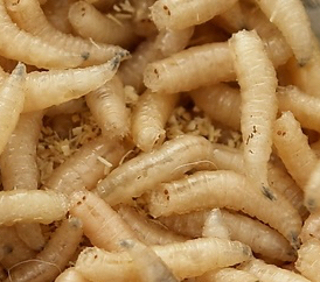
Podcast # 392: Maggot Therapy

Podcast # 392: Maggot Therapy

Author: Jared Scott, MD Educational Pearls: Interest started as it was noticed soldiers who had wounds infected with maggots had better outcomes than those without maggots Studies have shown that wou...

15 Okt 20183min

Populärt inom Vetenskap

p3-dystopia
dumma-manniskor
svd-nyhetsartiklar
allt-du-velat-veta
kapitalet-en-podd-om-ekonomi
det-morka-psyket
rss-ufo-bortom-rimligt-tvivel
sexet
rss-vetenskapsradion
pojkmottagningen
rss-vetenskapsradion-2
dumforklarat
rss-broccolipodden-en-podcast-som-inte-handlar-om-broccoli
halsorevolutionen
rss-spraket
bildningspodden
hacka-livet
rss-experimentet
medicinvetarna
rss-lara-fran-larda-en-fackbok-och-en-forfattare