Episode 906: Case Study of Hypernatremia

Episode 906: Case Study of Hypernatremia

Contributor: Aaron Lessen MD

Educational Pearls:

The case:

  • A gentleman came in from a nursing home with symptoms concerning for sepsis. He was hypotensive, hypoxic, febrile, and mentally altered.

  • His past medical history included previous strokes which had left him with deficits for which he required a feeding tube.

  • Initial workup included some point of care labs which revealed a sodium of 165 mEq/L (normal range 135-145)

Hypernatremia

  • What causes it?

    • Dehydration, from insufficient fluid intake. This might happen in individuals who cannot drink water independently, such as infants, elderly, or disabled people, as was the case for this patient.

    • Other causes of dehydration/hypernatremia include excessive sweating; diabetes insipidus; diuretic use; kidney dysfunction; and severe burns which can lead to fluid loss through the damaged skin.

  • How do you correct it?

    • Need to correct slowly, not more than 10 to 12 meq/L in 24 hours

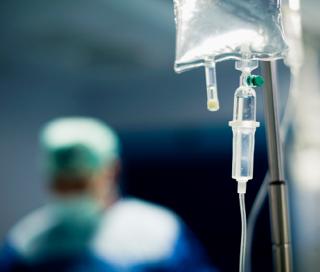
    • Can do normal saline (0.9%) or half saline (0.45%) and D5, at 150-200 mL per hour.

    • Check the sodium frequently (every 2-3 hours)

    • Will likely need ICU-level monitoring

  • What happens if you correct it too quickly?

    • Cerebral edema

    • Seizures

Bonus fact: Correction of hyponatremia too quickly causes osmotic demyelination syndrome (ODS).

References

  1. Chauhan, K., Pattharanitima, P., Patel, N., Duffy, A., Saha, A., Chaudhary, K., Debnath, N., Van Vleck, T., Chan, L., Nadkarni, G. N., & Coca, S. G. (2019). Rate of Correction of Hypernatremia and Health Outcomes in Critically Ill Patients. Clinical journal of the American Society of Nephrology : CJASN, 14(5), 656–663. https://doi.org/10.2215/CJN.10640918

  2. Lindner, G., & Funk, G. C. (2013). Hypernatremia in critically ill patients. Journal of critical care, 28(2), 216.e11–216.e2.16E20. https://doi.org/10.1016/j.jcrc.2012.05.001

  3. Muhsin, S. A., & Mount, D. B. (2016). Diagnosis and treatment of hypernatremia. Best practice & research. Clinical endocrinology & metabolism, 30(2), 189–203. https://doi.org/10.1016/j.beem.2016.02.014

Summarized by Jeffrey Olson MS2 | Edited by Meg Joyce & Jorge Chalit, OMSIII

Avsnitt(1145)

Podcast 833: NS vs LR

Podcast 833: NS vs LR

Contributor: Travis Barlock, MD Educational Pearls: Normal Saline (NS) contains 154 mEq of both Sodium (Na) and Chloride (Cl), and has a pH of 5.5 Normal Na and Cl in adult humans are about 140 mEq...

28 Nov 20225min
CA Bridge Program and Health Disparities in the Opioid Epidemic

CA Bridge Program and Health Disparities in the Opioid Epidemic

Happy Thanksgiving EMM listeners, Mason here wanting to extend a special thank you to all of you for tuning in to our show. Today we are featuring a special episode on health disparities in the opioid...

23 Nov 202251min

Podcast 832: STD Checks

Podcast 832: STD Checks

Educational Pearls: Most common sexually transmitted disease (STD) in North America: Human Papillomavirus (HPV) From the emergency department patients should be connected to follow-up care and educ...

22 Nov 20225min

Podcast 831: O2 Targets

Podcast 831: O2 Targets

Contributor: Aaron Lessen,MD Educational Pearls: Recent study looked at mechanically ventilated patients in ED and ICU to determine if O2 saturation level impacted patient outcomes 2541 patients ra...

21 Nov 20223min
Podcast 830: Peripheral IV Flow Rates

Podcast 830: Peripheral IV Flow Rates

Contributor: Travis Barlock, MD Educational Pearls: Gauge and length of catheter are determinants of flow rate Smaller gauges produce higher flow rate Longer catheters reduce flow rate Common IV...

15 Nov 20223min

Podcast 829: Monkeypox

Podcast 829: Monkeypox

Contributor: Aaron Lessen, MD Educational Pearls: Monkeypox transmission is still occurring in the United States Transmitted by contact to exposed lesion MSM are a high-risk group for monkeypox inf...

14 Nov 20224min

Podcast 828: TXA Dosing Update

Podcast 828: TXA Dosing Update

Contributor: Nick Hatch, MD Educational Pearls: In the setting of traumatic injury, tranexamic acid (TXA) is given to stabilize clots which minimizes bleeding and decreases risk of hemorrhagic shock ...

8 Nov 20224min

Podcast 827: Allergies in Peds

Podcast 827: Allergies in Peds

Contributor: Aaron Lessen, MD Educational Pearls: Recent study evaluated if early exposure to an allergen impacted the rate of allergy development later in childhood Children were exposed to peanut, ...

7 Nov 20222min

Populärt inom Vetenskap

svd-nyhetsartiklar
p3-dystopia
dumma-manniskor
pojkmottagningen
allt-du-velat-veta
det-morka-psyket
kapitalet-en-podd-om-ekonomi
rss-experimentet
dumforklarat
rss-vetenskapsradion-2
halsorevolutionen
rss-ufo-bortom-rimligt-tvivel
medicinvetarna
rss-vetenskapsradion
paranormalt-med-caroline-giertz
bildningspodden
rss-spraket
sexet
vetenskapsradion
4health-med-anna-sparre