Episode 906: Case Study of Hypernatremia

Episode 906: Case Study of Hypernatremia

Contributor: Aaron Lessen MD

Educational Pearls:

The case:

  • A gentleman came in from a nursing home with symptoms concerning for sepsis. He was hypotensive, hypoxic, febrile, and mentally altered.

  • His past medical history included previous strokes which had left him with deficits for which he required a feeding tube.

  • Initial workup included some point of care labs which revealed a sodium of 165 mEq/L (normal range 135-145)

Hypernatremia

  • What causes it?

    • Dehydration, from insufficient fluid intake. This might happen in individuals who cannot drink water independently, such as infants, elderly, or disabled people, as was the case for this patient.

    • Other causes of dehydration/hypernatremia include excessive sweating; diabetes insipidus; diuretic use; kidney dysfunction; and severe burns which can lead to fluid loss through the damaged skin.

  • How do you correct it?

    • Need to correct slowly, not more than 10 to 12 meq/L in 24 hours

    • Can do normal saline (0.9%) or half saline (0.45%) and D5, at 150-200 mL per hour.

    • Check the sodium frequently (every 2-3 hours)

    • Will likely need ICU-level monitoring

  • What happens if you correct it too quickly?

    • Cerebral edema

    • Seizures

Bonus fact: Correction of hyponatremia too quickly causes osmotic demyelination syndrome (ODS).

References

  1. Chauhan, K., Pattharanitima, P., Patel, N., Duffy, A., Saha, A., Chaudhary, K., Debnath, N., Van Vleck, T., Chan, L., Nadkarni, G. N., & Coca, S. G. (2019). Rate of Correction of Hypernatremia and Health Outcomes in Critically Ill Patients. Clinical journal of the American Society of Nephrology : CJASN, 14(5), 656–663. https://doi.org/10.2215/CJN.10640918

  2. Lindner, G., & Funk, G. C. (2013). Hypernatremia in critically ill patients. Journal of critical care, 28(2), 216.e11–216.e2.16E20. https://doi.org/10.1016/j.jcrc.2012.05.001

  3. Muhsin, S. A., & Mount, D. B. (2016). Diagnosis and treatment of hypernatremia. Best practice & research. Clinical endocrinology & metabolism, 30(2), 189–203. https://doi.org/10.1016/j.beem.2016.02.014

Summarized by Jeffrey Olson MS2 | Edited by Meg Joyce & Jorge Chalit, OMSIII

Avsnitt(1145)

Pediatric Palliative Care Expert Panel

Pediatric Palliative Care Expert Panel

Selected audio from our event, Palliative, hosted on June 27, 2022 in conjunction with Children's Hospital Colorado's Department of Palliative Medicine and The Denver Hospice's Footprints Program. Ke...

3 Aug 20221h 6min

Podcast 802: Intranasal Medication Administration for Pediatric Patients

Podcast 802: Intranasal Medication Administration for Pediatric Patients

Contributor: Aaron Lessen, MD Educational Pearls: Intranasal medication administration is a convenient, quick, and relatively painless option for pediatric patients Often used as an initial medicatio...

2 Aug 20223min
Mental Health Monthly #14: Substance-Induced Psychosis (Part II)

Mental Health Monthly #14: Substance-Induced Psychosis (Part II)

In this second episode of a two-part mini-series, we feature Dr. Nadia Haddad, a Colorado psychiatrist, and Dr. Ricky Dhaliwal, an emergency medicine physician, as they discuss the various treatment m...

27 Juli 202224min
Podcast 801: Push Dose Vasopressors

Podcast 801: Push Dose Vasopressors

Contributor: Aaron Lessen, MD Educational Pearls: There are two common options for push-dose vasopressor: phenylephrine and epinephrine. Both have been studied in the setting of the OR, but are lacki...

26 Juli 20223min
Podcast 800: Mortality in Fevers

Podcast 800: Mortality in Fevers

Contributor: Aaron Lessen, MD Educational Pearls: A recent study evaluated the association between the degree of fever and mortality rate in patients presenting to a set of Emergency Departments in I...

25 Juli 20222min
Podcast 799: EKG Abnormalities in Renal Failure

Podcast 799: EKG Abnormalities in Renal Failure

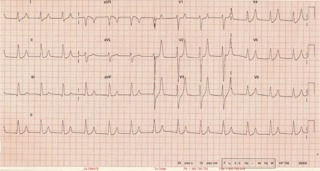
Contributor: Peter Bakes, MD Educational Pearls: Patients in renal failure may have elevated serum potassium levels which can result in EKG changes. EKG changes in the setting of hyperkalemia gener...

19 Juli 20224min

Podcast 797: Vitamin C in Sepsis

Podcast 797: Vitamin C in Sepsis

Contributor: Aaron Lessen, MD Educational Pearls: Prior, smaller studies showed intravenous Vitamin C given to patients with sepsis significantly improved patient mortality and additional outcomes. ...

12 Juli 20222min
Podcast 796: Fluid Amounts in Septic Shock

Podcast 796: Fluid Amounts in Septic Shock

Contributor: Aaron Lessen, MD Educational Pearls: Septic shock management has traditionally endorsed rapid fluid resuscitation and the administration of vasopressors Current guidelines are for patien...

11 Juli 20223min

Populärt inom Vetenskap

svd-nyhetsartiklar
p3-dystopia
dumma-manniskor
pojkmottagningen
allt-du-velat-veta
det-morka-psyket
kapitalet-en-podd-om-ekonomi
rss-experimentet
dumforklarat
rss-vetenskapsradion-2
halsorevolutionen
rss-ufo-bortom-rimligt-tvivel
medicinvetarna
rss-vetenskapsradion
paranormalt-med-caroline-giertz
bildningspodden
rss-spraket
sexet
vetenskapsradion
4health-med-anna-sparre