Episode 906: Case Study of Hypernatremia

Episode 906: Case Study of Hypernatremia

Contributor: Aaron Lessen MD

Educational Pearls:

The case:

  • A gentleman came in from a nursing home with symptoms concerning for sepsis. He was hypotensive, hypoxic, febrile, and mentally altered.

  • His past medical history included previous strokes which had left him with deficits for which he required a feeding tube.

  • Initial workup included some point of care labs which revealed a sodium of 165 mEq/L (normal range 135-145)

Hypernatremia

  • What causes it?

    • Dehydration, from insufficient fluid intake. This might happen in individuals who cannot drink water independently, such as infants, elderly, or disabled people, as was the case for this patient.

    • Other causes of dehydration/hypernatremia include excessive sweating; diabetes insipidus; diuretic use; kidney dysfunction; and severe burns which can lead to fluid loss through the damaged skin.

  • How do you correct it?

    • Need to correct slowly, not more than 10 to 12 meq/L in 24 hours

    • Can do normal saline (0.9%) or half saline (0.45%) and D5, at 150-200 mL per hour.

    • Check the sodium frequently (every 2-3 hours)

    • Will likely need ICU-level monitoring

  • What happens if you correct it too quickly?

    • Cerebral edema

    • Seizures

Bonus fact: Correction of hyponatremia too quickly causes osmotic demyelination syndrome (ODS).

References

  1. Chauhan, K., Pattharanitima, P., Patel, N., Duffy, A., Saha, A., Chaudhary, K., Debnath, N., Van Vleck, T., Chan, L., Nadkarni, G. N., & Coca, S. G. (2019). Rate of Correction of Hypernatremia and Health Outcomes in Critically Ill Patients. Clinical journal of the American Society of Nephrology : CJASN, 14(5), 656–663. https://doi.org/10.2215/CJN.10640918

  2. Lindner, G., & Funk, G. C. (2013). Hypernatremia in critically ill patients. Journal of critical care, 28(2), 216.e11–216.e2.16E20. https://doi.org/10.1016/j.jcrc.2012.05.001

  3. Muhsin, S. A., & Mount, D. B. (2016). Diagnosis and treatment of hypernatremia. Best practice & research. Clinical endocrinology & metabolism, 30(2), 189–203. https://doi.org/10.1016/j.beem.2016.02.014

Summarized by Jeffrey Olson MS2 | Edited by Meg Joyce & Jorge Chalit, OMSIII

Avsnitt(1145)

Mental Health Monthly #7: Urine Toxicology in the ED

Mental Health Monthly #7: Urine Toxicology in the ED

This episode of Mental Health Monthly we will be discussing drugs screens in the Emergency Department with Dr. Justin Romano and Eddie Carillo. Dr. Justin Romano is a current psychiatry resident and E...

10 Feb 202114min
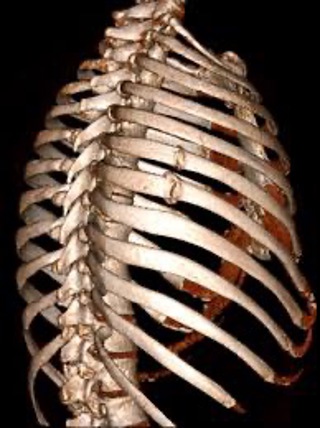
Podcast 639: Rib Fractures in the Elderly

Podcast 639: Rib Fractures in the Elderly

Contributor: Aaron Lessen, MD Educational Pearls: Retrospective review of 5,021 patients over 65 with 2 or more rib fractures recently published 3577 (78 %) were admitted to non-ICU setting 1.1% of ...

9 Feb 20213min
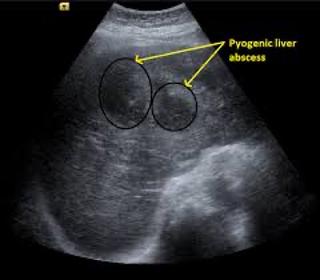
Podcast 638: Pyogenic Liver Abscess

Podcast 638: Pyogenic Liver Abscess

Contributor: Aaron Lessen, MD Educational Pearls: Pyogenic liver abscesses can be caused by Intra-abdominal infection progressing to peritonitis which then drains into liver Bacteremia leading to h...

8 Feb 20213min

Podcast 637: LSD

Podcast 637: LSD

Contributor: Katie Sprinkel, MD Educational Pearls: Commonly known as "acid," LSD is seeing a resurgence in the population as a recreational hallucination Onset is about 30 minutes with peak pharmaco...

2 Feb 20216min

Podcast 636: May-Thurner Syndrome

Podcast 636: May-Thurner Syndrome

Contributor: Sam Killian, MD Educational Pearls: iliac vein compression syndrome is also called May-Thurner Syndrome The left leg more frequently develops deep venous thrombosis (DVT) in part because...

1 Feb 20213min
Pharmacy Phriday #8: Atropine with Ketamine for Conscious Sedation of Pediatrics

Pharmacy Phriday #8: Atropine with Ketamine for Conscious Sedation of Pediatrics

Educational Pearls: Atropine has been shown to reduce hypersalivation as well as nausea and vomiting induced by ketamine sedation. Atropine can increase the occurrence of a transient rash, as well a...

29 Jan 20213min

Podcast 635: Wide Complex Tachycardias

Podcast 635: Wide Complex Tachycardias

Contributor: Peter Bakes, MD Educational Pearls: Two main differentials for wide complex tachycardia (WCT) include ventricular tachycardia (most common) and supraventricular tachycardia with aberranc...

26 Jan 20215min
Podcast 634: D10 for Hypoglycemia

Podcast 634: D10 for Hypoglycemia

Contributor: Dylan Luyten, MD Educational Pearls: D10 may be a better alternative to D50 in correcting hypoglycemia Risks of D50: Can cause extravasation injury Risk of rebound hypoglycemia D10 ...

25 Jan 20214min

Populärt inom Vetenskap

p3-dystopia
dumma-manniskor
svd-nyhetsartiklar
allt-du-velat-veta
kapitalet-en-podd-om-ekonomi
det-morka-psyket
pojkmottagningen
dumforklarat
rss-vetenskapsradion-2
rss-vetenskapsradion
sexet
halsorevolutionen
rss-ufo-bortom-rimligt-tvivel
rss-spraket
rss-experimentet
vetenskapsradion
rss-broccolipodden-en-podcast-som-inte-handlar-om-broccoli
medicinvetarna
bildningspodden
4health-med-anna-sparre