Podcast 912: Narcan (Naloxone)

Podcast 912: Narcan (Naloxone)

Contributor: Taylor Lynch, MD

Educational Pearls:

Opioid Epidemic- quick facts

  • Drug overdoses, primarily driven by opioids, have become the leading cause of accidental death in the U.S. for individuals aged 18-45.

  • In 2021, opioids were involved in nearly 75% of all drug overdose deaths

  • The rise of synthetic opioids like fentanyl, which is much more potent than heroin or prescription opioids, has played a major role in the increase in overdose deaths

What is Narcan AKA Naloxone?

  • Competitive opioid antagonist. It sits on the receptor but doesn't activate it.

When do we give Narcan?

  • Respiratory rate less than 8-10 breaths per minute

Should you check the pupils?

  • An opioid overdose classically presents with pinpoint pupils BUT…

  • Hypercapnia from bradypnea can normalize the pupils

  • Taking other drugs at the same time like cocaine or meth can counteract the pupillary effects

  • Basilar stroke could also cause small pupils, so don't anchor on an opioid overdose

How does Narcan affect the body?

  • Relatively safe even if the patient is not experiencing an opioid overdose. So when in doubt, give the Narcan.

  • What if the patient is opioid naive and overdosing?

    • Use a large dose given that this patient is unlikely to withdraw

    • 0.4-2 mg every 3-5 minutes

  • What if the patient is a chronic opioid user

    • Use a smaller dose such as 0.04-0.4 mg to avoid precipitated withdrawal

How fast does Narcan work?

  • Given intravenously (IV), onset is 1-2 min

  • Given intranasal (IN), onset is 3-4 min

  • Given intramuscularly (IM), onset is ~6 min

  • Duration of action is 60 mins, with a range of 20-90 minutes

How does that compare to the duration of action of common opioids?

  • Heroine lasts 60 min

  • Fentanyl lasts 30-60 min, depending on route

  • Carfentanyl lasts ~5 hrs

  • Methadone lasts 12-24 hrs

  • So we really need to be conscious about redosing

How do you monitor someone treated with Narcan?

  • Pay close attention to the end-tidal CO2 to ensure that are ventilating appropriately

  • Be cautious with giving O2 as it might mask hypoventilation

  • Watch the respiratory rate

  • Give Narcan as needed

  • Observe for at least 2-4 hours after the last Narcan dose

  • Larger the dose, longer the observation period

Who gets a drip?

  • If they have gotten ~3 doses, time to start the drip

  • Start at 2/3rds last effective wake-up dose

Complications

  • Flash pulm edema

    • 0.2-3.6% complication rate

    • Might be from the catecholamine surge from abrupt wake-up

    • Might also be from large inspiratory effort against a partially closed glottis which creates too much negative pressure

    • Treat with BIPAP if awake and intubation if not awake

Should you give Narcan in cardiac arrest?

  • Short answer no. During ACLS you take over breathing for the patient and that is pretty much the only way that Narcan can help

  • Just focus on high quality CPR

References

Summarized by Jeffrey Olson MS2 | Edited by Meg Joyce & Jorge Chalit, OMSII

Avsnitt(1145)

Podcast 609: Kratom

Podcast 609: Kratom

Contributor: Nick Hatch, MD Educational Pearls: Kratom is derived from the evergreen tree sharing the same name, found in Southeast Asia Kratom is legal is most regions Adverse effects of this substa...

2 Nov 20204min
Podcast 608: Another Elevated Lactate?

Podcast 608: Another Elevated Lactate?

Contributor: Jared Scott, MD Educational Pearls: Lactate is a byproduct of anaerobic metabolism or tissue hypoperfusion Though typically associated with severe sepsis, hyperlactatemia can be caused b...

27 Okt 20205min
Podcast 607: Is Pain the Enemy?

Podcast 607: Is Pain the Enemy?

Contributor: Don Stader, MD Educational Pearls: Pain is ubiquitous in the emergency department but it is not the enemy - suffering is Nociception is the ability to feel noxious stimuli which usually ...

26 Okt 20205min
Pediatric Emergencies Brewcast: Common Respiratory Conditions in Pediatric Patients

Pediatric Emergencies Brewcast: Common Respiratory Conditions in Pediatric Patients

Emergency Medical Minute collaborated with CarePoint Health in early March for a night of education on Pediatric Emergencies geared towards mid-level providers at a local Denver brewery for our latest...

21 Okt 202019min
Podcast 606: The Oxygen Wars

Podcast 606: The Oxygen Wars

Contributor: Aaron Lessen, MD Educational Pearls: The use of oxygen is controversial when treating patients with certain conditions, like MI's, stokes, or ARDS because adverse outcomes have been demo...

20 Okt 20203min

Podcast 605: Acute Limb Ischemia

Podcast 605: Acute Limb Ischemia

Contributor: Peter Bakes, MD Educational Pearls: Classically presents with the 6Ps: Pain, pallor, paresthesia, pulseless, poikilothermia (cold), and paralysis Acute limb ischemia occurs by embolic or...

19 Okt 20205min
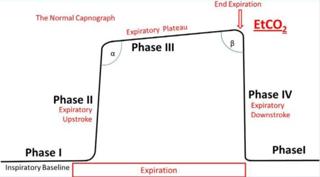
On the Streets #9: Advanced Applications of Capnography

On the Streets #9: Advanced Applications of Capnography

Capnography is the measurement of the partial pressure of exhaled CO2 and is an indirect measurement of your cellular respiration. It is displayed visually as a block-like waveform during the exhalati...

14 Okt 20201h 11min
Podcast 604: Baclofen Withdrawal

Podcast 604: Baclofen Withdrawal

Contributor: Erik Verzemnieks, MD Educational Pearls: Baclofen is used to treat muscle spasms or spasticity. Baclofen comes in two forms: oral and intrathecal Withdrawal is much more common with thos...

13 Okt 20202min

Populärt inom Vetenskap

p3-dystopia
dumma-manniskor
svd-nyhetsartiklar
allt-du-velat-veta
pojkmottagningen
kapitalet-en-podd-om-ekonomi
det-morka-psyket
dumforklarat
rss-vetenskapsradion-2
halsorevolutionen
rss-vetenskapsradion
rss-ufo-bortom-rimligt-tvivel
rss-spraket
rss-experimentet
sexet
medicinvetarna
vetenskapsradion
paranormalt-med-caroline-giertz
4health-med-anna-sparre
rss-broccolipodden-en-podcast-som-inte-handlar-om-broccoli